Is a Louvered Pergola Worth the Cost? An Honest Review
Last Updated: November 2, 2026
Quick Summary
A louvered pergola is worth the cost when you will actually use its adjustable roof, not just admire it. The system earns its premium through shade control, rain protection, and extended patio usage, so if you close the louvers twice a year and leave them, you have paid for engineering you never touch. Treat it as a lifestyle purchase rather than a resale investment.
- A louvered pergola typically costs $6,500 to $18,000 installed, or about $45 to $125 per square foot.
- Motorized systems run roughly $25,000 to $100,000, so automation only pays off if you adjust the roof often.
- Louvered pergolas are water-resistant, not waterproof; driving rain and heavy downpours may still find gaps.
- A fixed roof wins on pure weather protection, while a louvered roof wins on flexibility.
- Neglected drainage is the part that tends to fail first, so clear the gutters each season.
Table of Contents
- The Verdict: When a Louvered Pergola Earns Its Price
- What a Louvered Pergola Actually Costs
- Motorized Louvered Pergola Cost and Whether Automation Pays Off
- Are Louvered Pergolas Waterproof in Real Rain?
- Louvered Pergola vs. Fixed Roof: Which Protects Better
- Louvered Pergola Lifespan, Wind Ratings, and Long-Term Repair Costs
- Resale Value and Return on Investment: What the Premium Buys
- Choosing the Right Louvered Pergola for Your Patio
- Frequently Asked Questions
The Verdict: When a Louvered Pergola Earns Its Price
A louvered pergola is worth the cost when you will actually use its adjustable roof, not just admire it.
Here is the honest math. A louvered pergola typically costs $6,500 to $18,000 installed, or about $45 to $125 per square foot, according to Cactus Decking's 2026 cost guide.
The answer separates a smart buy from an expensive ornament.
Below, we break down real installed costs, motorized versus manual pricing, rain performance, lifespan, and resale assumptions.
What a Louvered Pergola Actually Costs
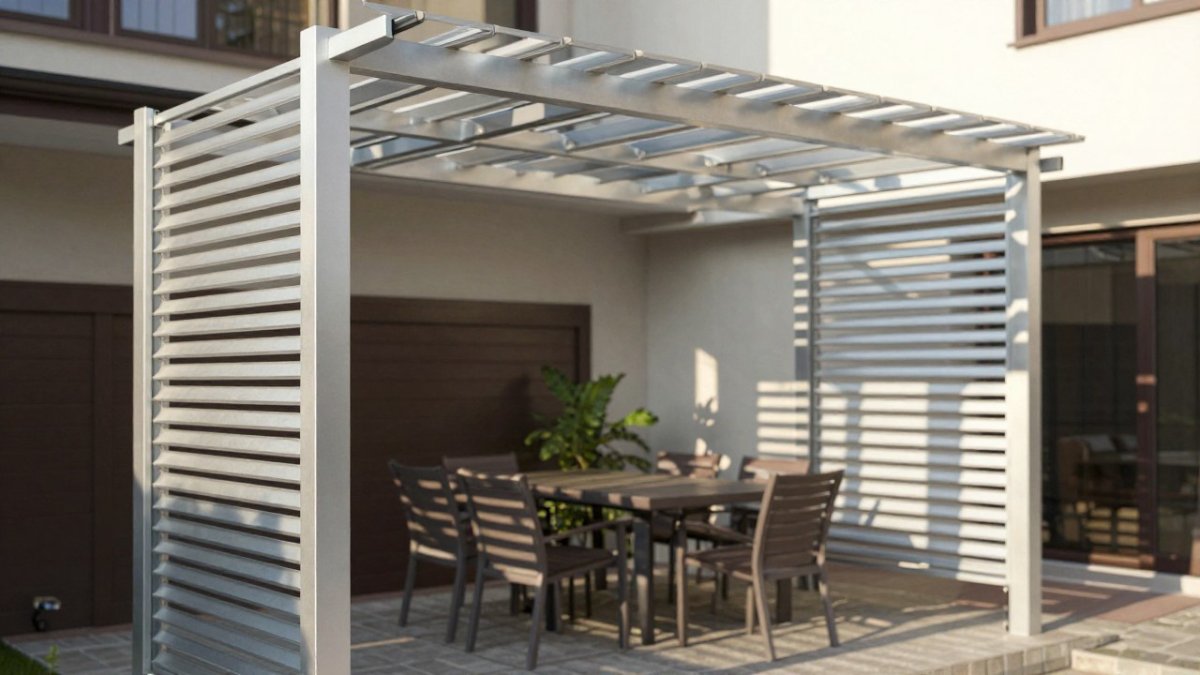
Installed prices cluster in a wide band because "louvered pergola" covers everything from a lightweight imported kit to a motorized architectural system. A separate 2026 cost guide gives a broad installed range of $4,000 to $25,000, attributing the spread to materials, size, and project factors (Schildr cost guide).
Kit Prices vs. Installed Project Costs
A lightweight imported kit runs $2,000 to $5,000 and weighs 250 to 450 pounds, per Pergola Cave's buyer guide. Commercial-grade systems sit far above that, and the guide does not publish a comparable price. The gap is not marketing. It is aluminum gauge, louver thickness, anchoring, and drainage engineering.
The Line Items Behind the Total Project Cost
The structure is only one line. A realistic budget separates the pieces so you can see where the money actually goes. The ranges below are typical U.S. planning figures, not quotes; your municipality, surface, and system size will move them.
- Structure and materials: $2,000 to $5,000 for a lightweight kit; $6,000 to $15,000 or more for a mid-grade aluminum system sized to a typical patio; commercial-grade and motorized architectural systems run higher.
- Professional installation labor: commonly $1,500 to $5,000 for a straightforward patio slab install, and more where access is tight, the surface is uneven, or the system is large.
- Foundation and anchoring: $500 to $3,000 depending on whether you need concrete footings, a new slab section, or surface-mounted anchors into existing masonry.
A YouTube homeowner reported a quote above $27,000 for a custom installation before choosing a DIY kit instead (Honest Louvered Pergola Review, 4 Years Later). That single data point explains why kit and installed prices diverge so sharply.
Regional Variation and Installation Timeline
Costs move with region because labor rates, permit fees, and wind and snow-load requirements differ. Coastal and high-wind areas often require engineered anchoring and higher-rated systems, which pushes both material and installation cost up.
Watch out: a quote that omits electrical, permitting, or foundation work is not a total project cost.
Here is where the money goes on a typical louvered pergola project.
| Line item | Typical range | Note |
|---|---|---|
| Structure and materials | $2,000 to $5,000 kit; $6,000 to $15,000+ mid-grade | Commercial and motorized systems run higher |
| Professional installation labor | $1,500 to $5,000 | More for tight access or uneven surfaces |
| Foundation and anchoring | $500 to $3,000 | Depends on footings, slab, or surface anchors |
| Electrical work | $800 to $3,000 | Dedicated circuit, conduit, motor or LED connections |
| Permitting | $100 to $1,000 | Driven by height, square footage, wind or snow review |
| Lead time and install | Two to six weeks lead; one to three days install | Permit review adds days to weeks |
Motorized Louvered Pergola Cost and Whether Automation Pays Off
Motorized louvered pergola cost runs well above manual systems, and the premium is steeper than most buyers expect.
Does automation pay off? It depends on who adjusts the roof.
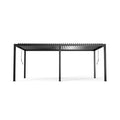
A manual system is a practical option for many buyers. The Alora Modern All-Weather Outdoor Pergola uses a simple crank and galvanized steel louvers rated to 73 mph, with integrated drainage through the posts.
Are Louvered Pergolas Waterproof in Real Rain?
Louvered pergolas are water-resistant, not waterproof. Fully closed louvers with a proper gutter system are designed to shed ordinary rain.
The engineering that matters is drainage. Water must channel into gutters and down through the posts, away from seating.
Watch out: a pergola installed on a slope without checking post-level drainage can pool water at one corner. Confirm the surface is level before anchoring.
Louvered Pergola vs. Fixed Roof: Which Protects Better
A fixed roof wins on pure weather protection. A louvered roof wins on flexibility. That is the whole trade-off, and everything else is detail.
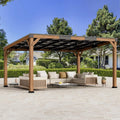
Alora Premium Outdoor Aluminum Louvered Patio Pergola With LED Lights →
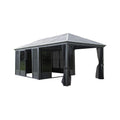
A fixed hardtop blocks sun and rain permanently. The Alora Premium Double-Layer Galvanized Steel Hardtop Gazebo Pergola offers a ventilated double roof that reduces heat buildup and supports snow loads, at $2,999.97 for a 12x20 footprint.

A louvered system gives you sun when you want it and coverage when you do not. A Zapp Exteriors comparison notes louvered systems cost more than traditional pergolas because of their materials and technology.
Best for louvered: homeowners who want shade control and rain cover from the same structure. Best for fixed roof: buyers in heavy snow regions who want set-and-forget protection.
Louvered Pergola Lifespan, Wind Ratings, and Long-Term Repair Costs
Louvered pergola lifespan depends almost entirely on material, wind rating, and how the structure handles water and snow. Powder-coated aluminum frames with galvanized steel louvers resist rust and corrosion and typically outlast fabric-topped alternatives by a wide margin. Wind ratings are the number to check: 60 mph and 73 mph ratings appear on quality aluminum systems, and those figures describe the structure, not a guarantee against debris impact.
Performance in Specific Climates and Severe Weather
A louvered roof behaves differently depending on where it is installed, and most buying guides skip this. The practical questions are wind, snow load, drainage, corrosion, and freeze-thaw.
- Wind: A rating is only meaningful if the anchoring matches it. A 73 mph-rated system bolted to a wood deck will not perform like the same system on engineered concrete footings. In hurricane- and high-wind regions, confirm the manufacturer's engineering documentation and ask your local building department what anchorage the code requires.
- Snow load: Louvers are not a solid roof, and snow behavior depends on louver spacing, pitch, and whether the system is rated for snow. In heavy-snow regions, verify the published snow-load rating and whether the manufacturer requires the louvers to be left open or closed during accumulation. Do not assume a louvered roof sheds snow the way a pitched hardtop does.
- Drainage: Water must channel into gutters and down through the posts, away from seating. In heavy downpours, undersized gutters or a clogged channel can overflow, and a pergola installed on a slope without checking post-level drainage can pool water at one corner. Confirm the surface is level before anchoring.
- Corrosion: Coastal salt air accelerates corrosion on fasteners and cut aluminum edges even when the frame is powder-coated. Rinse the structure periodically in coastal areas and inspect fasteners and connection points each season.
Verifying local engineering ratings before purchase is a useful step, because a system rated for your wind and snow conditions is better matched to the site.
Long-Term Repair Costs Over Several Years
Long-term repair costs stay low when you buy aluminum, but they are not zero. A realistic multi-year view:
- Lubrication and adjustment of louver joints: a modest annual cost if you do it yourself, more if you hire a technician.
- Gutter and drainage cleaning: the highest-value maintenance item, because neglected drainage is the part that fails first.
- LED strip replacement: integrated lighting eventually needs replacement; budget for it as a wear item rather than a permanent feature.
- Motor, remote, or sensor replacement on motorized systems: the largest single potential repair, and the main reason manual systems cost less to own over time.
There is no fabric to fade or tear, and no repainting if the powder coat holds. Neglected drainage is the part that tends to fail first, so clearing the gutters each season is worthwhile.
Resale Value and Return on Investment: What the Premium Buys
No credible source quantifies a resale return on a louvered pergola, and we will not invent one.
Bloom Cabin's buyer analysis frames the value as conditional. The system earns its premium if the owner uses its opening, closing, shading, and ventilation functions. That is the return on investment: patio usage, not appraisal line items.
A louvered pergola is best treated as a lifestyle purchase rather than a resale investment.
Choosing the Right Louvered Pergola for Your Patio
Start with size, then wind rating, then control type. Measure your patio and leave clearance for furniture and traffic. Match the wind rating to your local conditions. Decide whether you want a crank or a motor before you budget for electrical work.
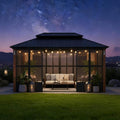
Two Alora models are relevant options. The Alora Premium Outdoor Aluminum Louvered Patio Pergola with LED Lights suits evening entertainers who want built-in lighting. The Alora Modern All-Weather Pergola with Aluminum Frame and Steel Louvers suits buyers who want a larger 10x19 footprint and a 73 mph wind rating. If you are still planning the build, our guide to gazebo assembly time requirements sets realistic expectations before delivery day.


Frequently Asked Questions
Are louvered pergolas worth it compared with a traditional open pergola?
Only if you will use the adjustable roof. A louvered pergola typically runs $6,500 to $18,000 installed, or about $45 to $125 per square foot, against a much lower price for an open frame that offers no rain protection. The premium buys shade control, drainage, and a dry seating area. If you mainly want partial shade on sunny days, a traditional pergola does that for less. If you want to host in drizzle and block afternoon glare, the louvered system is the one that earns its keep.
What does a motorized louvered pergola cost, and is automation worth it?
Motorized louvered pergola cost sits well above manual versions. One regional cost guide reports motorized systems at roughly $25,000 to $100,000 for a 150 to 250 square foot project, while manual kits start near $2,000 to $5,000 for lightweight imported units. Automation makes sense when the roof is large, mounted high, or adjusted daily.
Are louvered pergolas waterproof?
They are water-shedding rather than sealed like a house roof. When the louvers close fully, integrated gutters channel rain through the posts and away from seating. That keeps the area underneath dry in ordinary showers. Driving rain at an angle can still reach the edges, and water may pool if drainage channels clog with leaves. Check the drainage design before buying, and plan to clear debris a few times a year.
How long does a louvered pergola last?
Powder-coated aluminum frames are designed to resist rust, corrosion, and fading. The moving parts decide the real lifespan: louver pivots, cranks, and motors wear first. Wind ratings matter too, with quality units rated around 60 to 73 mph. Budget for occasional hardware replacement rather than assuming a maintenance-free run.
What are the disadvantages of a louvered pergola?
The main drawbacks are price and complexity. You pay significantly more than for a fixed or open structure, and installation can involve footings, electrical work for lighting or motors, and permits. Louvers add moving parts that need occasional attention, and heavy snow or extreme wind may require opening or closing the roof in advance. If you rarely sit outside or only need seasonal shade, those trade-offs rarely justify the spend.
The real challenge is not picking a pergola. It is deciding whether you will use one. If your patio sits empty half the year because of sun or rain, a louvered roof changes that equation. Backyard Sanctuary Supply LLC stocks aluminum louvered pergolas with adjustable louvers, integrated drainage, and LED lighting, all built for year-round use and shipped free within the continental U.S. Explore the collection and turn your patio into a space you use in every season.