How to Anchor a Pergola on a Concrete Patio
Last Updated: November 13, 2026
Quick Summary
To anchor a pergola on a concrete patio, set rated post bases on your layout marks, drill holes with a hammer drill and matching masonry bit, clean each hole, then set wedge anchors or concrete screws and torque them to the manufacturer's spec. The slab must be at least 4 inches thick and free of major cracks. Keep anchors at least 1.5 times the embedment depth from any free edge.
- Wait at least 28 days before drilling into a newly poured concrete patio.
- Wedge anchors suit sound, uncracked slabs; concrete screws handle cracked or older concrete better.
- Dust left in a drilled hole is the number one reason anchors pull loose.
- Weighted bases let you anchor a pergola without drilling but only handle light wind.
- Never anchor into a paver alone; reach the concrete or compacted base beneath it.
Table of Contents
- Tools, Hardware and What You Need Before You Start
- Checking Your Slab: Thickness, Condition and Curing Time
- Choosing the Right Pergola Post Base for Concrete
- Wedge Anchors vs Concrete Screws: Selecting an Anchor by Load
- How to Anchor a Pergola on a Concrete Patio Step by Step
- How to Anchor a Pergola Without Drilling
- How to Anchor a Pergola to Pavers
- How to Anchor a Pergola to the Ground
- Frequently Asked Questions
Tools, Hardware and What You Need Before You Start
Anchoring a pergola to a concrete patio starts with the right hardware, not the drill. Gather your tools and fasteners before you touch the slab. A missing socket or the wrong anchor turns a two-hour job into a two-day one.
Here is the short list of what you need:
- Hammer drill with a masonry bit matched to your anchor diameter
- Wedge anchors or concrete screws sized to your post base holes
- Post bases rated for your pergola's wind load
- Socket set, ratchet, and torque wrench
- Tape measure, chalk line, and 4-foot level
- Shop vacuum and stiff brush for hole cleaning
- Safety glasses and hearing protection
Two details trip people up. First, the masonry bit must match the anchor's stated diameter exactly; a worn bit drills an oversized hole and the anchor never bites. Second, buy anchors with a corrosion-resistant coating if your patio sees sprinkler spray or coastal air. Stainless or hot-dipped galvanized hardware costs more and lasts far longer.
Checking Your Slab: Thickness, Condition and Curing Time
A concrete patio slab needs to be at least 4 inches thick and free of major cracks before you anchor a pergola into it. Anything thinner, or badly fractured, will not hold an anchor under wind load. But thickness alone is not enough. The slab also has to be the right kind of concrete, in the right condition, and detailed correctly around the anchors. Here is how to assess all of that before you drill.
Measure thickness in more than one spot. Check at an edge or a control joint, or drill a small test hole and measure the depth with a piece of wire or a depth gauge.
Look for reinforcement. A slab with welded wire mesh or rebar distributes load and resists cracking better than an unreinforced slab. You can sometimes see mesh at an exposed edge or a core hole.
Judge condition, not just cracks. Hairline cracks are usually fine. Wide cracks, spalling, or a hollow sound when you tap the surface mean the slab is failing or has delaminated from the base.
Check edge distance. Anchors need concrete around them to resist pull-out and breakout.
Decide whether the patio is a structural footing. A patio slab is usually a non-structural slab-on-grade, poured to sit on the ground, not to resist uplift from a structure.
Curing time is the other trap. New concrete keeps getting harder for weeks. Many installers wait at least 28 days before drilling, because anchors set in green concrete can loosen as it shrinks.
Watch out: drilling into a slab that hides a post-tension cable or radiant heat tubing can cause real damage.
Choosing the Right Pergola Post Base for Concrete
The post base is what transfers wind and lateral load from the pergola into the slab, so pick it before you pick the anchor. A good base for concrete has a flat plate that sits tight against the surface and pre-drilled holes that match your anchor size.
Three styles cover most jobs:
- Standoff base: lifts the post slightly off the slab so water drains and the wood or metal foot stays dry.
- Flush base: sits flat for a cleaner look, but traps moisture under the plate.
- Adjustable base: lets you correct a post that is slightly out of plumb.
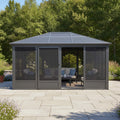
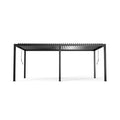
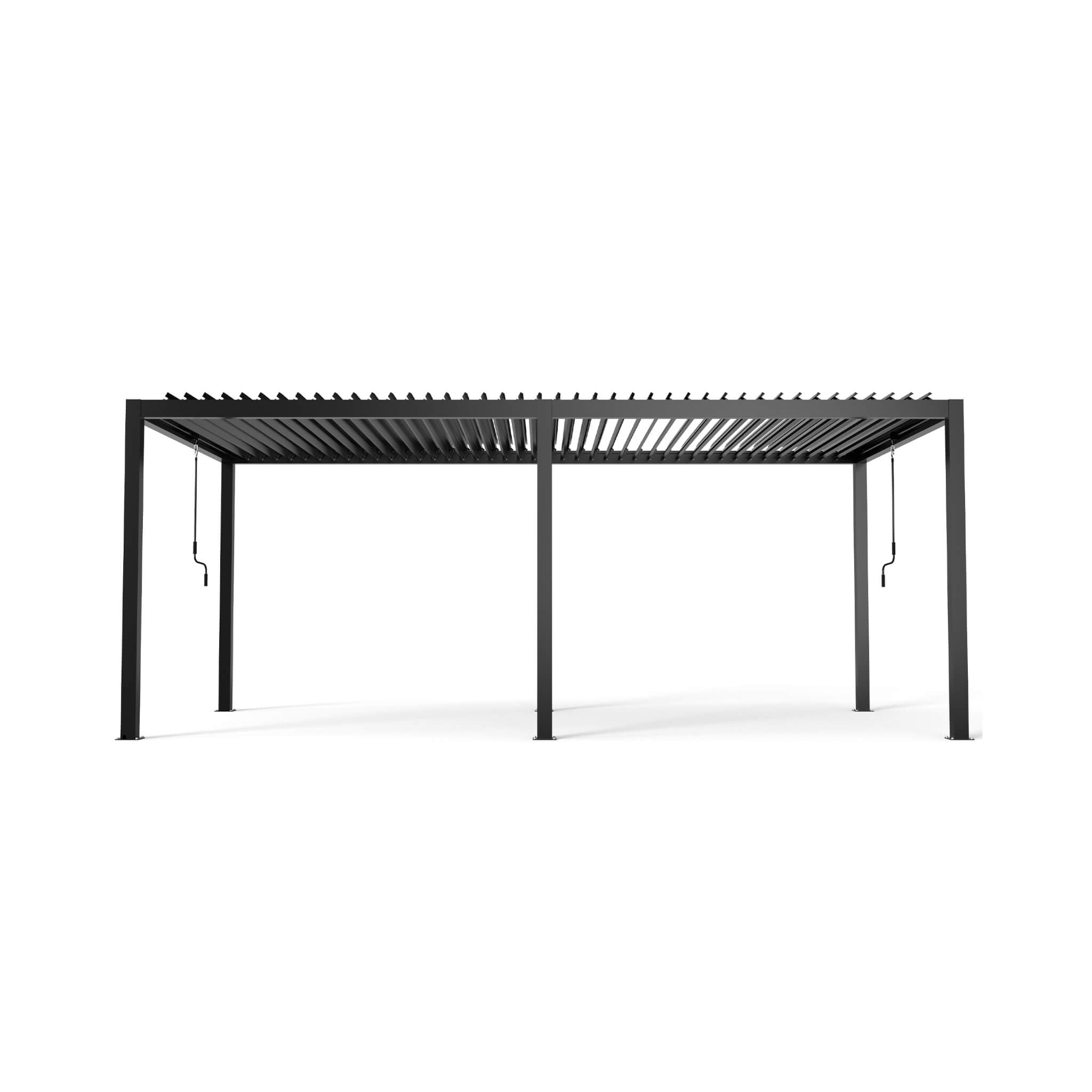
Match the base's hole pattern to your anchor spacing, and check that the base plate is wide enough to spread load across the concrete. You can browse the Alora louvered pergola with LED lights, or compare the 10x19 Alora all-weather pergola for a larger footprint. Both use a powder-coated aluminum frame.

Wedge Anchors vs Concrete Screws: Selecting an Anchor by Load
Wedge anchors and concrete screws are two common choices for a concrete patio, and the right pick depends on load and slab condition. Wedge anchors expand against the hole walls and deliver high pull-out strength in solid concrete. Concrete screws cut their own threads and work well in cracked or older slabs where expansion could split the concrete.
Here is how the common anchor types compare:
| Anchor type | Best for | Slab condition | Removable |
|---|---|---|---|
| Wedge anchor | Heavy wind uplift, thick solid slabs | Sound, uncracked concrete | No, permanent |
| Concrete screw | Moderate loads, thinner or older slabs | Handles cracked concrete better | Yes, can back out |
| Sleeve anchor | Lighter loads, hollow or block | Mixed | No |
| Adhesive anchor | Cracked or irregular concrete, high load | Cracked or repaired concrete | No |
Start with the load, not the anchor. A pergola post base sees two kinds of load: downward weight and lateral or uplift force from wind. Uplift is the one that pulls anchors out, and it grows with pergola height, roof coverage, and wind exposure. A small open pergola in a sheltered yard may need only moderate holding power.
Match diameter and embedment to the base plate and the slab. The anchor diameter must fit the holes in your post base, and the embedment depth must be within the slab thickness.
Choose corrosion resistance for the site. Standard zinc-plated anchors are fine in dry, sheltered conditions. Stainless steel or hot-dipped galvanized anchors cost more but resist rust from sprinkler spray, pool splash, and coastal air. Mixing metals can also cause galvanic corrosion, so match the anchor to the post base material where possible.
Consider adhesive anchors for problem slabs. Adhesive anchors bond a threaded rod into a cleaned hole with epoxy or acrylic resin. They work in cracked concrete, can be placed closer to edges, and often carry higher load ratings than mechanical anchors of the same diameter. The trade-off is cure time and more careful hole cleaning.
Edge distance and spacing count as much as anchor size. Keep anchors well away from the slab edge, or the concrete can break out under load. Space anchors so they do not overlap stress zones in the concrete.
Watch out: over-tightening a wedge anchor can strip the hole or crack the concrete, and under-tightening leaves the anchor loose. Use a torque wrench and follow the anchor manufacturer's torque specification.
How to Anchor a Pergola on a Concrete Patio Step by Step
Anchoring a pergola on a concrete patio follows a fixed sequence: lay out, drill, clean, set the base, and torque the anchors. Skipping any step weakens the whole connection.
- Lay out the posts. Mark each corner with a chalk line and confirm spacing and square with the 3-4-5 method. Check alignment against your pergola's dimensions.
- Set the post base. Place each base on its mark, confirm it is level, and mark the anchor holes through the plate.
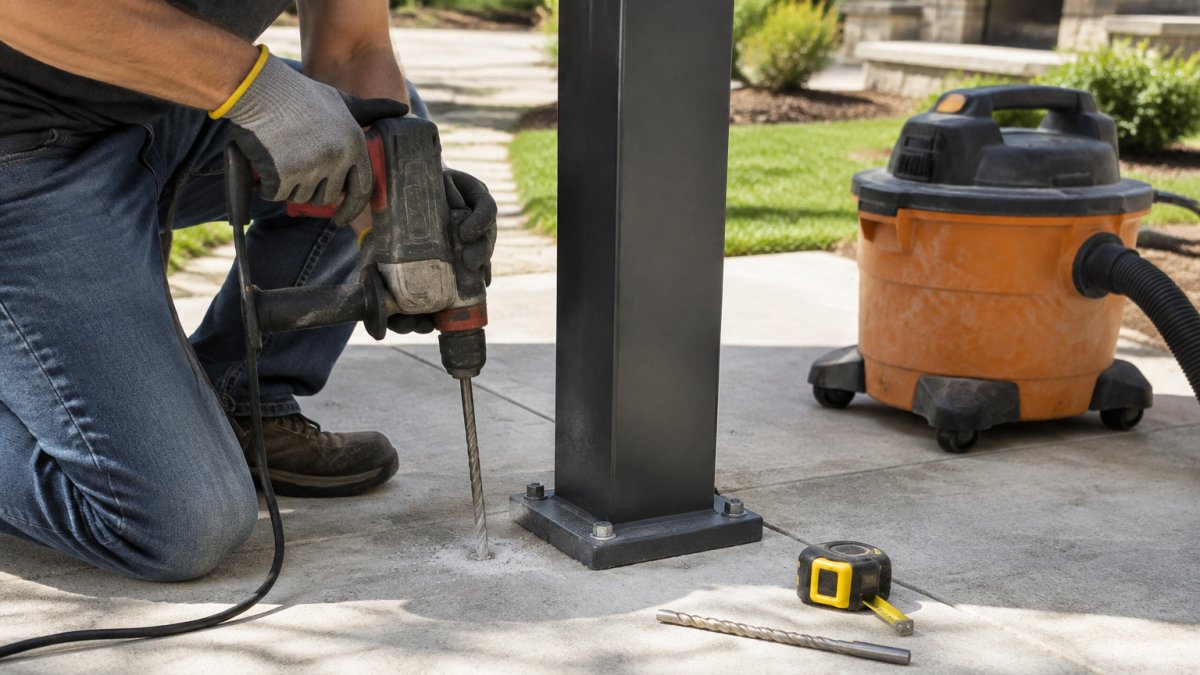
- Drill the holes. Use a hammer drill and a masonry bit matched to the anchor. Drill to the required depth, no deeper.
- Clean each hole. Vacuum out dust and brush the walls. Dust is the number one reason anchors pull loose.
- Set the anchor. Drive the wedge anchor or run the concrete screw through the base plate into the hole.
- Tighten to torque. Use a torque wrench and hit the manufacturer's spec. Over-tightening strips the hole.
- Attach the post. Set the post on the base, check plumb on two sides, and fasten with the base's supplied hardware.
If you are planning the full build and want to know how long assembly and setup will realistically take, our guide to gazebo assembly time requirements breaks down the schedule before you commit.
How to Anchor a Pergola Without Drilling
You can anchor a pergola without drilling by using weighted bases or ballast blocks instead of fasteners. This suits renters, paver patios, and anyone who cannot penetrate the surface. Fill heavy base weights with sand or gravel and set them over each post foot.
The trade-off is real. Weighted bases resist downward and lateral force through mass alone, so they handle light wind but not the uplift a drilled anchor provides. Add weight low on the structure, spread it wide, and re-check it after storms. For a pergola in an exposed spot, drilling is the safer call.
How to Anchor a Pergola to Pavers
Anchoring a pergola to pavers requires reaching the concrete or compacted base beneath the pavers, because the pavers themselves will not hold an anchor. Lift the pavers at each post location, set the base on the layer below, and anchor there. Then cut and refit the pavers around the base.
If there is no solid base under the pavers, use a weighted base instead of drilling. Never anchor into a paver alone; it will crack and the post will work loose. Plan the paver cuts before you drill so the finished edge looks clean.
How to Anchor a Pergola to the Ground
Anchoring a pergola to the ground means setting posts in concrete footings or driving ground anchors below the frost line. For a freestanding structure on soil, dig footings sized to your local frost depth, set a post base or anchor bracket in the concrete, and let it cure before loading it. Ground screws are a faster option for lighter structures.
Footing size and depth depend on your structure and your local building code. Check with your local building department before you dig; many areas require a permit for a permanent pergola, and code also governs wind uplift requirements. Getting that right protects the structure and your investment.
A pergola is only as secure as the connection between its posts and the ground, and that connection starts with the right base and a sound slab. Backyard Sanctuary Supply LLC offers a curated selection of outdoor living products, including the Alora louvered pergola with adjustable louvers and remote LED lighting, and the 10x19 Alora all-weather pergola with a powder-coated aluminum frame and steel louvers that withstand winds up to 73 mph.
Frequently Asked Questions
Can I anchor a pergola to a 4-inch concrete slab?
A 4-inch slab is the practical minimum, and only if it is sound, reinforced and poured over a stable base. Wedge anchors need enough embedment to engage the concrete, which leaves little margin in a thin slab. Concrete screws often suit thin slabs better because they cut threads into the concrete rather than expanding against it. If the slab is cracked, hollow-sounding or unreinforced, plan on cutting out footings instead of trusting the surface.
How long should new concrete cure before I anchor a pergola?
Wait at least 7 days before drilling, and 28 days for full design strength. Anchors torqued into green concrete can crack it or pull loose later. During curing, keep the slab covered and damp for the first week to slow moisture loss. If your patio was poured recently, mark post locations now and schedule the anchor a pergola job for after the cure window rather than rushing it.
How do I anchor a pergola without drilling into the concrete?
Weighted bases filled with sand or gravel are one option. Both rely on mass and friction rather than fasteners. This works for lightweight aluminum frames in sheltered yards, but it is not a substitute for anchoring a pergola against wind uplift. Check your local wind requirements before choosing a non-drilling method for a permanent structure.
What type of anchor should I use for pergola posts on concrete?
Wedge anchors and concrete screws are common choices for residential pergolas on concrete. Wedge anchors grip by expansion and suit solid, uncracked slabs. Concrete screws install faster and tolerate cracked concrete better. Match the anchor diameter to the base plate holes, keep anchors well clear of the slab edge, and use corrosion-resistant hardware outdoors.