The Best Hardtop Gazebo for Backyard Shade That Lasts
Last Updated: November 22, 2026
Quick Summary
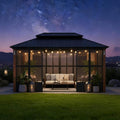
The best hardtop gazebo for backyard shade is the Alora 12x20 Double-Layer Galvanized Steel Gazebo at $2,999.97, our pick for large patios in hot, sunny climates. Its ventilated double roof reduces heat buildup and eases wind pressure, while the powder-coated aluminum frame stays rust-free. Three ceiling hooks let you hang a fan or lights.
- A 12x20 hardtop gazebo needs a clear 12 by 20 feet plus about 2 feet of clearance per side.
- The Barrington cedar gazebo is listed as tested to withstand 12,700 lbs. of snow and 100 mph winds.
- The Alora Meridian 11x14 four-season sunroom is the highest-priced structure in the lineup at $4,899.97.
- The wall-mounted polycarbonate pergola at $1,119.80 mounts to the home's exterior using included hardware.
- Have underground utilities marked through 811 Before You Dig before digging or drilling.
Table of Contents
- What Separates a Shade Structure From a Sun Trap
- Six Hardtop Gazebos Built for Backyard Shade
- Why a Hardtop Gazebo With Screens Extends Your Season
- Sizing a 12x20 Hardtop Gazebo Against Your Patio Footprint
- Hardtop Gazebo Installation and Anchoring on Concrete, Deck, or Grass
- Hardtop Gazebo Maintenance That Protects Your Investment
- Matching a Gazebo to Your Climate and Shade Goals
- Choosing Your Gazebo and Planning the Install
- Frequently Asked Questions
What Separates a Shade Structure From a Sun Trap
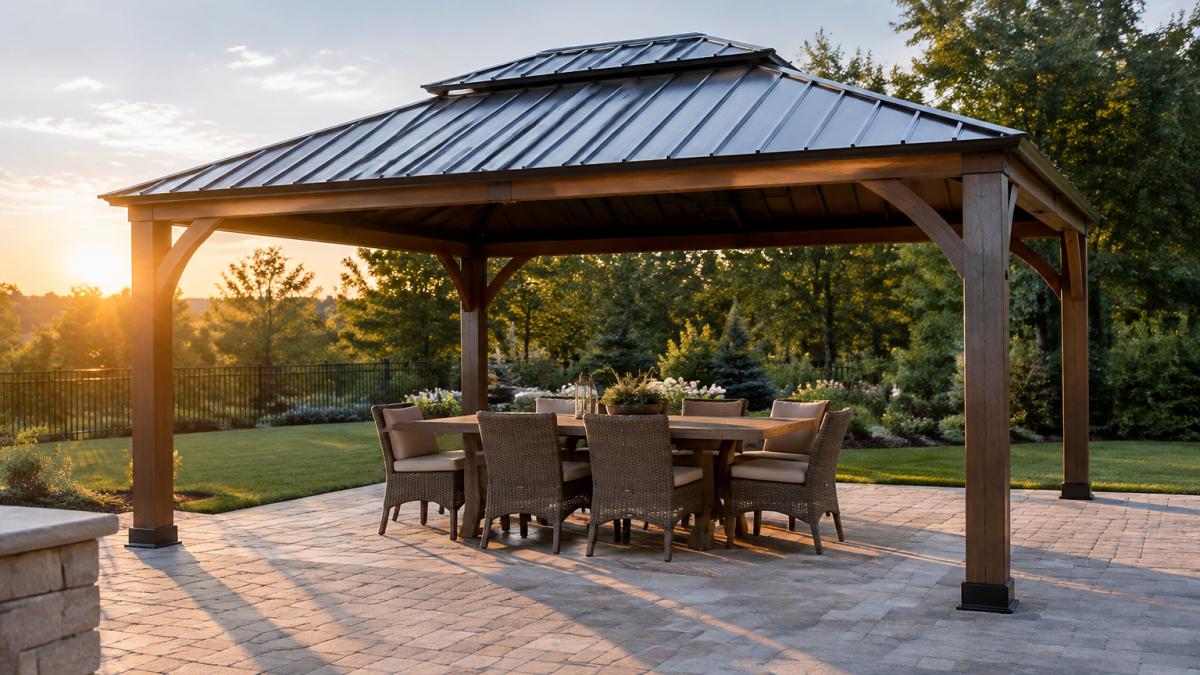
A hardtop gazebo is a permanent outdoor shade structure with a solid roof, typically galvanized steel, aluminum or polycarbonate, supported by a metal or wood frame. The roof is central to how much shade a structure provides. A common mistake is buying on looks alone, then discovering by August that the "shade" structure bakes the patio underneath it.
Fabric canopies are a different construction from a solid roof with ventilation.
How Roof Design Changes Shade Coverage Through the Day
A fixed roof casts a shadow that moves across the patio as the sun tracks west.
Three roof details decide how usable that shadow is:
- Roof slope: A pitched or sloped roof throws shade further from the structure's center than a flat one.
- Double-tier or vented design: A gap between roof layers lets rising heat escape, so the space below stays cooler even when the sun is directly overhead.
- Overhang: Panels that extend past the posts widen the shaded footprint without adding floor area.
A ventilated double roof is designed to reduce heat buildup underneath compared with a single panel.
Roof and Frame Materials That Decide Longevity
Galvanized steel roofs are designed for corrosion resistance and year-round use. Powder-coated aluminum frames are designed for rust-free durability. Cedar and fir frames bring warmth.
Check that reinforced pillars and pre-drilled anchor bases are part of the design.
Six Hardtop Gazebos Built for Backyard Shade
Here is a shortlist of options from the collection. The options below come from our collection, with listed prices.
| Gazebo | Size | Price | Best For |
|---|---|---|---|
| Alora Double-Layer Galvanized Steel | 12x20 | $2,999.97 | Large patios, hot climates |
| Barrington Cedar With PowerPort | 20x12 | $4,452.68 | Entertaining with power needs |
| Alora Meridian Four-Season Sunroom | 11x14 | $4,899.97 | Year-round use |
| Alora Fir Wood With Steel Roof | 8x10 | $2,199.97 | Small yards, rustic style |
| Alora Modern Cedar Gazebo | Varies | $2,699.97 | Design-forward gardens |
| Wall-Mounted Polycarbonate Pergola | Large | $1,119.80 | Tight footprints, budget |
Price
Alora 12x20 Double-Layer Galvanized Steel Gazebo: Best for Large Patios
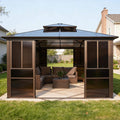
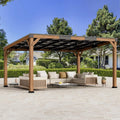
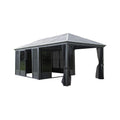
The 12x20 Alora is our pick for big backyards that need serious shade. Its ventilated double roof reduces heat buildup and eases wind pressure, while the powder-coated aluminum frame stays rust-free. At $2,999.97, it is priced below the larger Barrington and Meridian models. View the 12x20 Alora gazebo.
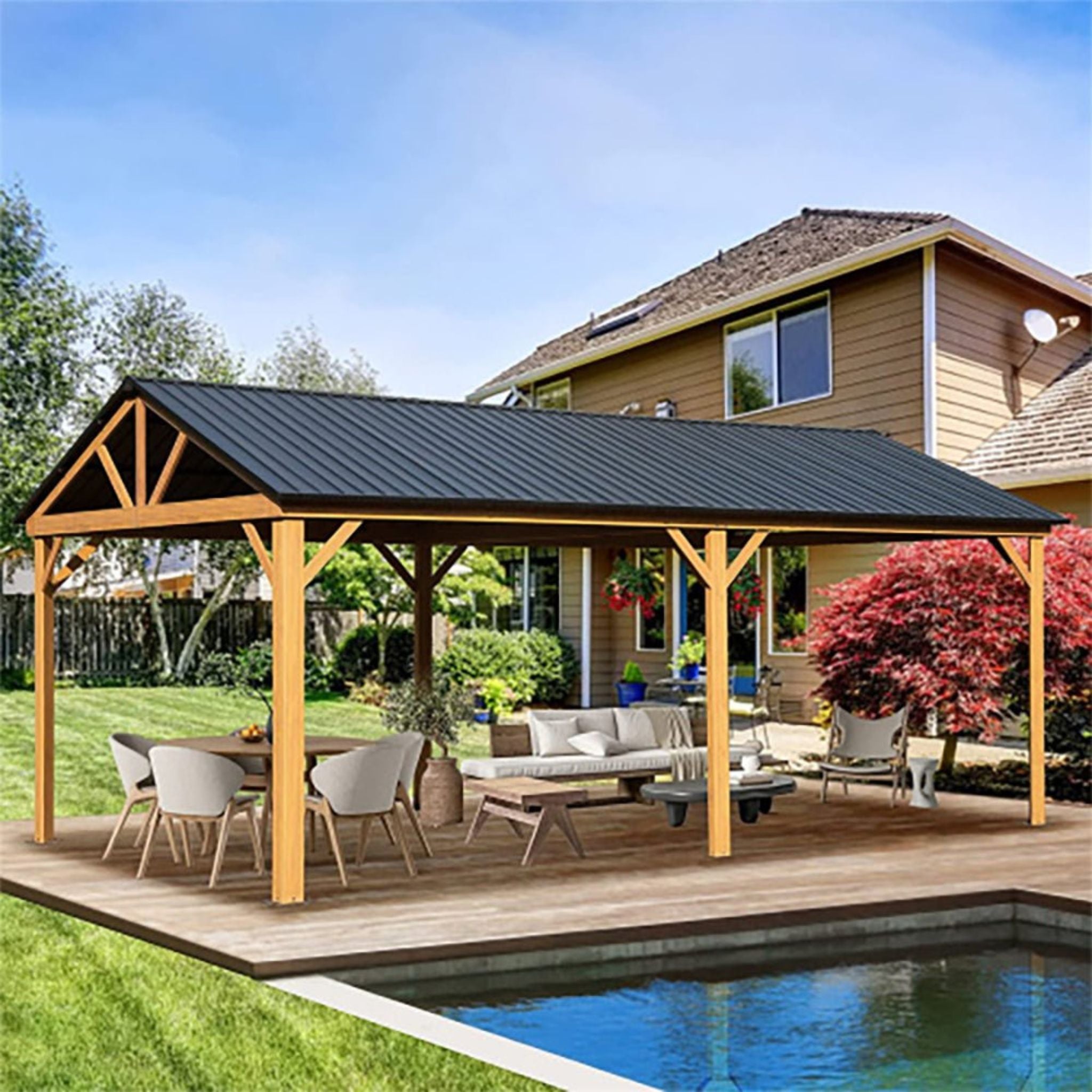
Best for: Large patios in hot, sunny climates. Skip if: You want an enclosed, four-season room.
Barrington 20x12 Cedar Gazebo With PowerPort: Best for Entertaining
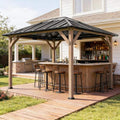
Cedar warmth meets a galvanized steel hip roof. The listing describes it as tested to withstand 12,700 lbs. of snow and 100 mph winds. The PowerPort adds outlets and USB ports, so speakers, lights and devices run without extension cords across the lawn. It runs $4,452.68. See the Barrington cedar gazebo.
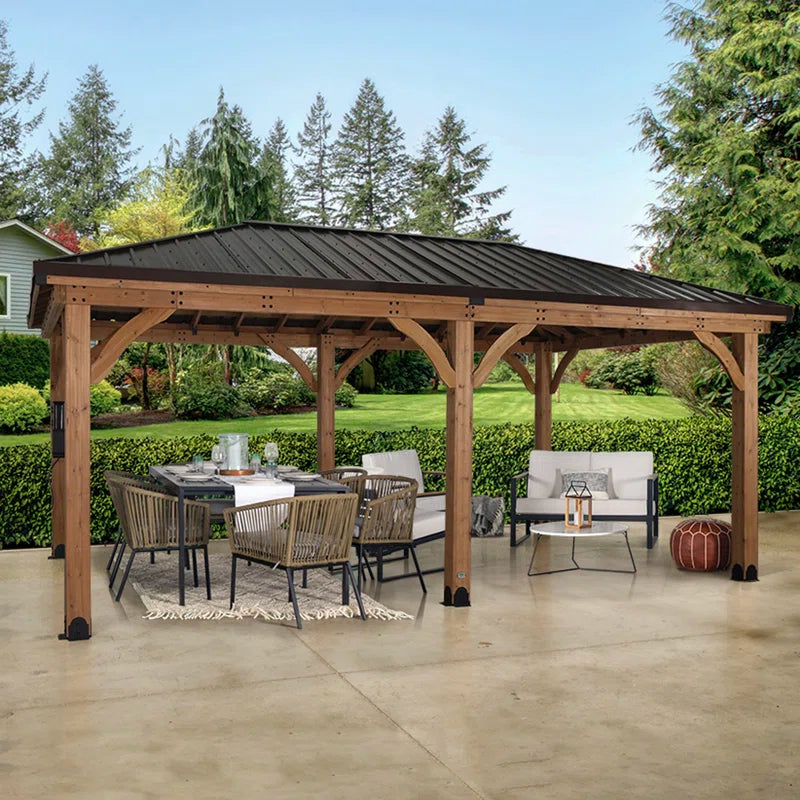
Best for: Hosts who want power at the table. Skip if: Your budget tops out under $3,000.
Alora Meridian 11x14 Four-Season Sunroom: Best for Year-Round Use
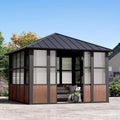
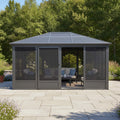
This model is designed as an enclosed structure. Sliding doors, movable PVC screen walls and louver windows let you tune airflow and keep insects out. The aluminum frame and galvanized steel roof are designed for rust-free durability, and the listing includes a built-in gutter system for rainwater drainage. At $4,899.97, it is the highest-priced structure in this lineup. Explore the Meridian sunroom.
Best for: Homeowners who want outdoor living in every season. Skip if: You only need summer shade.
Alora Fir Wood 8x10, Modern Cedar, and Wall-Mounted Options: Best for Smaller Spaces
Three options suit smaller spaces:
- Alora Fir Wood 8x10 ($2,199.97): A galvanized steel roof with UPF50+ defense and a clear polycarbonate top that filters soft light. Ground stakes and expansion screws anchor it on grass or concrete. Shop the fir wood 8x10.
- Alora Modern Cedar ($2,699.97): The listing describes the cedar as naturally resistant to decay and insects, and the sloped hardtop provides protection from rain and snow.
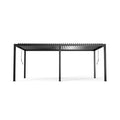
- Wall-Mounted Polycarbonate Pergola ($1,119.80): The listing describes mounting to the home's exterior using included hardware.
Best for: Compact patios and awkward footprints. Skip if: You need to seat a crowd.
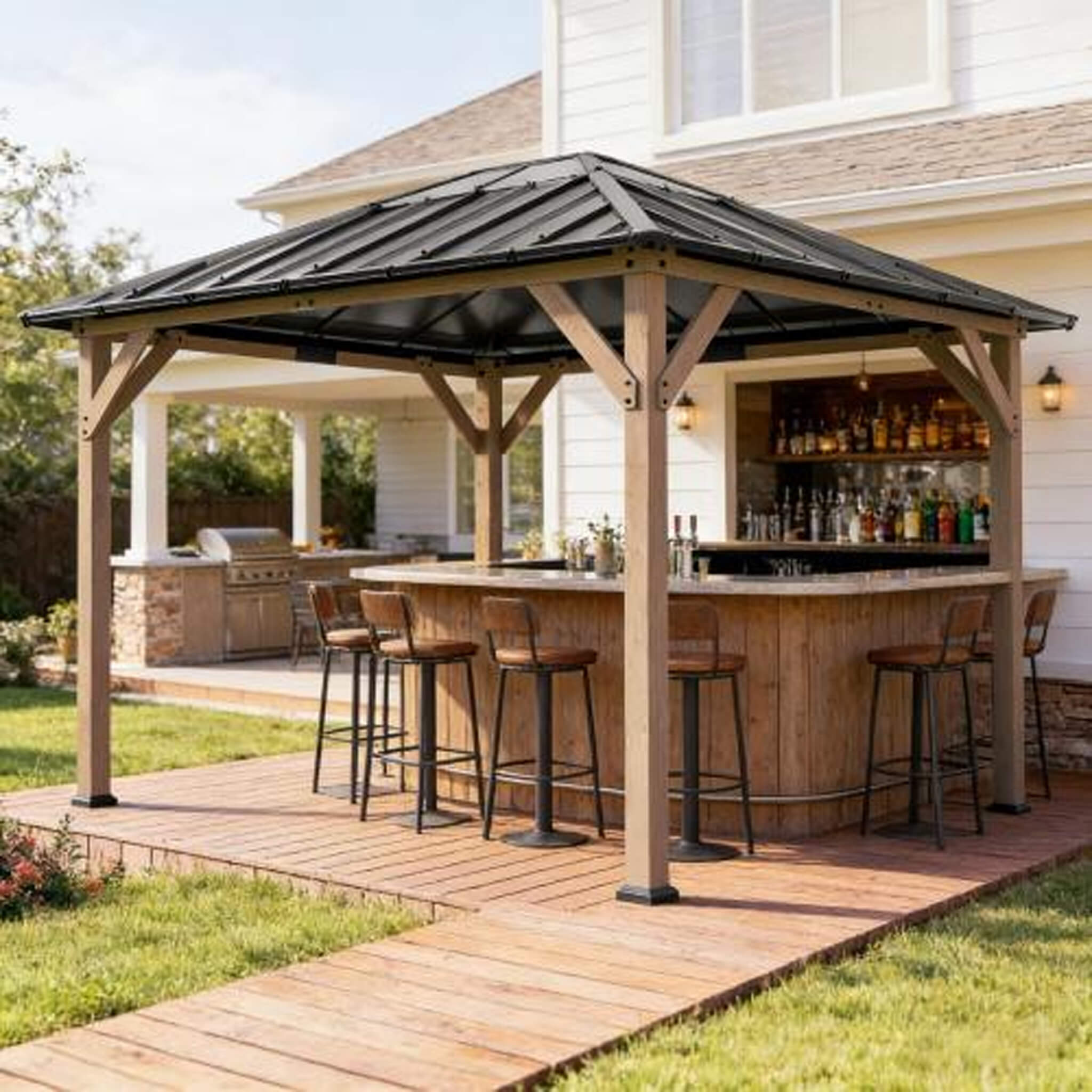
Why a Hardtop Gazebo With Screens Extends Your Season
A hardtop gazebo with screens can extend how you use a seating area. Screens can help keep insects out while preserving airflow and views.
The Meridian's movable PVC screen walls and the Edge solarium's breathable mesh panels are two examples of screening options. Adding privacy curtains is an option some owners consider for evening use.
Sizing a 12x20 Hardtop Gazebo Against Your Patio Footprint
Measure before you buy. A 12x20 hardtop gazebo needs a clear rectangle of at least 12 by 20 feet, plus roughly 2 feet of clearance on each side for anchoring and airflow.
Walk your patio with a tape measure and mark the corners with painter's tape. Then check three things: does the roofline clear your home's eaves, do the posts land on solid ground rather than a paver edge, and does the shaded area cover where you actually sit?
Hardtop Gazebo Installation and Anchoring on Concrete, Deck, or Grass
Anchoring is where installations succeed or fail, and it is also where the purchase price stops being the real price. Additional costs such as a pad, hardware, and help can apply beyond the listed price, so plan the surface before you plan the furniture.
Match the Anchor to the Surface
- Concrete: Expansion bolts through the pre-drilled base plates, positioned clear of slab edges and control joints. Confirm the slab thickness and condition suit the anchoring method before installation.
- Deck: Use lag bolts appropriate for the deck structure, and confirm the framing supports each post before you drill.
- Grass or gravel: The listings include ground stakes and expansion screws for anchoring on grass or concrete.
Site Preparation and the Checks Competitors Skip
Measure the clear rectangle first: a 12x20 needs 12 by 20 feet plus about 2 feet of clearance per side for anchoring and airflow. Then confirm the roofline clears your home's eaves and that posts land on solid ground rather than a paver edge.
Before digging or drilling, have underground utilities marked (811 Before You Dig). Check local setback and permit rules before delivery, and review any HOA covenants that may apply.
Use the included anchor hardware, since unanchored structures may be lifted by wind.
A Realistic Installed-Cost Worksheet
Consider the full cost, not only the listed price:
- Structure: the listed price, from $1,119.80 for the wall-mounted pergola to $4,899.97 for the Meridian sunroom.
- Delivery: freight for a 12x20 crate is often a line item; confirm curbside versus placement.
- Foundation: a concrete pad or compacted gravel base, priced by square foot in your market.
The listings describe pre-drilled components, and the Barrington listing describes the BILT app for step-by-step guidance. For a realistic time estimate by model, read our assembly time guide before you schedule help.
Hardtop Gazebo Maintenance That Protects Your Investment
Maintenance on a hardtop gazebo is light but not zero, and a seasonal routine helps protect the structure. Consider upkeep when comparing options: wood frames may require periodic sealing, while the listed powder-coated aluminum frames are designed for rust-free durability.
A Seasonal Inspection Routine
- Spring: rinse roof panels with a garden hose to clear debris, and check anchor bolts and hardware.
- Summer: clear gutters and downspouts so runoff drains properly, and inspect screen panels for tears.
- Fall: remove leaf debris from the roof valleys, confirm the slope still drains away from the seating area, and check caulk or flashing on wall-mounted ledgers.
Materials and What They Actually Need
- Powder-coated aluminum frames: wipe down once a season; touch up scratches to prevent corrosion at the exposed metal.
- Galvanized steel roofs: rinse to remove pollen and bird droppings, which hold moisture against the coating; inspect cut edges and fasteners for the first sign of rust.
- Cedar and fir frames: reseal every year or two to resist rot and insects; cedar resists decay naturally but still benefits from a sealer.
- Polycarbonate panels: clean with mild soap and water, never an abrasive pad, which clouds the surface and cuts light transmission.
Repairability and Replacement Parts
Before you buy, ask whether roof panels, screen walls, and anchor hardware are sold separately.
Regular maintenance helps keep the frame in good condition.
Lifetime Value, Not Sticker Price
Add up purchase price, the installed-cost items above, and a decade of sealing or touch-up supplies. Consider total cost of ownership, including upkeep, when comparing structures.
Matching a Gazebo to Your Climate and Shade Goals
Climate should drive the decision more than style. Hot climates may favor ventilated double roofs. Snowy areas call for a roof rated for snow load and the optional support columns where available.
If your goal is afternoon shade for dining, prioritize overhang and slope. If your goal is a bug-free evening retreat, prioritize screens and airflow. Match the structure to the problem, not the catalog photo.
Choosing Your Gazebo and Planning the Install
A suitable hardtop gazebo for backyard shade is sized to your patio, suited to your weather, and anchored properly.
Backyard Sanctuary Supply offers structures with weather-resistant materials, clean modern design, and year-round usability, with free shipping on most orders within the Continental U.S.
Your backyard deserves shade that lasts more than a season. Backyard Sanctuary Supply offers weather-resistant hardtop gazebos with galvanized steel roofs, rust-free aluminum frames, and designs built for year-round use.
Frequently Asked Questions
Do hardtop gazebos provide full shade?
A hardtop gazebo blocks direct sun across its entire roof footprint, but how much shade reaches the ground depends on roof design and sun angle. Solid galvanized steel panels cast the deepest shade, while polycarbonate roofs filter light rather than block it completely. Double-tier and vented roofs trade a small amount of coverage for better airflow and less heat buildup underneath. If midday shade is your priority, choose a solid steel roof sized so the footprint covers your seating area at the hours you actually use it.
Are hardtop gazebos with screens worth it?
Screens add real value if you plan to use the space at dusk or in mosquito-heavy areas. A hardtop gazebo with screens, like the Alora Meridian 11x14 with movable PVC screen walls, keeps insects out while preserving your view and airflow. The trade-off is more panels to clean and store if yours are removable.
How do you anchor a hardtop gazebo?
Anchoring depends on the surface. On concrete, use the pre-drilled base plates and expansion screws included with most models, such as the oversized pre-drilled aluminum stand poles on the Alora 12x20. On grass or soil, drive ground stakes deep and add gravel or a paver base under each post. On decks, bolt through the decking into joists rather than surface-mounting. Never rely on weight alone. Wind resistance comes from the connection between the frame and the ground, so follow the manufacturer's anchoring instructions exactly.
Can you leave a hardtop gazebo up year-round?
Yes, hardtop gazebos are designed for permanent installation, unlike soft-top canopies that should come down for winter. Galvanized steel and powder-coated aluminum frames resist rust and corrosion, and roofs like the Barrington's hip roof is described in its listing as tested to withstand 30 inches of snow and 100 mph winds. Routine upkeep matters: clear heavy snow with a soft roof rake, check fasteners each season, and rinse the frame to remove debris.