Aluminum vs Wood Pergola for Modern Homes
Last Updated: November 5, 2026
Quick Summary
The aluminum vs wood pergola choice comes down to upkeep versus natural warmth: aluminum offers clean lines and near-zero maintenance, while wood delivers genuine grain but needs re-staining every one to three years. Aluminum typically lasts 20-30 years, wood 10-15, and wood's lower sticker price is often erased by the second or third refinishing cycle.
- Most wood structures need re-staining or sealing every one to three years to hold off rot, warping, and swelling.
- Aluminum generally costs more upfront per square foot, while wood often starts cheaper before finishing and staining.
- In high-heat climates, aluminum conducts heat roughly 1,500 times faster than wood, so a metal frame can run hotter to the touch.
- Snow load is a design and engineering question: rafter spacing, beam depth, and footing size determine whether either material survives.
- Pick aluminum if low maintenance, clean lines, and a long material lifespan top your list; pick wood if natural grain and warmth matter more.
Table of Contents
- Aluminum vs Wood Pergola for Modern Homes: The Core Trade-Offs
- Aluminum Pergola vs Wood Cost: What Each Material Really Costs
- Wood Pergola Maintenance: The Real Time and Money Commitment
- Durability, Weather Resistance, and Structural Integrity
- Aluminum Pergola Kits: What to Check Before You Buy
- Louvered Pergola Options and Smart Home Integration
- Choosing the Right Pergola for Your Backyard
- Frequently Asked Questions
Aluminum vs Wood Pergola for Modern Homes: The Core Trade-Offs
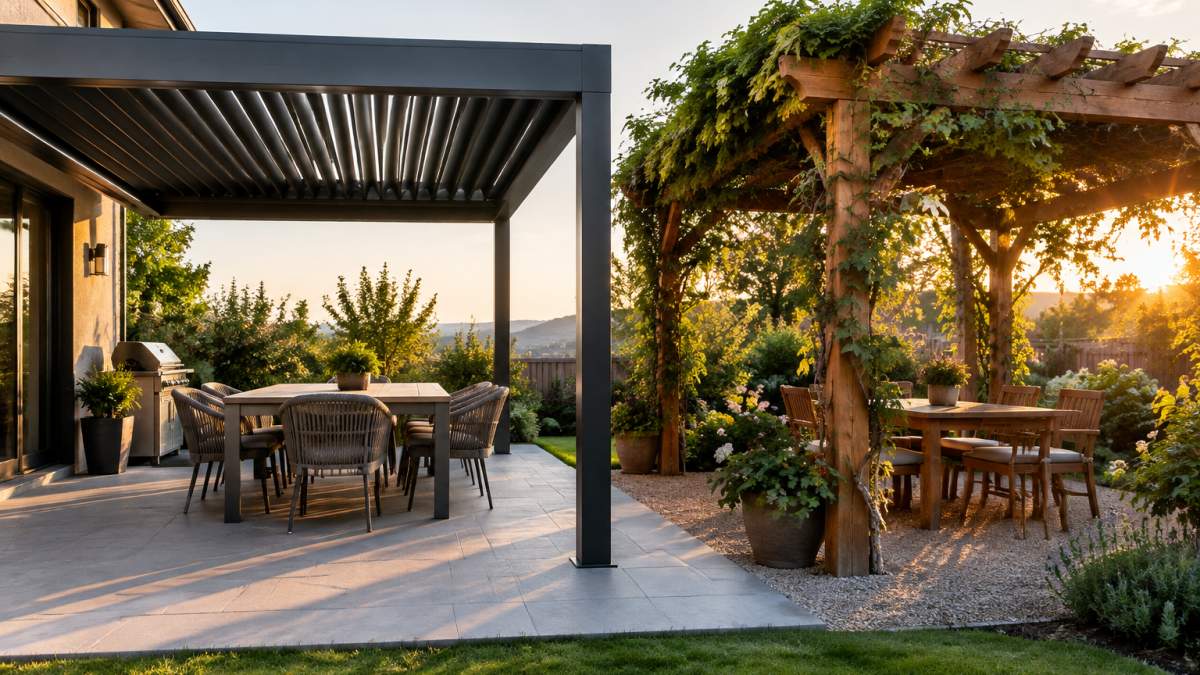
The aluminum vs wood pergola decision comes down to one question: do you want a structure that looks like timber but behaves like metal, or one that looks like timber and behaves like timber? This choice plays out constantly for homeowners planning permanent outdoor dining areas. Industry data from Boco Modern's 2026 pergola industry report shows maintenance-free aluminum and vinyl pergolas are now the fastest-growing segment in the outdoor shade market. That growth is real, but it does not make wood obsolete.
The trade-off is simple. Aluminum gives you clean lines, powder-coated finishes, and near-zero upkeep. Wood gives you natural grain, warmth, and a look no finish can fully copy. Neither wins outright.
Side-by-Side Comparison at a Glance
| Factor | Aluminum | Wood |
|---|---|---|
| Upkeep | Wipe-down only | Re-stain every 1-3 years |
| Typical lifespan | 20-30 years | 10-15 years |
| Heat behavior | Conducts heat fast | Stays cooler in high heat |
| Look | Clean, modern, uniform | Natural grain, warm |
| Best for | Low-maintenance modern homes | Natural, traditional settings |
Aesthetic Profile: Clean Lines vs Natural Grain
Aluminum suits a modern design aesthetic because its flat profiles and powder-coated aluminum finish hold a crisp architectural style with no warping or checking. Wood wins when natural timber grain matters more than upkeep, which is why Mirador Outdoor's material guide still recommends genuine timber for that look.
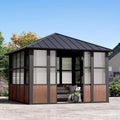
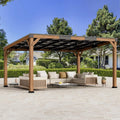
For a cedar option that shows wood's appeal with a hardtop roof, see the Alora Luxury Modern Cedar Gazebo.

Aluminum Pergola vs Wood Cost: What Each Material Really Costs
Budget talk around the aluminum vs wood pergola question usually stops at the sticker price. That is a mistake. Upfront cost is only one line in a longer ledger that includes installation labor, refinishing, and replacement timing. The useful comparison is a 20-year total cost of ownership, not a kit price.
Upfront Price, Installation Labor, and Long-Term Value
Aluminum generally costs more upfront per square foot, while wood often starts cheaper before finishing and staining. The gap narrows fast once you price the full install. Wood needs more on-site cutting, sealing, and fastener work, and a stained finish is usually a separate line item from the kit. Aluminum kits arrive powder-coated and pre-drilled, so labor skews toward assembly and anchoring rather than finishing.
The recurring cost is where the ledger diverges. Most wood structures need re-staining or sealing every one to three years to hold off rot, warping, and swelling. Over a 20-year horizon that is roughly 7 to 20 refinishing cycles, each carrying both material cost and either your weekend labor or a contractor's hourly rate. Aluminum needs almost nothing beyond a seasonal rinse.
A common mistake is comparing raw kit prices and ignoring finish durability and refinishing cycles. Build the full number before you decide: kit price, plus finishing, plus installation labor, plus refinishing cycles over your expected ownership period, plus replacement timing. That is the only figure that lets you compare the two materials honestly.
Resale Value and ROI
Homeowners rarely ask which material adds more equity, and most guides never answer it. The honest answer is that no material guarantees a premium, but a structure that still looks intentional after a decade protects the value you put into it. A wood pergola that has been skipped on re-staining reads as deferred maintenance to a buyer and can become a negotiating point. A powder-coated aluminum structure that still looks crisp at year 10 reads as an amenity. Most practitioners find that the ROI case for aluminum is less about a resale premium and more about avoiding the depreciation that neglected timber invites. If you plan to sell within five years, factor in whether you will actually keep up with a re-staining schedule; if not, the cheaper material can cost you at the closing table.
Watch out: a low kit price that excludes finishing, fasteners, and anchoring hardware is not a real comparison. Ask for the delivered, installed number before you treat one material as cheaper than the other.
Wood Pergola Maintenance: The Real Time and Money Commitment
Wood pergola maintenance is the single biggest hidden cost in the comparison. Most wood structures need re-staining or sealing every one to three years to hold off rot, warping, and swelling, according to Breslow's aluminum vs wood comparison. Skip a cycle and moisture resistance drops fast.
Aluminum needs little beyond occasional cleaning.
Watch out: skipping a re-stain on wood does not just look tired, it lets rot and decay set into joints where water pools. That repair bill dwarfs the cost of a can of stain.
Durability, Weather Resistance, and Structural Integrity
Durability is where the two materials split sharply, but the split is not the same in every climate. Most guides give one generic verdict; the useful answer is climate-specific. In high-heat climates, aluminum conducts heat roughly 1,500 times faster than wood, per Stillbury's wood vs aluminum pergola guide, so a metal frame can run hotter to the touch. Wood stays cooler but degrades faster under moisture and UV. Which of those matters more depends on where the structure sits.
How Each Material Handles Heat, Wind, and Moisture
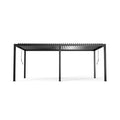
Powder-coated aluminum frames are designed to hold up against wind, rain, and UV exposure. Wood's structural integrity depends heavily on climate and how often you maintain it. Our Alora Modern All-Weather Pergola pairs a powder-coated aluminum frame with galvanized steel louvers rated for winds up to 73 mph and integrated drainage.

Climate-Specific Performance: Coastal, High-Snow, and Arid/High-UV
Coastal and salt-air environments punish both materials differently. Salt accelerates corrosion on bare steel fasteners and on any cut or scratched aluminum edge, so the hardware spec matters as much as the frame. Fastener and finish specification matter in salt-air environments. Wood in salt air also holds moisture longer, which speeds rot at joints. Aluminum wins here, but only if the fasteners and finish are specified for the exposure.
Alora Modern Durable All-Weather Outdoor Pergola With Aluminum Frame And Steel →
High-snow-load regions flip the calculation toward structure, not material. Snow load is a design and engineering question: rafter spacing, beam depth, and footing size determine whether either material survives a heavy winter. Aluminum's consistent dimensional stability means it does not swell, check, or warp under freeze-thaw cycles the way wood does, but a thin aluminum frame will still deflect if it was not engineered for the load. Confirm snow-load and wind ratings against your local requirements before ordering.
Arid and high-UV climates stress finishes more than structures. Intense sun breaks down wood finishes and drives checking and graying, which is why re-staining intervals shorten in the Southwest. A common pattern is that the finish, not the metal, is the failure point in high-UV regions.
Foundation and Permitting Requirements
Foundation and permitting are the most-skipped part of this comparison. Freestanding units need proper anchoring, and attached styles need sound structural attachment to the home. Footing size and depth depend on frost depth, soil, and the load the structure carries, so a local engineer or contractor should confirm them. Permitting rules vary by municipality: many jurisdictions treat a freestanding pergola under a certain height and square footage as an accessory structure that still requires a permit, while attached structures often trigger additional review. Confirm local requirements and load-bearing capacity before ordering, and get the snow-load and wind ratings in writing so the permit reviewer and your installer are working from the same numbers.
Watch out: skipping a re-stain on wood does not just look tired, it lets rot and decay set into joints where water pools. That repair bill dwarfs the cost of a can of stain.
Aluminum Pergola Kits: What to Check Before You Buy
When comparing aluminum pergola kits, check frame construction, finish, hardware, and drainage.
Foundation Requirements and Permitting
Foundation requirements differ by product. Freestanding units need proper anchoring, while attached styles need sound structural attachment to the home. Permitting rules vary by municipality, so confirm local requirements and load-bearing capacity before ordering.
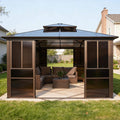
If assembly time is a concern, our guide to gazebo assembly time breaks down realistic timelines. For a concrete kit example, see the Alora 10x19 aluminum pergola.
Louvered Pergola Options and Smart Home Integration
A louvered roof is the feature that separates modern aluminum pergolas from older fixed designs. Adjustable louvers control shade and airflow, and some designs channel rain away through integrated drainage. This is the angle most wood-versus-aluminum guides skip entirely.
Smart integration is the other gap. Some louvered pergolas offer remote-controlled LED lighting for evening use. The Alora Louvered Pergola with LED Lights includes warm 3000K LED lighting for evening use.

Choosing the Right Pergola for Your Backyard
Pick aluminum if low maintenance, clean lines, and a long material lifespan top your list. Pick wood if natural grain and warmth matter more than upkeep. Climate decides the rest: high heat favors timber's cooler feel, while wet and windy regions favor aluminum's corrosion resistance.
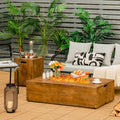
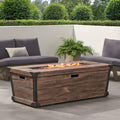
Plan the finished space, not just the structure. A complementary piece like our Alora fire pit table helps define the entertaining area. A structure that still looks intentional years after installation tends to suit the outdoor space well over time.
Frequently Asked Questions
What are the disadvantages of aluminum pergolas?
In high-heat climates, an aluminum frame can feel hot to the touch and may radiate warmth under direct sun. Bare metal can also look industrial unless it has a powder-coated finish or wood-look extrusion. Finally, aluminum kits with louvered roofs cost more upfront than basic wood frames, so the savings show up over time through lower maintenance rather than at purchase.
Which pergola material requires less maintenance, aluminum or wood?
Aluminum wins on upkeep. Powder-coated aluminum resists rot, warping, swelling, and insect damage, and needs only occasional rinsing. Wood pergolas generally need periodic re-staining or sealing to keep their structure and appearance.
How does aluminum pergola vs wood cost compare over time?
Wood usually costs less upfront but carries recurring costs for stain, sealant, and labor every 1 to 3 years. Aluminum pergola kits cost more at purchase but need almost no upkeep. Over a long ownership period, the cost gap between aluminum and wood can narrow once maintenance and replacement are included.
Are aluminum pergolas ok in high winds?
Yes, when properly anchored. The Alora Modern All-Weather Pergola with a powder-coated aluminum frame and galvanized steel louvers is rated to withstand winds up to 73 mph. Wind performance depends on correct foundation anchoring, so follow the manufacturer's expansion screw and footing instructions rather than relying on the frame rating alone.
Which pergola material looks best with a modern home?
Aluminum fits modern homes best. Its flat, clean profile and powder-coated finishes match contemporary architecture, and the finish options can give a clean, modern appearance with less upkeep. Wood suits rustic, traditional, or craftsman styles where natural grain and genuine timber matter more than minimal maintenance. For a modern home, a louvered aluminum pergola with a low-profile frame reads as an architectural extension rather than an add-on.
The right call depends on how you want to spend your weekends: refinishing timber or actually using the space. At Backyard Sanctuary Supply, we stock weather-resistant structures built for year-round use, with free shipping on most orders within the Continental U.S. Browse our curated pergolas and gazebos to find the frame, finish, and louver setup that fits your yard. Get started with Backyard Sanctuary Supply and turn your patio into a space you never want to leave.