7 Low Maintenance Outdoor Pergola Design Ideas That Last
Last Updated: October 30, 2026
Quick Summary
The best low maintenance outdoor pergola design ideas start with powder-coated aluminum or galvanized steel hardtop structures, which need only two washings a year plus one spring inspection. Adjustable louvered roofs shed debris and route rainwater through the posts, while hard roofs beat fabric canopies for low upkeep.
- Powder-coated aluminum needs hose-down or mild soap cleaning 2 to 3 times per year with no refinishing.
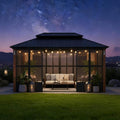
- The Alora all-weather aluminum louvered pergola withstands winds up to 73 mph.
- Treated wood requires sealing every 12 to 18 months and staining every 2 to 3 years.
- Skip climbing plants like ivy and wisteria if you want low care, since they demand constant pruning.
- Aluminum and steel structures range from $1,119.80 to $5,499.97 with free shipping on most Continental U.S. orders.
Table of Contents
- 1. The All-Weather Aluminum Louvered Pergola
- 2. Low-Maintenance Pergola Materials That Skip the Scraping
- 3. Pergola Shade Ideas That Need No Upkeep
- 4. Pergola Privacy Screen Ideas Without Climbing Vines
- 5. Pergola Ideas for Small Backyards and Tight Patios
- 6. Weather, Wind, and Drainage: Matching the Design to Your Climate
- 7. Total Cost of Ownership: What Low Maintenance Really Saves
- Choosing Your Low-Maintenance Pergola at Backyard Sanctuary Supply
- Frequently Asked Questions
1. The All-Weather Aluminum Louvered Pergola
Low maintenance outdoor pergola design ideas start with one decision: choosing a structure that does the upkeep work for you. Aluminum louvered pergolas can end that cycle.
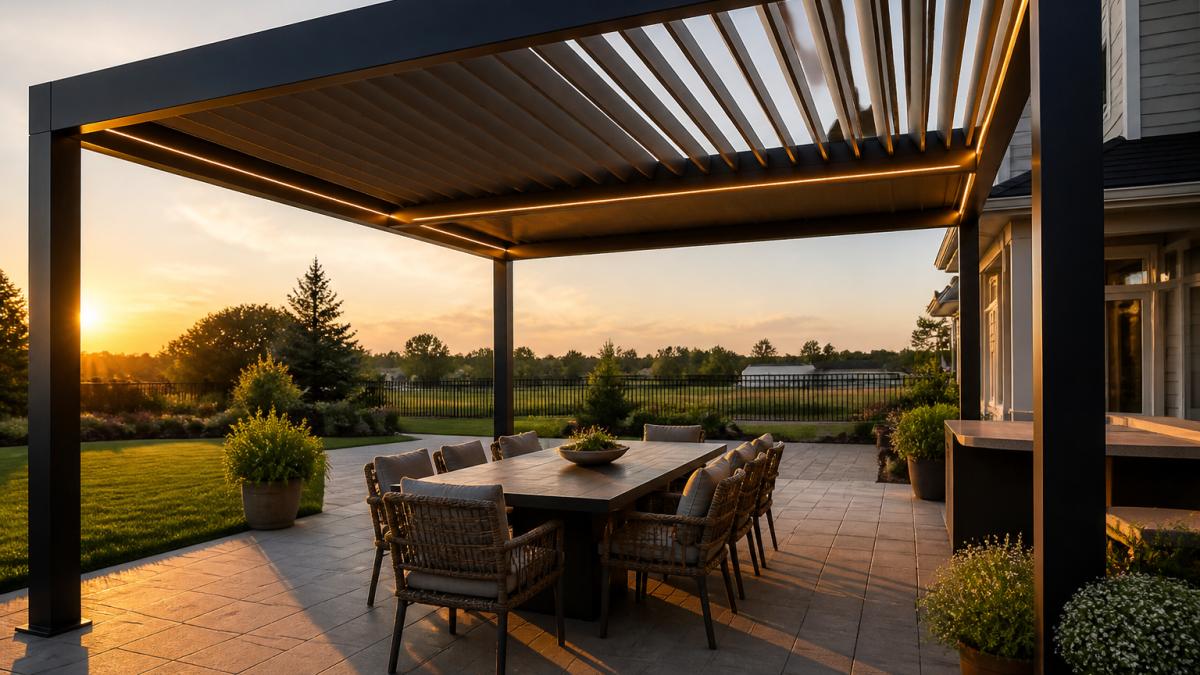
An aluminum louvered pergola is a freestanding or attached shade structure with adjustable horizontal slats in the roof that tilt open and closed.
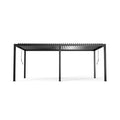
(/products/10x19ft-alora-modern-durable-all-weather-outdoor-pergola-with-aluminum-frame-and-steel-louvers-sak32691) pairs galvanized steel louvers with a powder-coated aluminum frame, and its listing states it withstands winds up to 73 mph.Watch out: Even low-maintenance pergolas are not maintenance-free. Motorized and crank components benefit from occasional lubrication, and owners routinely underestimate this. A yearly check keeps the mechanism smooth.
2. Low-Maintenance Pergola Materials That Skip the Scraping
Material choice decides how much work your pergola demands each season, and "low maintenance" means different things depending on what the structure is made of. Instead of a vague promise, here is what each common material actually asks of you year to year, plus how the upkeep adds up over a decade.
Upkeep Schedules by Material
| Material | Typical cleaning | Sealing / refinishing | Inspection cadence |
|---|---|---|---|
| Powder-coated aluminum | Hose-down or mild soap 2-3x per year | None on the finish; lubricate louver or motor mechanisms yearly | Check fasteners and moving parts each spring |
| Galvanized steel hardtop | Soap-and-water wash 2x per year; touch up scratches promptly | None on galvanized surfaces; spot-paint bare metal | Check anchors, roof seams, and drainage each spring and fall |
| Vinyl | Soap-and-water wash 2-3x per year | None | Check for cracking, loose joints, and fading annually |
| Composite | Soap-and-water wash 2x per year | None; some composites fade or chalk over time | Check joints and fasteners annually |
| Treated wood | Spot-clean as needed | Seal every 12-18 months; stain every 2-3 years; inspect for rot and insects each spring | Annual inspection plus refinishing |
A common pattern among owners is to underestimate the wood column: sealing a medium pergola is a weekend project once you count prep, drying time, and cleanup, and skipping a cycle accelerates graying and rot. Aluminum and steel invert that, a few hours of cleaning and a spring fastener check replace the annual refinishing ritual.
How the Materials Compare on Durability and Weather
- Aluminum: Rust-resistant, holds a powder-coated finish through sun and rain, and never needs sanding. The trade-off is that thin-walled frames can dent, so check gauge and wall thickness rather than price alone.
- Galvanized steel: The strongest option against wind and snow loads, which is why it dominates hardtop roofs. Watch for scratches that expose bare metal and touch them up before rust starts.
- Vinyl: Rot-resistant and washable, but less rigid than wood, fiberglass, or metal, per Yardzen's pergola design guide. It suits budget shade but trades lifespan for the savings.
- Composite: Splinter-free and paint-free, but heavier than vinyl and prone to gradual color shift under strong UV.
Climate Fit Matters More Than the Label
"Low maintenance" is climate-relative. In coastal air, salt accelerates corrosion on fasteners and bare steel, so specify stainless or coated hardware and rinse metal frames more often. In snowy regions, a sloped hardtop sheds load better than an open slat roof, and you should clear snow rather than let it sit. In hot, dry, high-UV climates, powder-coated aluminum and composite resist fading better than vinyl, which can chalk.
What the Upkeep Actually Costs Over Time
Instead of quoting a single sticker price, compare total cost of ownership: purchase price plus sealer, stain, brushes, and your weekends. Wood's lower purchase price is offset by recurring refinishing supplies and labor every year or two, plus earlier repair or replacement.
3. Pergola Shade Ideas That Need No Upkeep
Shade should not mean fabric that mildews or a retractable canopy that jams halfway through a party. The lowest-upkeep shade comes from hard roof systems, and the right one depends on how you want to balance sun control, rain protection, airflow, and water runoff. Here is how the main roof options actually perform.
Roof System Comparison: Shade, Rain, Airflow, and Drainage
| Roof type | Shade control | Rain protection | Ventilation | Drainage behavior | Upkeep |
|---|---|---|---|---|---|
| Open slat (fixed) | Partial, moves with the sun | Minimal, rain passes through | Excellent | Water falls straight through; no gutters | Debris can lodge between slats; periodic clearing |
| Louvered (adjustable) | Full, tilt to any angle | Good when closed; integrated gutters route water to posts | Excellent when open | Channels water through frame and posts | Lubricate mechanism yearly; clear gutters |
| Fixed hardtop (steel or aluminum) | Full, permanent | Full | Limited unless ventilated | Sloped roof sheds to gutters or edge | Wash roof and check seams yearly |
| Retractable fabric or canopy | Adjustable | Light rain only; fabric can sag and mildew | Good when retracted | Fabric sheds water poorly; motor and track wear | Highest, fabric replacement and track service |
| Polycarbonate panel | Full with light transmission | Good | Limited; can trap heat | Sloped panels shed to edge or gutter | Wash panels; check seals |
Match the Roof to Your Worst Weather Week
The practical rule is to design for your worst weather, not your average one. In rainy climates, a louvered roof with integrated gutters or a sloped hardtop keeps water off the patio; an open slat roof will not. In windy regions, a fixed hardtop or a louvered roof rated for wind performs better than fabric, which flaps and wears. In hot, still climates, adjustable louvers let you vent heat that a sealed hardtop traps, which is why ventilated double roofs exist.
Why Hard Materials Beat Fabric for Low Upkeep
Fabric and retractable canopies are the highest-maintenance shade choice: they mildew, fade, sag, and eventually need replacement, and their motors and tracks require service. Hard roofs, louvered, hardtop, and polycarbonate, need washing and occasional gutter clearing instead. Our Alora louvered pergola with LED lights combines adjustable louvers with a hidden gutter system and remote-controlled 3000K LED strip lights. Skip climbing plants like ivy and wisteria if you want low care; they look lovely but demand pruning, trellis repair, and constant trimming away from the structure.

4. Pergola Privacy Screen Ideas Without Climbing Vines
Privacy and low maintenance can coexist. Instead of vines, use fixed or sliding panels: aluminum slat screens, frosted polycarbonate, or wood-slat walls paired with an aluminum frame.
Slat screens block sightlines without blocking airflow, and they never need watering or trimming. For a softer look, choose a louvered side panel that matches the roof. Either way, you get year-round privacy with a hose-down cleaning routine instead of a gardening schedule.
Alora Modern Durable All-Weather Outdoor Pergola With Aluminum Frame And Steel →
5. Pergola Ideas for Small Backyards and Tight Patios
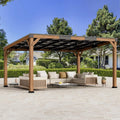
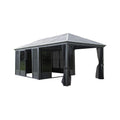
Small spaces reward wall-mounted designs. Our wall-mounted hardtop pergola with sloped polycarbonate roof mounts to an exterior wall and uses a sloped roof for rainwater runoff.

For narrow side yards, choose a single-post or cantilever style and keep furniture low-profile. Space-saving layouts work best when the pergola hugs one edge of the patio and the roof overhangs the seating zone, so you gain shade without losing walkway.
6. Weather, Wind, and Drainage: Matching the Design to Your Climate
Climate should drive the design, not the other way around. In windy regions, choose a structure with a rated wind tolerance and secure anchoring; louvered roofs with integrated drainage handle heavy rain, while hardtops with sloped roofs shed snow.
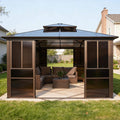
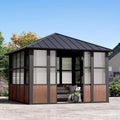
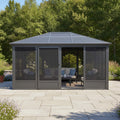
Our double-layer galvanized steel hardtop gazebo pergola uses a ventilated double roof, a sloped roof for drainage, and a pre-drilled oversized stand pole for anchoring. Match the roof to your worst weather week, not your average one.

7. Total Cost of Ownership: What Low Maintenance Really Saves
The sticker price tells half the story. Wood pergolas cost less upfront but demand annual sealer, stain, and labor, and they eventually need repair. Aluminum and steel cost more initially and then mostly need cleaning.
Our aluminum and steel structures range from $1,119.80 for the wall-mounted polycarbonate pergola to $5,499.97 for the 10x19 all-weather louvered pergola, with free shipping on most orders within the Continental U.S.
Choosing Your Low-Maintenance Pergola at Backyard Sanctuary Supply
Ready to stop maintaining and start enjoying? Our curated collection focuses on weather-resistant materials and clean modern design built for year-round use. Before you commit, review the modern gazebo assembly time requirements to plan your installation.
Frequently Asked Questions
What is the lowest-maintenance material for a pergola?
Powder-coated aluminum is the lowest-maintenance pergola material because it resists rust, corrosion, fading, and scratches without sealing, staining, or repainting. Aluminum resists rust, corrosion, fading, and scratches as its listing describes. Vinyl costs less upfront but is generally less rigid than wood, fiberglass, or metal, so aluminum is a sturdier long-term pick for a low maintenance pergola.
Do aluminum pergolas need maintenance?
Aluminum pergolas need very little, but not zero. Rinse the frame and louvers with a garden hose a few times a season to clear pollen, dust, and leaf debris. Check the drainage channels before rainy months so water flows through the posts instead of pooling. If your pergola has a crank or motor, lubricate the moving parts once a year. Buyers often underestimate this small step on motorized units, and it is the main reason a mechanism starts to stick.
How can I add privacy to a pergola without using climbing plants?
Use fixed or sliding panels instead of vines. Wood-slat walls can deliver a wood tone and privacy while avoiding wood maintenance, especially when paired with an aluminum frame. Other options include louvered side panels, outdoor fabric roller shades, and decorative metal screens with a pattern. All of them install in an afternoon, need only occasional rinsing, and never drop leaves into your gutters or need pruning.
What can I put on top of a pergola for low-maintenance shade?
Choose a hardtop or louvered roof over fabric. Galvanized steel hardtops provide a fixed roof that does not rely on fabric. Adjustable aluminum louvers let you open the roof for sun and air, angle it for filtered shade, or close it fully for rain protection. Both options wipe clean and need no seasonal removal. Fabric canopies are the higher-effort choice because they trap debris and wear out faster.
Are freestanding or attached pergolas easier to maintain?
Attached pergolas usually need less upkeep because the house wall carries part of the load, so there are fewer posts to inspect and anchor. Freestanding pergolas are more flexible for odd yard shapes and rooftops but require secure footings that you should check each season. Either style stays low maintenance when built from aluminum or steel. Whichever you pick, confirm local permit rules before installation, since attached structures often fall under different code requirements.
The challenge is simple: most pergolas demand more work than their owners expect. We built Backyard Sanctuary Supply to change that with powder-coated aluminum frames, galvanized steel louvers, and integrated drainage that hold up season after season. Explore the collection and turn your backyard into a space you never want to leave.