Synthetic Wicker vs Metal Furniture for Longevity
Last Updated: October 31, 2026
Quick Summary
Quality synthetic wicker over a powder-coated aluminum frame can last 10 to 25+ years with proper care, while cheap PVC wicker fails in 3 to 5 years. Aluminum outlasts steel because it does not rust, though metal is easier to repair than woven resin.
- Resin synthetic wicker lasts 15-25+ years with proper care, but PVC wicker rarely exceeds 3-5 years.
- Powder-coated aluminum resists corrosion and salt air, making it the strongest metal for coastal yards.
- Steel and wrought iron rust wherever the powder coating chips, and rust spreads under the finish.
- Rinse coastal pieces monthly with fresh water to remove salt film that dulls resin and speeds corrosion.
- A damaged resin weave is hard to repair, so owners often replace the piece or frame instead.
Table of Contents
- Synthetic Wicker vs Metal Patio Furniture: The Longevity Question
- Side-by-Side Comparison: Lifespan, Weather Resistance, and Care
- How Long Does Outdoor Furniture Last? Realistic Ranges by Material
- Aluminum vs Steel Outdoor Furniture: Which Metal Frame Lasts Longer
- How to Prevent Rust on Outdoor Metal Furniture
- How to Maintain Synthetic Wicker Furniture Through Every Season
- Frame and Weave Quality: What Separates a 20-Year Set From a 5-Year One
- Choosing the Right Set for Your Backyard
- Frequently Asked Questions
Synthetic Wicker vs Metal Patio Furniture: The Longevity Question
Synthetic wicker is a woven outdoor furniture material made from resin or PVC strands over a frame, and it has become the default choice for homeowners who want a natural look without the upkeep. Metal patio furniture, by contrast, covers aluminum, steel, and wrought iron. The longevity question between them comes down to three things: frame material, weave quality, and climate. Buyers often ask this before investing in a permanent outdoor setup. The short answer: quality synthetic wicker and powder-coated aluminum can last a decade or more with proper care, while cheap PVC wicker and untreated steel tend to fail sooner. Below, we break down realistic lifespan ranges, failure modes, and how to tell a 20-year set from a 5-year one.
Side-by-Side Comparison: Lifespan, Weather Resistance, and Care
Synthetic wicker wins on low maintenance and comfort, while metal wins on structural rigidity and repairability. Neither material is universally better, and the gap narrows or widens depending on how each is built.
| Factor | Synthetic Wicker | Aluminum | Steel / Wrought Iron |
|---|---|---|---|
| Realistic lifespan | 10-25+ years (resin); 3-5 years (cheap PVC) | 15-20+ years | 10-15 years with care; rust risk high |
| Weather resistance | Strong; resin resists moisture and UV | Excellent; rust-proof | Moderate; rusts if coating chips |
| Sun and fade resistance | Good with UV-stabilized resin | Excellent | Good; coating dependent |
| Maintenance | Rinse and wipe | Rinse and wipe | Touch-up painting, rust checks |
| Repairability | Weave hard to repair; frame replaceable | Weldable, refinishable | Weldable, refinishable |
| Best for | Lounging, low-upkeep patios | Year-round exposure, coastal | Traditional looks, covered areas |
The takeaway: aluminum and quality resin wicker are the two materials that reliably reach the far end of those ranges.
How Long Does Outdoor Furniture Last? Realistic Ranges by Material
Outdoor furniture lasts anywhere from 3 to 25 years depending on material, construction, and climate. Synthetic wicker spans a wide range: Wicker Paradise's guide to natural vs synthetic wicker describes outdoor synthetic wicker lasting 15-25+ years with proper care. A separate durability guide from Golden Teak's teak vs aluminum vs wicker comparison estimates synthetic resin wicker at 10-20 years and notes that PVC wicker rarely lasts more than 3-5 years.
Treat these as general ranges rather than guarantees. Resin wicker built on a solid frame and kept out of standing water can last a long time, while thin PVC weave on a flimsy frame tends to have a much shorter life regardless of how it is described at purchase.
What Shortens a Set's Life: Failure Modes to Watch
- UV degradation: unstabilized resin turns brittle and fades under constant sun exposure.
- Weave unraveling: loose or thin strands pull free at stress points like armrests.
- Frame rust: steel frames rust from the inside once moisture enters a chip in the coating.
- Cushion breakdown: cheap foam collapses and covers mildew in humid conditions.
- Freeze-thaw damage: trapped water expands and cracks welds or weave in cold winters.
Aluminum vs Steel Outdoor Furniture: Which Metal Frame Lasts Longer
Aluminum generally outlasts steel outdoors because it does not rust the way steel does. Powder-coated aluminum resists corrosion, moisture, and salt air, which makes it the stronger pick for year-round exposure and coastal yards. Steel and wrought iron are heavier and more rigid, but they rust wherever the powder coating chips or scratches, and that rust spreads under the finish.
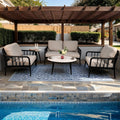
Weight and wind resistance favor steel on paper, but a well-built aluminum frame with sturdy legs holds its own and moves far more easily. For a reader who wants an aluminum option, our 5PC Outdoor Aluminum Patio Furniture Modern Chat Sofa Conversation Set pairs tapered tubular frames with Sunbrella upholstery and sintered stone tabletops.
Watch out: a steel frame sold without a clear powder-coat spec is the single most common cause of a "metal furniture" purchase turning into a rust repair project within a few seasons.
How to Prevent Rust on Outdoor Metal Furniture
Rust prevention on metal patio furniture comes down to keeping the protective coating intact and keeping water from pooling in joints, welds, and feet. The mechanism matters: steel and wrought iron rust when moisture and oxygen reach bare metal, and once corrosion starts under a powder coat it creeps beneath the finish and lifts it, which is why a small chip becomes a flaking patch within a season or two.
Match the routine to the metal type. Treating all metal the same is the most common maintenance mistake.
- Powder-coated aluminum: rinse monthly with fresh water, wipe with mild soap, and inspect welds and feet each season. Aluminum needs little rust-related attention and is well suited to humid and coastal settings.
- Powder-coated steel: inspect the frame each season for chips, scratches, and worn spots, especially at welds, feet, and fastener holes where water collects. Touch up bare metal immediately with matching exterior-grade paint.
- Wrought iron: needs the most attention because it rusts fastest at welds and feet. Check the finish every few months, touch up chips promptly, and keep the piece out of standing water.
Seasonal routine:
- Inspect the frame each season for chips, scratches, and worn spots.
- Touch up bare metal immediately with matching exterior-grade paint.
- Dry the frame after rain rather than letting water sit in joints.
- Store or cover metal furniture during freeze-thaw months.
- Rinse salt air off coastal pieces monthly with fresh water.
Repairability is a real advantage for metal. A chipped powder coat can often be sanded, primed, and repainted, and a cracked weld can be repaired by a local fabricator. A damaged resin weave is generally harder to repair strand by strand, so it often means replacing the piece or the frame. The trade-off is that metal asks more of you up front, and a steel frame without a clear powder-coat spec is a common source of rust problems within a few seasons.
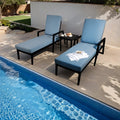
If rust is a concern, our 3PC Outdoor Aluminum Patio Furniture Chaise Lounge Set features a lightweight aluminum frame.

How to Maintain Synthetic Wicker Furniture Through Every Season
Maintaining synthetic wicker is simple in principle: rinse it, dry it, and protect it from standing water and harsh cleaners. Resin weave does not need oiling or sealing, which is a large part of its appeal.
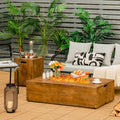
Panther Outdoor Patio Wicker and FSC Wood Seating Set →
How resin wicker fails. UV-stabilized resin resists sun damage, but unstabilized or low-grade resin turns brittle and fades under constant exposure. Weave unravels when loose or thin strands pull free at stress points like armrests and seat fronts.
Seasonal routine:
- Spring: hose down the frame and weave, then wipe with mild soapy water. Check armrests and seat fronts for loose strands.
- Summer: rinse off pollen and sunscreen residue; keep cushions dry and stand them up after rain.
- Fall: clear debris from crevices before it traps moisture, and inspect the frame under the weave for chips.
- Winter: move pieces to a covered spot or use breathable covers; avoid sealed plastic that traps condensation.
Skip abrasive brushes and bleach on the resin. A soft brush and mild soap protect the finish. Cushion covers that unzip make seasonal cleaning far easier, and the 7-piece all-weather rattan set uses zip-off covers for exactly that reason.

Climate-specific care. Coastal salt air leaves a film that dulls resin and accelerates frame corrosion, so rinse coastal pieces monthly with fresh water. Intense UV regions reward UV-stabilized resin and fade-resistant fabric; without stabilization, color loss shows within a few seasons.
Repairability is the weak point. A cracked or unraveled strand is difficult to repair invisibly, and most owners end up replacing the piece or the frame rather than re-weaving it.
Frame and Weave Quality: What Separates a 20-Year Set From a 5-Year One
Frame and weave construction decide longevity more than the material label on the box. A higher-quality set generally uses a powder-coated aluminum frame and tightly woven UV-stabilized resin strands. Lower-cost sets often use thinner PVC strands over a lighter frame with looser weaving.
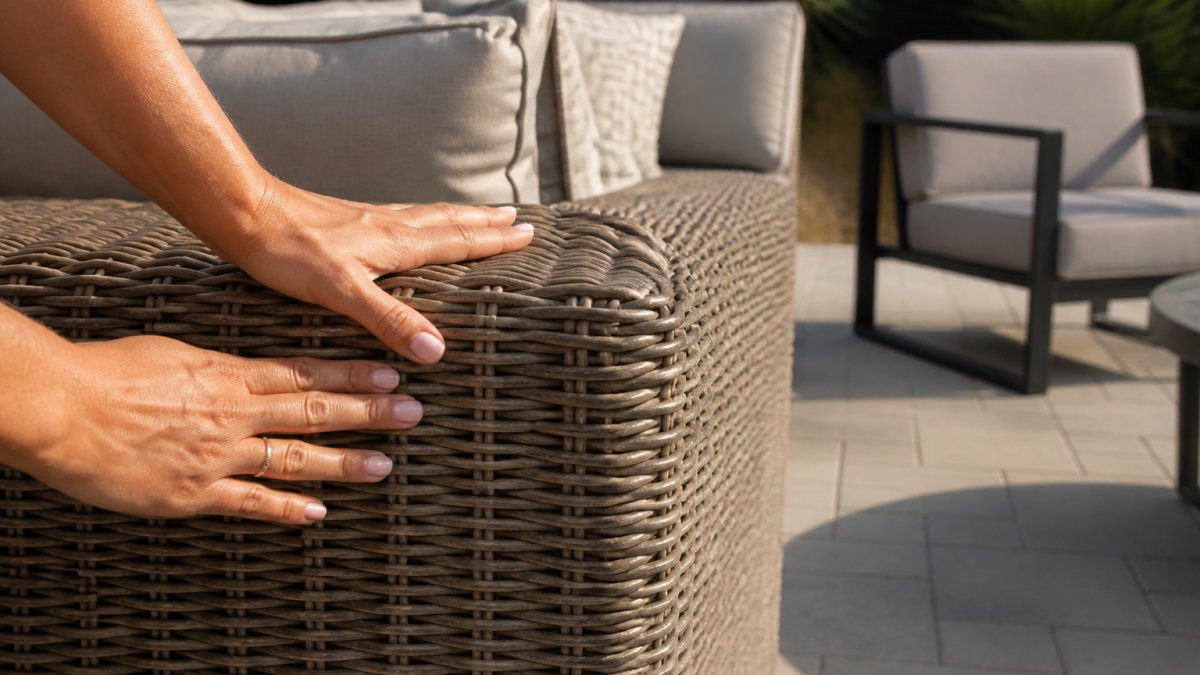
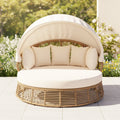
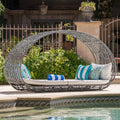
Check a few things before buying: strand thickness and tightness, frame material under the weave, and whether the weave is UV-stabilized. Our Alora Large 2-Person Abigal Outdoor Wicker Daybed With Aluminum Frame And Cushions combines an aluminum frame with a weather-resistant wicker look and water-resistant cushions.

Choosing the Right Set for Your Backyard
Consider climate and upkeep alongside looks. Coastal or humid yards generally favor aluminum and resin wicker. Covered porches can suit steel and wrought iron. Sun-exposed patios generally benefit from UV-stabilized resin and fade-resistant fabric.
Match the set to how you actually use the space. A lounging zone wants wicker and deep cushions; a dining or conversation area benefits from aluminum's rigidity. Our Alora 7-Piece Outdoor All-Weather Rattan Patio Sofa Set With Cushions covers the lounging case, while the 5PC Outdoor Aluminum Patio Furniture Modern Chat Sofa Conversation Set suits hosting. Whichever you pick, confirm the frame material and weave spec first, then the style.
Frequently Asked Questions
Does synthetic wicker or metal patio furniture last longer?
It depends on the metal. Powder-coated aluminum frames and quality resin wicker both hold up for 10 to 20 years or more with proper care. Steel and wrought iron can match that lifespan, but only if the protective coating stays intact, since any chip or scratch exposes bare metal to rust. PVC wicker is the weak link on the wicker side, with one durability guide noting it rarely lasts more than 3 to 5 years. Construction quality matters more than the material category itself.
How long does synthetic wicker patio furniture typically last?
Published estimates range widely, and lifespan depends on resin type, weave density, and how the piece is stored and cleaned. Quality resin wicker kept under a cover or in a sheltered spot during the harshest months can last many years.
Is aluminum or steel better for outdoor furniture?
Aluminum resists rust by nature, which makes it the lower-risk choice in humid, coastal, or rainy climates. Steel is stronger and heavier, so it resists wind better and suits large structures, but it needs a flawless powder coating to avoid corrosion. For many residential patios, powder-coated aluminum is a practical choice for longevity and low maintenance. Steel makes sense when structural rigidity matters more than rust exposure.
How do you prevent rust on metal patio furniture?
Keep the powder coating intact and dry the frame after rain. Touch up chips and scratches promptly with a matching paint or coating, since rust starts at exposed metal. Store or cover steel and wrought iron pieces during winter, and avoid leaving them in standing water or on damp ground. Wipe down salt spray if you live near the coast. Aluminum needs far less attention, but rinsing it periodically still removes grit that can dull the finish.
Which outdoor furniture material needs less maintenance?
Synthetic wicker generally wins on routine upkeep: rinse with mild soap, brush out debris trapped in the weave, and cover it for winter. Metal needs similar cleaning plus coating checks, and steel or iron demands touch-ups whenever the finish is compromised. Both benefit from covers and cushions brought inside during storms. The real difference is failure risk: a neglected metal frame rusts, while neglected wicker mostly just looks tired.
The real challenge is not choosing between wicker and metal. It is finding pieces built well enough to justify either. Backyard Sanctuary Supply LLC curates weather-resistant outdoor furniture with clean modern design, free shipping on most orders within the Continental U.S., and materials chosen to hold up year-round. Explore the collection and build a backyard that lasts.