How to Put an Outdoor Kitchen Under a Pergola Safely
Last Updated: October 29, 2026
Quick Summary
Yes, you can plan an outdoor kitchen pergola setup if the structure is rated for the load, the roof clears the grill, and the space vents smoke properly. Match the grill to the roof, keep at least two sides open, and never enclose all four sides.
- Gas and electric grills produce less ember risk than charcoal or wood-fired units.
- The grill hood must open fully without touching the roof, with room for smoke to rise.
- Open-slat pergolas vent smoke through the gaps but shed little wind-driven rain.
- Solid roofs need a ridge vent, gable vent, or high edge gap to release smoke.
- Check the grill manual, local codes, HOA rules, and insurance before ordering appliances.
Table of Contents
- Can You Put an Outdoor Kitchen Under a Pergola?
- Can You Put a Grill Under a Pergola? Appliance and Roof Checks
- Pergola Grill Clearance: Distances That Decide the Layout
- Outdoor Kitchen Ventilation by Grill and Roof Type
- Covered Outdoor Kitchen Ideas That Work Under a Pergola
- Permits, Codes and Fire Safety Before You Build
- Plan Your Pergola Kitchen With Backyard Sanctuary Supply
- Frequently Asked Questions
Can You Put an Outdoor Kitchen Under a Pergola?
Yes, you can plan an outdoor kitchen pergola setup, provided the structure is rated for the load, the roof clears the grill, and the space vents smoke properly. The short answer is a design question, not a yes-or-no one.
The outdoor kitchen pergola pairing works because a pergola defines the space without sealing it in. You get shade and rain protection while keeping an open-air feel.
What the Structure Has to Handle
A pergola over a cooking area carries three loads a plain pergola does not: heat, moisture, and smoke. Your structure has to manage all three without warping, rusting, or trapping fumes.
Here is what actually matters:
- Heat tolerance. Roof panels and beams near the grill must resist radiant heat. Wood chars. Aluminum and steel hold up better.
- Load rating. A grill island, refrigerator, and countertop add serious weight. The structure and its footings must be rated for it.
- Rain shedding. A solid roof needs gutters or slope. A louvered roof needs drains.
Watch out: buying a decorative pergola rated only for shade, then bolting a built-in grill island under it. The structure may not carry the load or the heat.
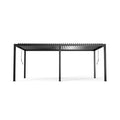
If you want a roof that adjusts to sun and rain, the Alora Premium Outdoor Aluminum Louvered Patio Pergola With LED Lights offers adjustable rotating louvers and a hidden gutter system.

Can You Put a Grill Under a Pergola? Appliance and Roof Checks
You can put a grill under a pergola if the roof clears the grill by a safe margin and the roof material resists heat. The appliance and the roof must be matched to each other, not chosen separately.
Run through these checks before you commit:
- Match the grill to the roof. Gas and electric grills produce less ember risk than charcoal. Charcoal and wood-fired units throw sparks and heavy smoke.
- Check the roof material. Solid wood or fabric panels sit too close to open flame. Metal, hardtop, or louvered aluminum roofs handle heat far better.
- Confirm overhead clearance. The grill hood must open fully without touching the roof. Smoke needs room to rise and escape.
- Verify the structure rating. The pergola or gazebo must be rated for the grill's heat and the island's weight.
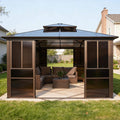
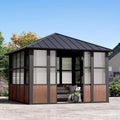
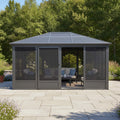
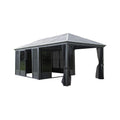
If your heart is set on charcoal, a purpose-built grill gazebo with a hardtop roof is the safer route than a shade pergola. The Alora Premium Outdoor Hardtop Wooden BBQ Grill Gazebo has a metal pent roof and built-in tool hooks.

Pergola Grill Clearance: Distances That Decide the Layout
Pergola grill clearance is the set of distances that decide whether your layout is safe and comfortable. Exact figures come from your grill's manual and local code, so treat these as planning rules, not fixed law.
Here is how to think about the gaps:
- Overhead clearance: enough room for the hood to open fully and for smoke to rise past the roof edge.
- Side clearance: space between the grill and any post, wall, or combustible material.
- Walkway clearance: room to move behind the cook without bumping the island.
A large built-in island eats space fast.
Watch out: squeezing a big island under a small pergola. Measure the island's full footprint plus clearance first, then size the structure around it.
Outdoor Kitchen Ventilation by Grill and Roof Type
Outdoor kitchen ventilation is the difference between a comfortable cook space and a smoke-filled box. The roof type and the grill type together decide how smoke and heat escape. The unique angle here is matching the ventilation strategy to the specific roof, because an open-slat pergola and a solid louvered roof behave very differently under load.
How Each Roof Type Behaves
- Open-slat pergola. The gaps between slats act as a continuous vent. Smoke rises and escapes through the roof plane, and crossflow from open sides clears the space quickly. The trade-off is rain: open slats shed little water, so wind-driven rain reaches the cooking zone.
- Solid roof (hardtop, metal, or shingled). A solid roof traps smoke and heat underneath unless the sides are open and the roof has a ridge vent, gable vent, or high edge gap. Without an exit path, smoke rolls along the underside and stains or heats the structure.
- Louvered roof. Adjustable louvers can be angled to vent smoke out while shedding rain. The key is the louver angle and the perimeter gap: louvers pitched to drain water still need an open path for smoke at the high side. A louvered roof with all four sides enclosed defeats the purpose.
Matching the Grill to the Roof
| Grill Type | Best Roof Match | Ventilation Strategy |
|---|---|---|
| Gas | Open-slat or louvered | Open sides, louvers angled to vent smoke |
| Electric | Any roof with open sides | Keep two sides open for crossflow |
| Charcoal | Hardtop with high clearance | Strong crossflow, hood up, spark screens |
| Wood-fired | Dedicated grill gazebo | Full open front, high roof peak |
The rule is simple: never enclose all four sides. Smoke needs an exit path. A louvered roof helps because you can angle the slats to push fumes out while keeping rain off.
When a Hood or Powered Vent Is Worth It
Most outdoor kitchens under a pergola do not need a powered hood. A hood becomes worth considering when:
KoKoMo Outdoor Kitchen BBQ Island with 12' x 12' Pergola – Built-In 4-Burner →
- The grill sits under a solid roof with limited side openings.
- The cooking zone is recessed against a wall or house.
- You cook frequently on high heat or with charcoal.
A hood must be rated for outdoor use and ducted to clear the roof or wall, and it adds electrical work and cost. For most open-slat and louvered pergola setups, crossflow and an open high side do the job without one.
Rain, Wind, and Smoke in Practice
A pergola is not a sealed room. Expect wind-driven rain to reach the cooking zone under open slats, and expect smoke to drift toward the prevailing wind side. Site the grill so the prevailing breeze carries smoke away from seating, and keep at least two sides open. In cooler months, a patio heater keeps the space usable without adding another open flame under the roof.
Covered Outdoor Kitchen Ideas That Work Under a Pergola
Covered outdoor kitchen ideas that actually work share one trait: they plan the layout around airflow and traffic first, then add the finishes. Here are layouts that hold up in practice.
- The straight-run island. Grill, prep space, and fridge in one line under the pergola edge. Simple airflow, easy build.
- The L-shaped island. Wraps a corner for more counter space, leaving two sides open for crossflow.
- The pergola-and-island combo. A single unit that pairs a built-in grill, fridge, and lighting under one roof.
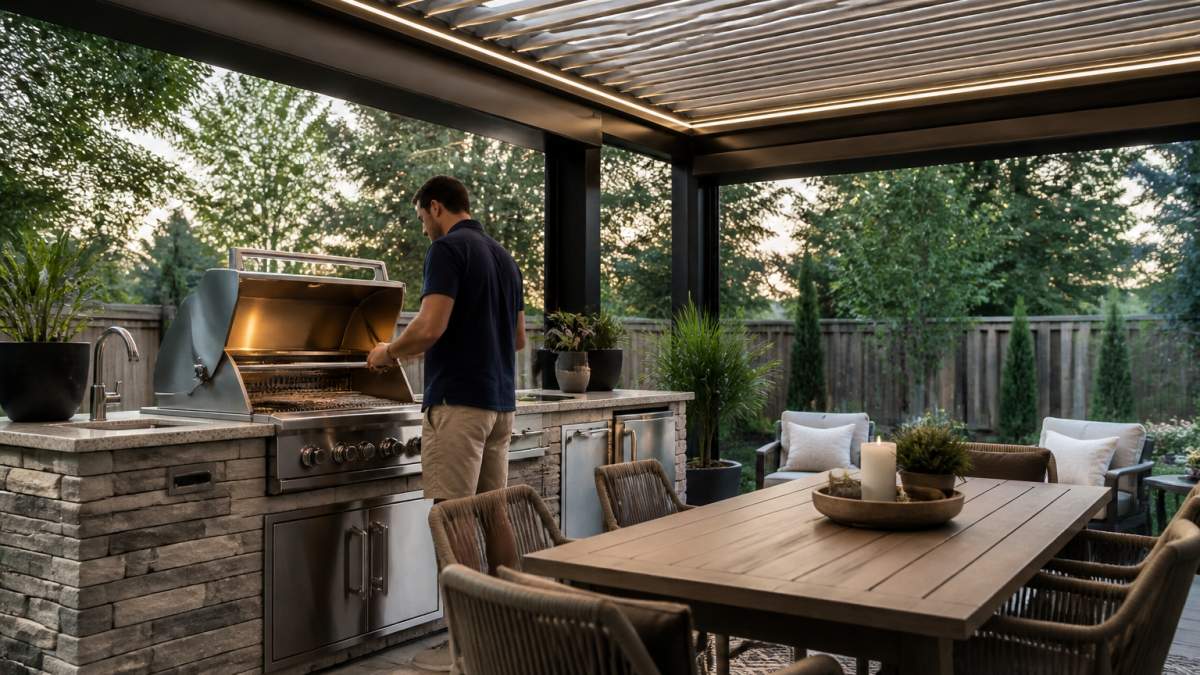
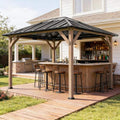
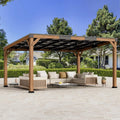
The KoKoMo Outdoor Kitchen BBQ Island with 12' x 12' Pergola bundles a four-burner grill, refrigerator, and lighting under one structure with a 12' x 12' pergola.

Permits, Codes and Fire Safety Before You Build
Permits and fire safety come before the fun part. Pergola kitchens often need a check against local building codes, and fire safety rules govern how close a grill can sit to combustible materials. The unique angle here is the sequence: approvals and clearances should be settled before you order a single appliance, because the grill you choose and the roof you build determine what you are allowed to install.
Fire Clearances: What Actually Governs the Distance
There is no single national clearance number for a grill under a pergola. The distance that matters comes from several sources, and you follow the strictest one:
- The appliance manual. Every gas, charcoal, and wood-fired grill lists minimum clearances to combustible overhead and side surfaces. These are manufacturer requirements, not suggestions, and they override any generic rule of thumb.
- The roof material. A combustible roof (wood, fabric, some composites) needs more separation from heat and embers than a noncombustible one (steel, aluminum, concrete board). If your manual specifies a clearance to combustibles, a wood pergola roof must meet it or be replaced with a noncombustible panel above the cooking zone.
- Local fire and building code. Local building and fire codes address outdoor cooking appliance placement, clearance to combustibles, and LP-gas cylinder storage. Your local amendments can be stricter.
A practical pattern many builders follow: keep the grill hood and any side burner at least the manual's stated clearance from combustible beams, and add a noncombustible back panel or heat shield where the island sits close to a wood post. Never assume a decorative pergola rated for shade can accept a built-in grill without checking the manual first.
Permits: What Usually Triggers One
Permit rules vary by municipality, but common triggers include:
- Permanent structures. A pergola that is anchored to footings, attached to the house, or over a certain height or square footage often needs a building permit.
- Gas lines. Running a natural gas line or installing a fixed LP system typically requires a plumbing or mechanical permit and a licensed trade.
- Electrical work. Built-in fridges, lighting, and receptacles need permitted electrical work in most jurisdictions.
HOA and Insurance Checks
Homeowner associations often limit structure size, height, materials, and sometimes grill type. Your homeowner's insurance may also have conditions for outdoor cooking appliances, particularly for built-in grills and fuel storage. A quick call to both before construction avoids a removal order later.
A Simple Pre-Build Sequence
- Pull the grill manual and note its clearance requirements.
- Confirm the roof material and whether it is combustible at the cooking zone.
- Call the local building department about permits, setbacks, and gas/electrical rules.
- Check HOA covenants and insurance conditions.
- Only then finalize the pergola size, island footprint, and appliance selection.
The U.S. Fire Administration home fire safety guidance is a solid starting point for outdoor cooking safety. For structural, gas, and electrical specifics, your local building department has the final word.
Plan Your Pergola Kitchen With Backyard Sanctuary Supply
Planning a pergola kitchen comes down to three decisions: the right structure, the right clearance, and the right airflow. Nail those, and the rest is finishes and furniture.
At Backyard Sanctuary Supply, we help homeowners match pergolas, gazebos, and islands that fit together. Our collection includes weather-resistant pieces, with free shipping on most orders within the Continental U.S. If you are unsure what fits your yard, start with the structure and work outward.
Frequently Asked Questions
Can I put a grill under a pergola?
Yes, if the roof and clearances suit the grill. A gas grill needs open airflow above and around it, and any pergola with a solid or louvered roof should sit high enough that heat and smoke do not collect near beams. Charcoal grills produce more embers and smoke, so they need more headroom and a noncombustible surface below. Check the grill manual for its required clearance to combustibles, then measure your pergola's beam height and roof material before you commit to a layout.
How much clearance does a grill need under a pergola?
Start with the grill manufacturer's clearance to combustibles, which is printed in the manual. Then allow enough headroom so smoke and heat rise away from the chef. If your pergola is wood, treat every beam within that clearance zone as combustible and keep the grill well forward of it.
Does an outdoor kitchen under a pergola need ventilation?
It needs airflow, and how much depends on the roof. Slatted and louvered roofs vent smoke naturally through the gaps, while solid hardtop roofs trap heat and smoke under the panels. With a solid roof, position the grill at the open edge or under a ridge vent, and never enclose the sides with walls or screens. A single-slope hardtop, like the Alora grill gazebo, can help direct smoke away from the cooking position.
Do I need a permit for an outdoor kitchen under a pergola?
Often yes, but it varies by jurisdiction. Many municipalities require a building permit for a permanent pergola, and may require separate permits for gas lines, electrical circuits and plumbing. Fire codes may also set distance rules between grills and combustible structures. Call your local building department before ordering, ask specifically about pergola permits, gas appliance connections and setback from property lines, and get the answer in writing so your installation plan matches what inspectors expect.
A covered outdoor kitchen rewards careful planning, and the right structure makes the whole build simpler. Backyard Sanctuary Supply offers pergolas, grill gazebos, and integrated kitchen islands selected for lasting materials and clean design. Explore the collection to find the pieces that turn your yard into a space you never want to leave. Get started with Backyard Sanctuary Supply and build an outdoor kitchen you will use all year.