Is Wrought Iron Furniture Good for Rainy Climates?
Last Updated: November 11, 2026
Quick Summary
Wrought iron furniture is generally a poor match for rainy climates because rain and humidity cause rust once its protective finish is damaged. It performs far better in dry, windy regions, while powder-coated aluminum is usually the safer choice for wet or coastal yards.
- Standing water in joints and humid air give rust more time to work on iron.
- A scratch or chip exposes bare metal, and rust starts there and spreads under the finish.
- Wrought iron needs regular sealing and touch-ups, while cast aluminum needs minimal maintenance.
- Inspect wrought iron each season, dry it after storms, and address chips before they spread.
- Covered patios and pergola-shaded areas can reduce direct rain exposure for wrought iron.
Table of Contents
- Short Answer: Wrought Iron in Wet Climates
- How Rain and Humidity Attack Wrought Iron
- Wrought Iron vs. Cast Aluminum for Rainy Weather
- Can Wrought Iron Furniture Be Left Outside?
- Wrought Iron Furniture Maintenance That Prevents Rust
- Repairing Rust Already on Your Furniture
- Best Outdoor Furniture for Rainy Climates
- Choosing Rain-Ready Pieces for Your Backyard
- Frequently Asked Questions
Short Answer: Wrought Iron in Wet Climates
Wrought iron furniture is generally a poor match for rainy climates, unless you are willing to maintain it closely. Wrought iron is generally a poor match for wet or coastal areas, because the metal rusts quickly once its protective finish is compromised. Wrought iron furniture performs far better in dry, windy regions.
The look of wrought iron is appealing, but the climate decides whether it lasts. If your yard gets regular rain, humidity, or salt air, a weather-resistant material such as powder-coated aluminum is usually the safer starting point.
How Rain and Humidity Attack Wrought Iron
Rain itself is not the main problem. The real threat is what water does once it reaches exposed steel. Iron reacts with oxygen and moisture to form rust, and that reaction speeds up when moisture sits on the surface for long periods. Standing puddles, pooled water in joints, and humid air all give rust more time to work.
Wrought iron is also vulnerable at the points where the coating breaks down. A scratch, chip, or worn spot exposes bare metal, and rust starts there and spreads under the finish. Wrought iron requires regular sealing and touch-ups, and a compromised finish will rust when exposed to rain.
Wrought Iron vs. Cast Aluminum for Rainy Weather
Cast aluminum is the most common alternative for rainy yards, and the difference comes down to how each metal handles moisture. Aluminum does not rust in the way iron does. Instead, it forms a thin protective oxide layer, which means a scratch is far less likely to turn into a rust problem.
The comparison below summarizes the practical differences for homeowners in wet climates.
| Factor | Wrought Iron | Cast Aluminum |
|---|---|---|
| Rust risk in rain | High if finish is damaged | Very low |
| Maintenance | Regular sealing and touch-ups | Minimal |
| Weight | Heavy, stays put in wind | Lighter, easier to move |
| Best climate | Dry, windy regions | Wet, humid, or coastal areas |
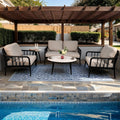
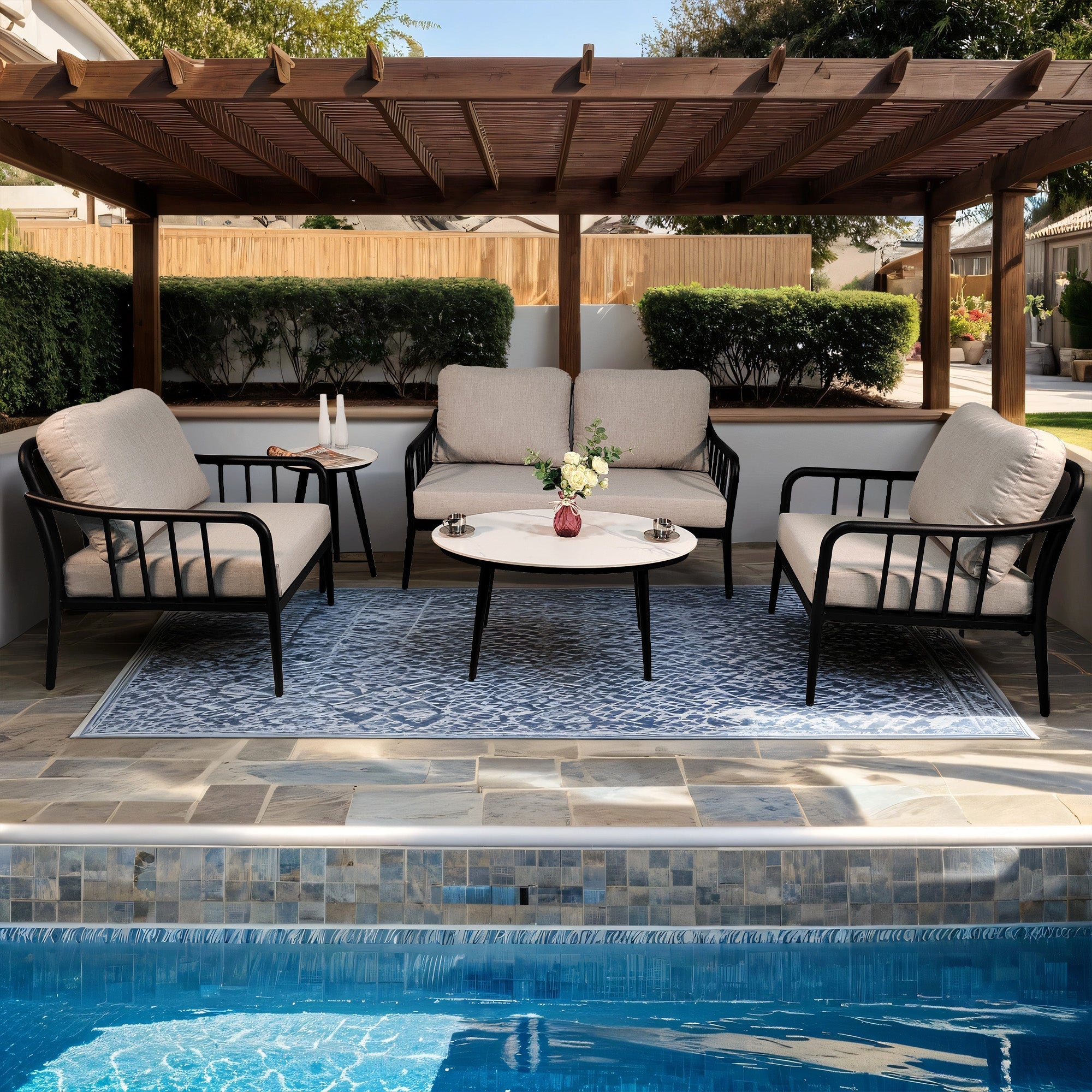
Our 5PC Outdoor Aluminum Patio Furniture Modern Chat Sofa Conversation Set at $2,790.48 is built on aluminum frames with Sunbrella upholstery.
Can Wrought Iron Furniture Be Left Outside?
Wrought iron can be left outside, but only with conditions. Covered patios and pergola-shaded areas can reduce direct rain exposure.
If you leave wrought iron outside year-round in a rainy region, plan to inspect it each season, dry it after storms, and address chips before they spread.
Wrought Iron Furniture Maintenance That Prevents Rust
Maintenance plays a large role in whether wrought iron survives a wet climate. Rust starts wherever bare steel meets moisture, so the goal of every maintenance step is to keep a continuous, bonded barrier over the metal.
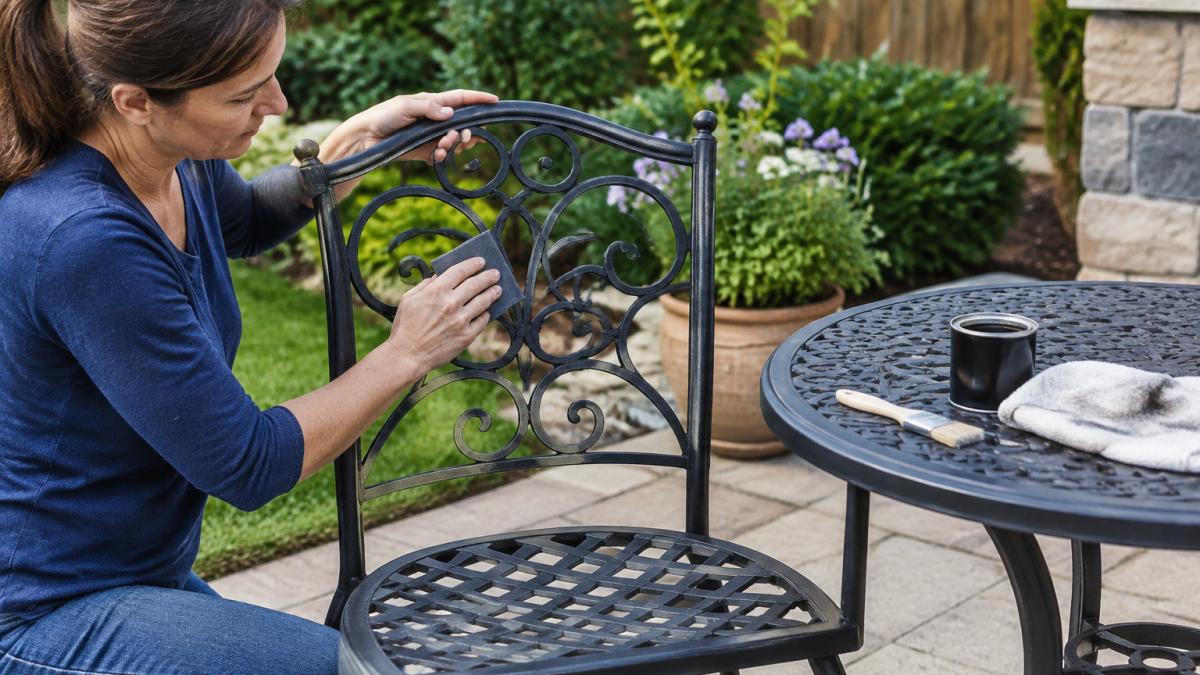
Start by identifying what the existing finish is. Factory pieces are usually coated with a baked-on powder coat or a spray enamel. Older pieces may carry a brushed oil-based paint. Each responds differently to repair. Powder coat is hard and bonds poorly to paint applied over it unless the surface is scuffed, so a small patch of rust on powder-coated iron often needs more prep than the same patch on an older enamel finish.
For routine upkeep, a practical sequence looks like this:
- Wash the piece with mild dish soap and warm water, then rinse and let it dry completely. Trapped moisture under a fresh coat is a common cause of early failure.
- Inspect every joint, weld seam, and the underside of rails and feet, since these collect water and are where rust most often begins.
- Remove any loose flakes with a wire brush or a fine abrasive pad. Feather the edges of any chip so the new coat does not form a ridge that traps water.
- Wipe the area with a degreaser or mineral spirits to remove oils from handling. Paint will not adhere well over residue.
- Apply a rust-inhibiting primer designed for ferrous metal. Brush or aerosol primers containing zinc or iron-oxide pigments are common choices. Let it cure for the time the label specifies, which is often longer than the touch-dry time.
- Finish with an exterior-grade enamel or a clear coat rated for outdoor metal. Two thin coats generally bond better and sag less than one heavy coat.
Clear coats deserve a note of caution. A clear finish protects well on undamaged iron and keeps the wrought look, but it shows every scratch as a starting point for rust and is harder to touch up invisibly than pigmented paint. Many owners in rainy regions choose a colored enamel for that reason.
Watch out: sanding back to bare metal and leaving it uncoated overnight in humid air can produce visible surface rust before you reach the primer step, so prime the same day you clean.
A seasonal schedule, with a full inspection before the wettest months and a lighter wipe-down after major storms, catches most problems while they are still cosmetic.
Repairing Rust Already on Your Furniture
Most rusted wrought iron is salvageable, but the right repair depends on how deep the corrosion goes, and recognizing that difference is the skill that saves time and money. Before you start, press a screwdriver or pick into the rusted area. Surface rust is a crust of oxide that flakes or brushes off and leaves solid metal beneath. Pitting shows as small craters that remain after the loose rust is removed. Structural rust is the case where the metal itself has thinned or split, usually at welds, bolt holes, and the joints where legs meet the frame.
Surface rust is the easiest category. Remove loose material with a wire brush, then use a fine abrasive to smooth the edges of the affected area so the repair blends into the surrounding finish. A rust converter, which chemically changes remaining oxide into a stable compound, can be useful in crevices where a brush cannot reach, though it should be followed by a primer and not used as a finish on its own. Clean the area with a degreaser, prime with a zinc-rich or rust-inhibiting primer, and topcoat to match the original.
Pitting requires more work. Grind out the pits as far as practical, fill the remaining depressions with a metal-filled epoxy or body filler rated for outdoor use, sand flush, and then prime and paint. Filler is cosmetic and protective, not structural. If the pits are deep enough that the wall of the tube or bar feels thin under a screwdriver, the repair will not hold a load.
Structural rust calls for a different decision. Welded or bolted joints that have rusted through, legs that flex, or frames that have lost stiffness are poor candidates for restoration. Replacing a single leg or rail is sometimes possible through a fabrication shop, and the cost of that is worth comparing with the price of a new piece. Where the failure is in a decorative element with no load, a patch or a cosmetic repair may be sensible. As a rough rule, if more than a small fraction of the frame is compromised, repeated restoration usually costs more in time and materials than replacement.
After any repair, return to the spots where rust reappeared first. Moisture collects at the same joints and undersides each season, so those areas are where a repair is most likely to need redoing. Note them on your inspection schedule and check them before every wet season.
Best Outdoor Furniture for Rainy Climates
Aluminum and weather-resistant pieces are generally a practical choice for rainy regions. Several of our current lines suit wet-weather yards.
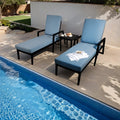
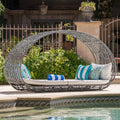
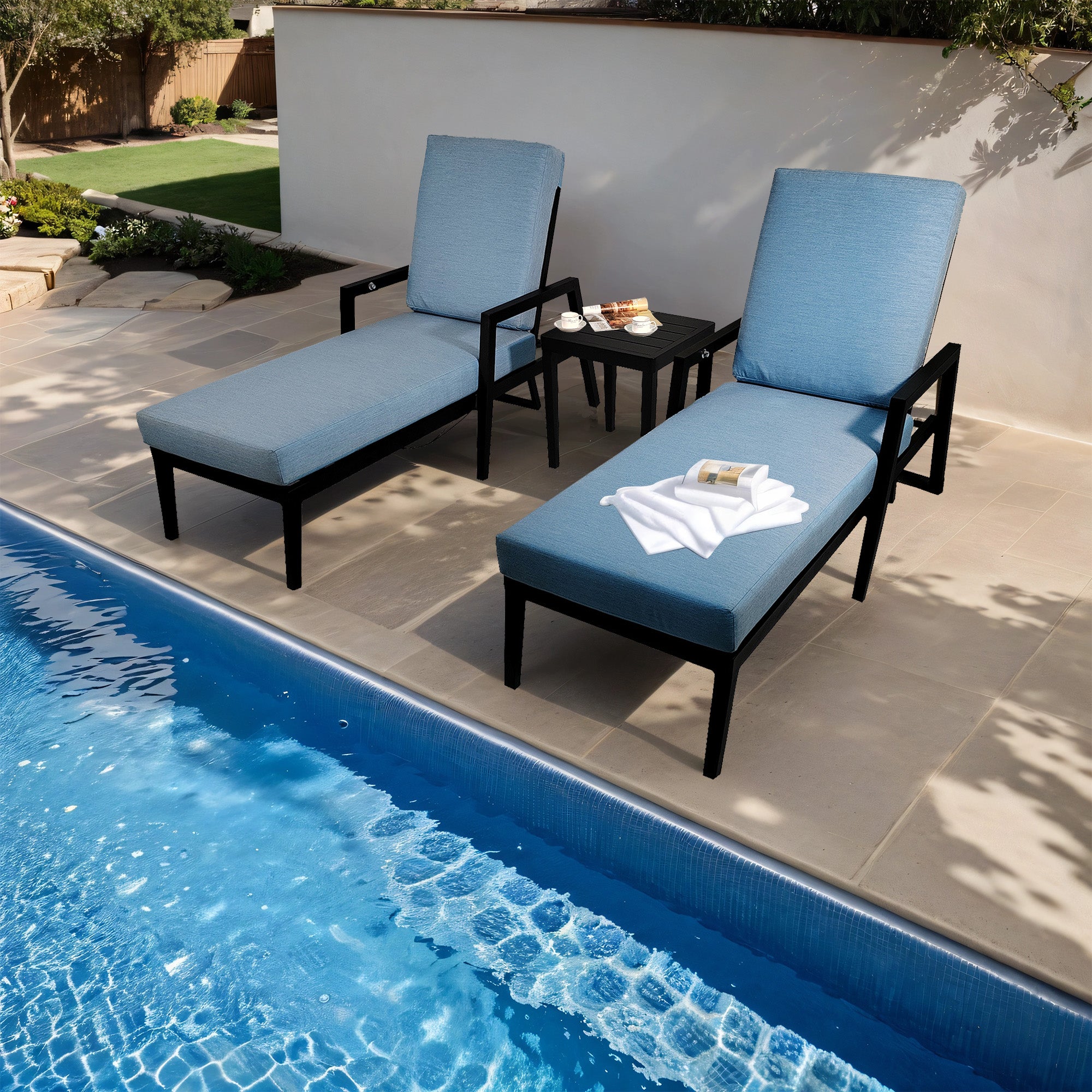
- The 3PC Outdoor Aluminum Patio Furniture Chaise Lounge Set at $2,684.22 pairs a lightweight aluminum frame with a Sunbrella cushion, and its hidden wheels make it easy to relocate.
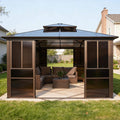
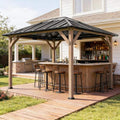
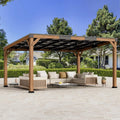
- The Alora Modern Durable All-Weather Outdoor Pergola at $5,499.97 uses a powder-coated aluminum frame and an integrated drainage system that channels rainwater through the posts.
Choosing Rain-Ready Pieces for Your Backyard
Start by matching the material to your weather, then think about shelter. A covered area changes the math for almost any material, while open lawns demand more weather-resistant construction.
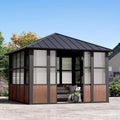
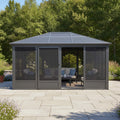
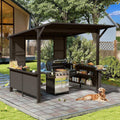
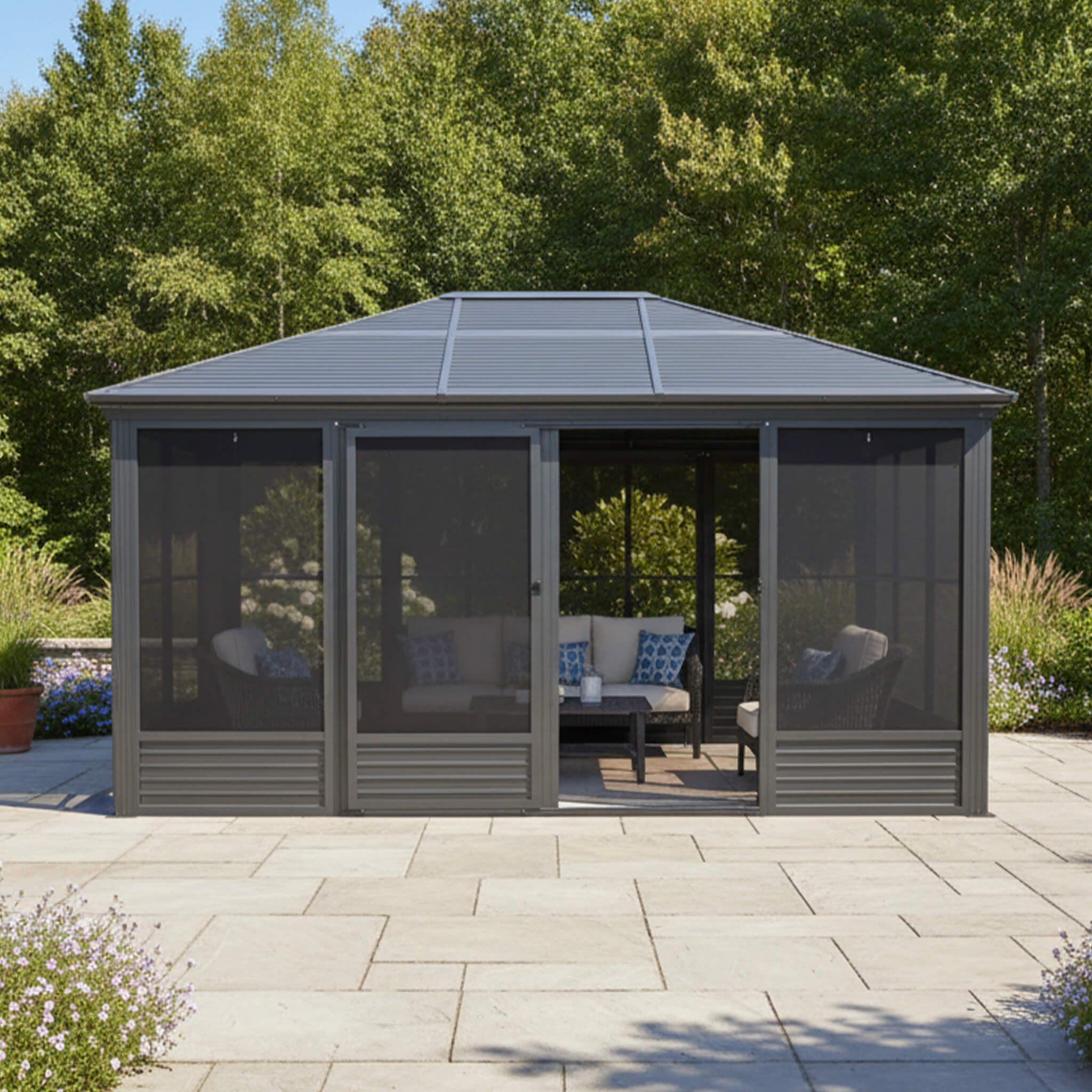
For a fully enclosed option, the Alora Meridian Premium Four Season Outdoor Aluminum Hardtop Gazebo Sunroom at $4,899.97 offers a galvanized steel roof, a built-in gutter system, and sliding doors, which suits homeowners who want sheltered outdoor space.
Frequently Asked Questions
What is the best outdoor furniture to withstand rain?
Cast aluminum and powder-coated aluminum hold up best in rainy weather because they do not rust when moisture reaches bare metal. Sunbrella cushions are also rated to withstand rain, humidity and mildew, which makes them a practical choice for seating in wet regions. Wrought iron can work in rainy areas, but only with a sealed finish that is checked and touched up regularly. Choose the material that matches how much maintenance you are willing to do.
Can wrought iron furniture be left outside?
Wrought iron can be left outside, but it will rust in rain if the protective finish is scratched, chipped or worn. Wrought iron is generally a poor match for wet or coastal climates for this reason. If you leave it outdoors in a rainy area, keep the powder-coated or sealed finish intact, dry pieces after storms, and consider a cover or covered location.
Does wrought iron patio furniture rust in the rain?
Yes, wrought iron patio furniture can rust in the rain once its protective coating is compromised. Rust starts where the finish is scratched or chipped and spreads from there. Regular inspection, prompt touch-ups and sealing bare spots help prevent it. In wet climates, a sealed finish alone is not enough; it needs ongoing attention to stay effective.
How do you protect wrought iron furniture from rust?
Protect wrought iron furniture by keeping its protective finish intact. Inspect pieces at least twice a year, sand and touch up any chipped or scratched areas right away, and reapply a rust-inhibiting sealant. Dry furniture after rain, avoid leaving it in standing water, and store cushions or pieces under cover during extended wet seasons. These steps matter more in rainy climates than in dry ones.