7 Steps to Winterize Outdoor Dining Furniture Sets
Last Updated: November 12, 2026
Quick Summary
To winterize outdoor dining furniture sets, clean every surface with mild detergent and warm water, dry the table, chairs, and frames completely, then protect wood with an exterior stain or sealant and cover the set with a breathable, well-fitted cover. Bring cushions indoors bone dry, and store them in a breathable bag rather than a sealed plastic bin.
- Most dining sets take two to three hours to winterize, plus drying time.
- Never pressure-wash joints or seams, because forced moisture inside the frame is the problem you are preventing.
- Store cushions indoors only after they are fully dry, ideally in a breathable bag or bin.
- Sealing over damp wood traps moisture inside and causes peeling and cracking.
- Stack chairs upside down on the tabletop so water runs off the seats instead of pooling.
Table of Contents
- What You Need Before You Winterize Outdoor Dining Furniture Sets
- Step-by-Step: How to Winterize an Outdoor Dining Set
- How to Winterize Outdoor Cushions and Fabric Items
- How to Protect Outdoor Wood Furniture in Winter
- Outdoor Furniture Covers: Safe Use, Ventilation, and Fit
- How to Store Patio Furniture for Winter: Indoor vs. Outdoor
- Match Your Winterizing Plan to Your Material and Climate
- Shop Dining Sets Built to Handle Winter
- Frequently Asked Questions
What You Need Before You Winterize Outdoor Dining Furniture Sets
Winter does not care how much you paid for your table. Ice expands in every seam, moisture sits in every cushion, and one hard freeze can crack a wood top that looked flawless in September. Learning how to winterize outdoor dining furniture sets is the cheapest insurance you will ever buy for a set that cost more than your first car.
Good materials buy you time, not immunity. Prep work does the rest. Below, we will show you exactly what to gather and how to work through the job in an afternoon.
Gather these supplies before you start:
- A soft brush or sponge and a bucket
- Mild detergent and warm water
- A garden hose
- Clean rags or microfiber towels
- A weather-resistant cover sized to your set
- Exterior wood stain or sealant, if you have a wood set
- A fabric protector spray for cushions
- A dry, covered storage spot for cushions and small items
Skip harsh cleaners. Abrasive pads and bleach-based sprays dull finishes and strip protective coatings, and you will spend spring undoing the damage.
Step-by-Step: How to Winterize an Outdoor Dining Set
Here is the full process, start to finish. Most dining sets take two to three hours, plus drying time.
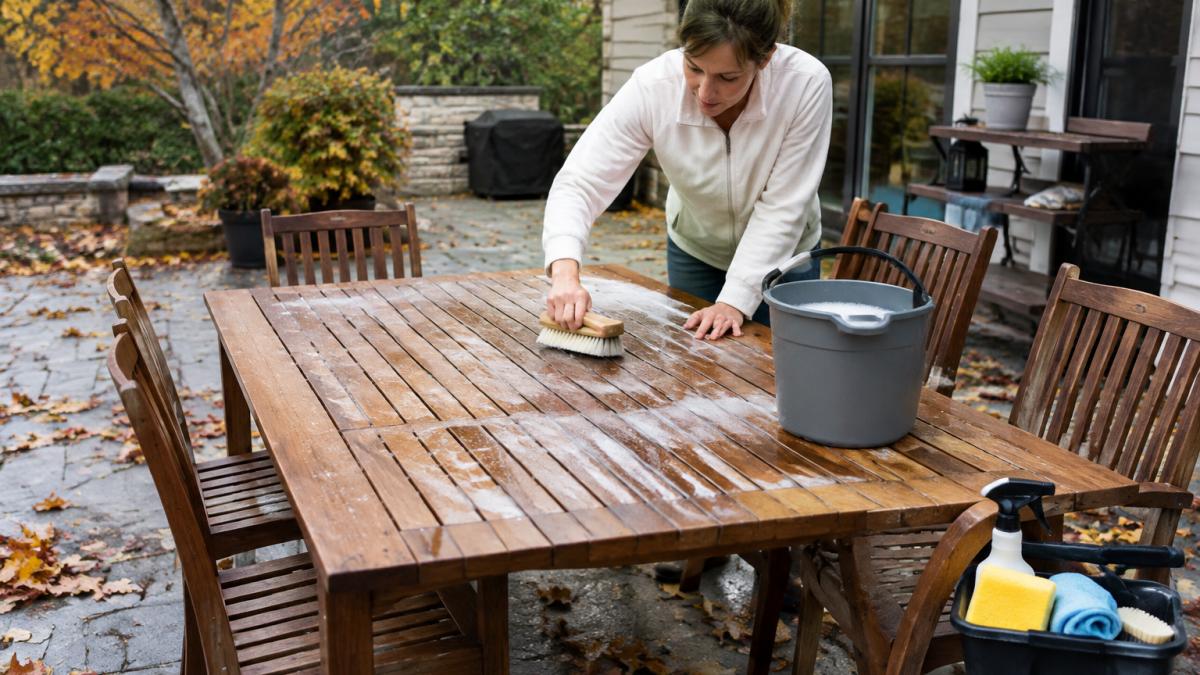
Clean Every Surface With Mild Detergent and Warm Water
Start with the tabletop, then work down each chair leg and frame. Mix a few drops of mild detergent into a bucket of warm water and wipe every surface with a soft cloth.
Pay attention to the places grime hides:
- Slats and gaps in the tabletop
- Armrests and seat edges
- The base of each leg, where dirt splashes up
- Foot caps, which trap grit and moisture
Rinse with a hose and wipe down with a clean rag. Do not blast water into joints or seams. Pressure forces moisture inside the frame, which is the exact problem you are trying to prevent.
Dry the Table, Chairs, and Frames Completely
This step matters more than the cleaning. Trapped moisture under a cover causes mold, mildew, and finish damage all winter long.
Wipe every surface with a dry towel, then let the set air dry in the sun for a few hours. Tilt chairs on their sides for a few minutes so water drains out of the legs. Feel the underside of the table and the joints before you move on. If your hand comes away damp, keep waiting.
How to Winterize Outdoor Cushions and Fabric Items
The fastest way to ruin outdoor cushions is to store them damp. Fabric that goes into winter storage even slightly wet comes out with mildew stains that never wash out.
Follow this order:
- Brush off loose dirt and crumbs.
- Spot clean stains with mild detergent and warm water.
- Rinse thoroughly and blot with a towel.
- Let cushions dry fully in the sun, flipping them once.
- Spray with a fabric protector so they repel water next season.
- Store them indoors in a dry spot, ideally in a breathable bag or bin.
Never stack damp cushions on top of each other. Air needs to move around the fabric. If you have no indoor space, bring cushions inside the house before the first hard freeze, even if only into a garage or closet.
How to Protect Outdoor Wood Furniture in Winter
Wood is the material that rewards attention, and it still benefits from a protective barrier before winter.
Clean and dry the wood first, then inspect the surface. Light gray patches and dry spots mean the finish is breaking down. Sand those areas lightly, wipe off the dust, and apply an exterior stain or sealant made for outdoor wood. One coat before winter goes a long way.
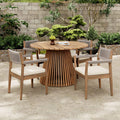
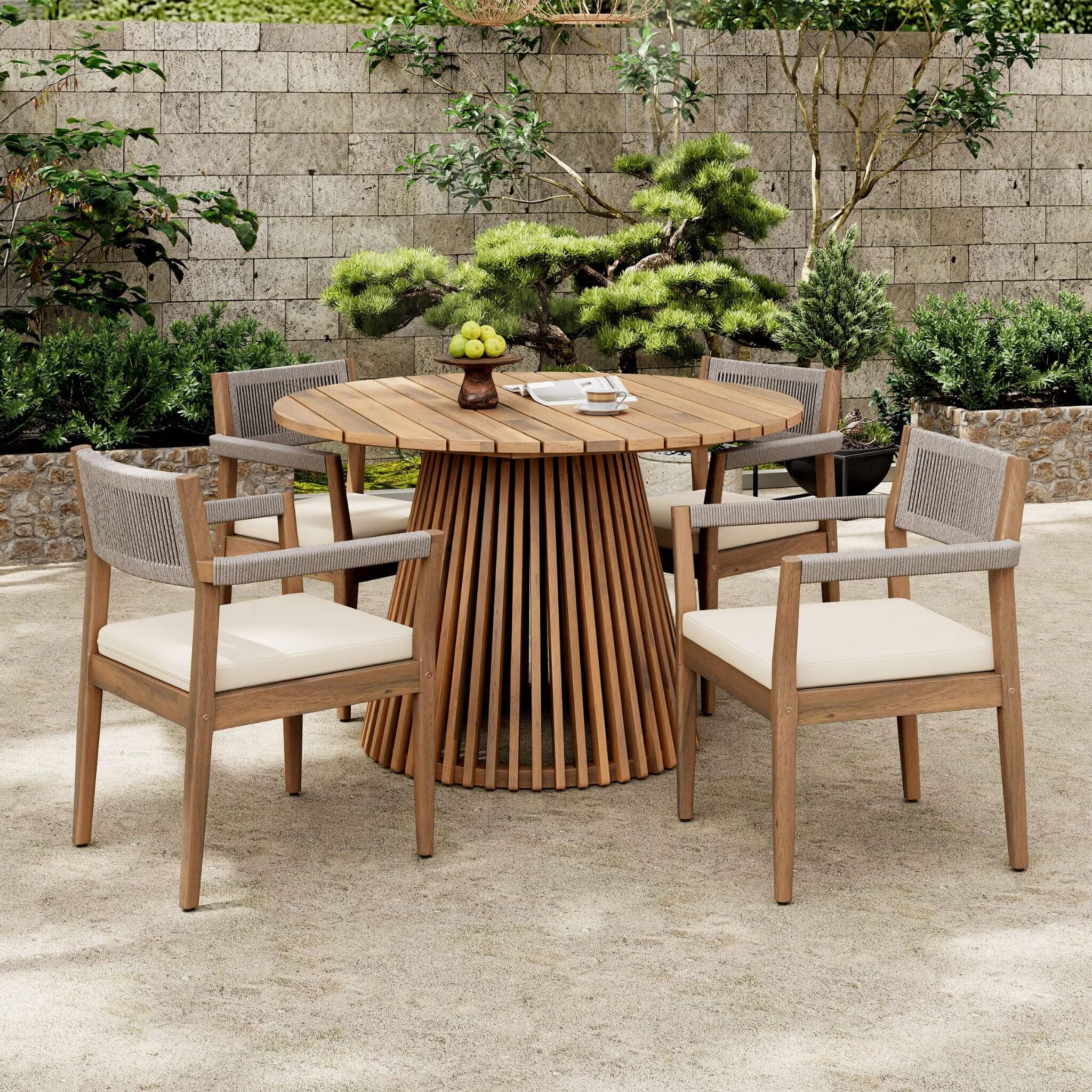
If you are working with an acacia dining set, the Alora Premium 5-Piece Outdoor Acacia Wood Patio Furniture Set with Braided Dining Chairs, Cushions, and Dining Table is built from acacia wood and includes water-resistant cushions.
Watch out: sealing over damp wood traps moisture inside and causes peeling and cracking. Test a small spot and wait for a fully dry day before you coat anything.
Outdoor Furniture Covers: Safe Use, Ventilation, and Fit
A cover is not a plastic bag. The goal is to keep rain and snow off while letting trapped moisture escape.
Choose a cover that fits your set closely without being tight. A loose cover flaps in wind and traps water underneath. A tight one seals in condensation.
Look for these features:
- Breathable, weather-resistant fabric
- Vents that let air circulate
- Secure ties or straps at the legs
- A size that covers the table and chairs together
Tie the cover down before storms. Water pooling in a sagging cover adds weight and can bend frames or tear seams. If your set sits on a windy patio, check the straps once a month through winter.
How to Store Patio Furniture for Winter: Indoor vs. Outdoor
Storage is where most people run out of room. Decide early, because cushions and fabric items should come inside no matter what. The table below covers the common options, and the notes after it cover the dining-set-specific moves that save the most space.
| Storage Option | Best For | Watch Out For |
|---|---|---|
| Garage or shed | Cushions, small chairs, accessories | Damp floors; raise items off concrete on pallets or shelves |
| Basement or spare room | Cushions, fabric items | Must be fully dry before storing; check for damp walls |
| Covered patio or deck | Wood and metal dining sets | Wind, snow drift, cover wear |
| Uncovered yard | Nothing you want to keep long-term | Ice, standing water, sun damage |
If you need extra off-season space, a storage kit such as the Diy Windemere 10 Ft W X 12 Ft D Pre Cut Wood Shed With Floor Outdoor Storage Kit gives you a dry place for cushions and smaller pieces.
Dining-set-specific storage moves. A dining set is mostly table and chairs, and both can be broken down further than most people realize. Remove the table extension leaf if you have one and store it flat and dry, because a leaf left in place under a cover is a moisture trap between two surfaces.
When you have no garage or shed. Stack chairs upside down on the table and cover the set, keeping cushions indoors in a closet or under a bed in breathable bags. Fold or roll fabric items rather than folding them flat in the same creases, because creases are where mildew starts.
Watch out: storing cushions in a sealed plastic bin before they are bone dry traps moisture and guarantees mildew; use a breathable bag or leave the bin lid cracked.
Match Your Winterizing Plan to Your Material and Climate
Not every set needs the same routine. Match your plan to what your furniture is made of and what your winters actually do.
| Material | Can stay outside? | Cover needed? | Store indoors? | Key winter risk |
|---|---|---|---|---|
| Solid wood (acacia, eucalyptus) | Yes, with a fresh sealant coat | Yes, breathable | No, but cushions yes | Moisture in end grain and joints; finish breakdown |
| Teak | Yes | Optional; a cover helps | No | Surface dirt and mildew if wet and covered tight |
| Powder-coated aluminum | Yes | Recommended | No | Scratches that expose bare metal; pooled water bending frames |
| Steel or wrought iron | Yes, if painted or coated | Yes | Better indoors in coastal air | Rust at chips, welds, and foot caps |
| Wicker, rattan, rope, woven | Yes, if synthetic | Yes, breathable | Natural fibers: yes | Mildew in weave; frame rust bleeding through |
| Cushions and fabric | No | No | Yes, always | Mildew from stored-damp fabric |
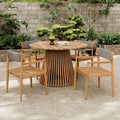
Wood. Clean, dry, and coat with an exterior stain or sealant. If you own a teak dining set, the Rinjani Rectangular Teak Table and Fortuna Armchair Dining Set is made from certified teak wood exclusively grown in Indonesia, with care guidance attached to each piece.

Metal. Wipe down the frame, then run a finger along welds, foot caps, and the underside of the tabletop. Any scratch that shows bare metal is a rust start point; touch it up with matching exterior paint before winter.
Wicker, rattan, and rope weave. Use a soft brush, not a hose, and let the weave dry completely. Natural fibers should come indoors; synthetic resin wicker can stay out under a breathable cover.
Climate changes the plan too. In heavy-snow regions, the load matters as much as the wet: a sagging cover that collects snow can bend aluminum frames, so keep the cover pitched and knock snow off after storms.
If you want to keep using the patio through cold months, the Bromic Heating Tungsten Smart Heat 44 Inch 2000W Electric Infrared Patio Heater keeps a dining area usable after the temperature drops.
Shop Dining Sets Built to Handle Winter
The best winterizing routine starts with furniture that does not need saving every year. Materials, joinery, and finish decide how much work November brings.
The approach behind our curated collection is to look for weather-resistant materials, clean modern lines, and durable construction.
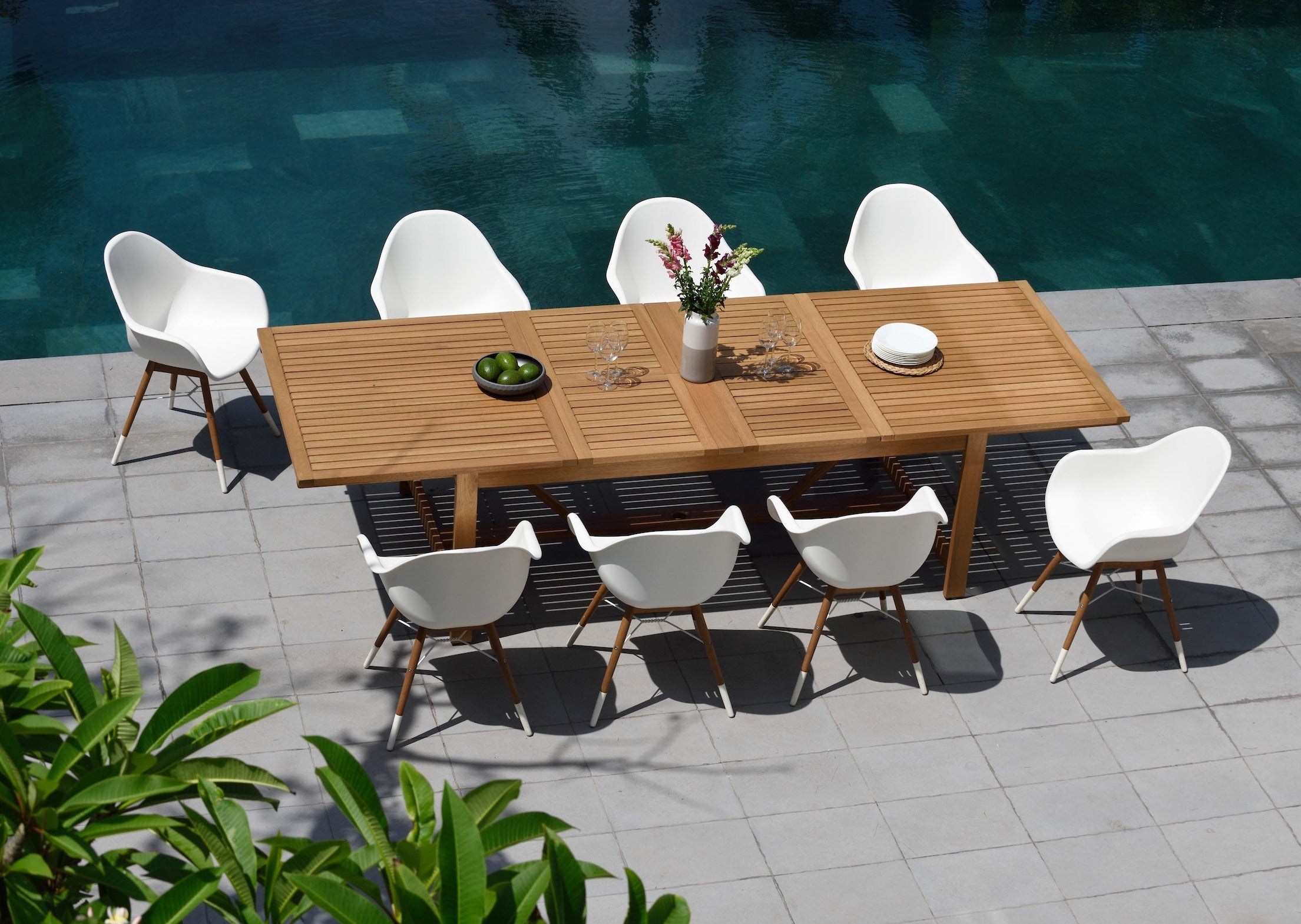
A complete set like the Leyland Table and 8 Chamonix Armchair Dining Set is built from FSC-certified solid wood and includes a table and eight chairs.
Winter will test every joint, finish, and cushion you own. The homeowners who breeze through spring are the ones who spent one afternoon in the fall. Backyard Sanctuary Supply LLC stocks weather-resistant dining sets, pergolas, and outdoor living pieces chosen for lasting materials and clean design, with free shipping on most orders within the Continental U.S. Browse the collection, pick a set built for your climate, and give it the prep it deserves before the first freeze.
Frequently Asked Questions
Should outdoor furniture be covered in winter?
Yes, but only after it is completely clean and dry. A weather-resistant cover keeps snow, rain, and ice off the frame and tabletop, which is what causes most freeze damage and water stains. Choose a cover that fits snugly yet allows some airflow, and never wrap furniture in plastic sheeting, because trapped moisture does more harm than the weather. If you can move the set indoors, do that instead and skip the cover entirely.
Can patio furniture stay outside in the winter?
Most quality sets can stay outside if you prepare them. Clean and dry every surface, remove cushions and bring them inside, and cover the frame with a breathable weather-resistant cover. Solid wood benefits from a fresh coat of sealant or wax before the first freeze. In regions with heavy snow and ice, moving the set into a garage or shed is the safer choice.
How should you prepare outdoor cushions for winter storage?
Clean cushions with mild detergent and warm water, rinse them, and let them dry fully in the sun before storing. Never put a damp cushion into a bin, because trapped moisture causes mildew that will not wash out. Store cushions indoors in a dry, ventilated space, ideally in a breathable storage bag rather than a sealed plastic one. If your cushions are not removable, treat the outdoor fabric with a fabric protector that helps it repel water.
How do you keep outdoor furniture covers from blowing away?
Buy a cover sized to your exact table and chair footprint, since a loose cover catches wind like a sail. Use the built-in drawstring or straps to cinch it tight, and tuck the skirt under the table legs where possible. On exposed patios, place a heavy object such as a planter near the center of the tabletop under the cover. Check the cover after storms, because a cover that has shifted and pooled water can trap moisture against the frame.