7 Teak Furniture Maintenance Tips for Beginners
Last Updated: November 18, 2026
Quick Summary
To maintain teak furniture as a beginner, wipe surfaces weekly, wash monthly with mild soap and water, and deep clean twice a year at the start and end of patio season. Clean and dry the wood fully before oiling or sealing, and skip pressure washers, which can damage the grain.
- Wipe teak surfaces weekly with a dry or slightly damp cloth.
- Deep clean teak furniture twice a year, at season start and end.
- Never pressure wash teak, as it can discolor wood and damage grain.
- Only oil dry wood, since oil on damp teak traps moisture and causes uneven color.
- Treat mildew spots with about one part white vinegar to three parts water.
Table of Contents
- Start With a Simple Teak Maintenance Schedule
- How to Clean Teak Furniture Before Oiling
- How to Care for Teak Outdoor Furniture
- How to Care for Teak Indoor Furniture
- Choosing the Best Teak Sealer for Outdoor Furniture
- How to Identify Your Teak's Finish and Care Needs
- Common Teak Mistakes and How to Fix Them
- Shop Teak Pieces Built to Last
- Frequently Asked Questions
Start With a Simple Teak Maintenance Schedule
Teak furniture care starts with a rhythm, not a product. A light cleaning every few weeks during patio season and a deeper clean twice a year keeps most pieces in good shape. Consistency beats intensity.
Here is a beginner-friendly schedule you can actually keep:
- Weekly: Wipe down surfaces with a dry or slightly damp cloth.
- Monthly: Wash with mild soap and water, then rinse.
- Twice a year: Deep clean at the start and end of the season.
- Yearly: Check for loose joints, mildew, and worn finish.
That is the whole system. Simple, repeatable, and safe for natural teak.
What You'll Need Before You Begin
Gather these basics before your first cleaning session:
- A soft-bristle brush
- A lint-free cloth or microfiber towel
- Mild dish soap
- A bucket of warm water
- A garden hose
- Optional: teak cleaner, teak sealer, or teak oil
Skip the pressure washer. Teak care guidance from Teak Culture warns that power washing can discolor teak and damage the wood grain. A soft brush and mild soap do the job without the risk.
How to Clean Teak Furniture Before Oiling
Cleaning before oiling is the step most beginners rush, and it is the one that decides whether the oil actually works. Dirt trapped under oil turns into a dull, patchy finish.
Follow these steps:
- Brush off loose dirt and outdoor debris with a dry brush.
- Mix a few drops of mild soap into a bucket of warm water.
- Scrub along the wood grain with a soft brush.
- Rinse with clean water from a hose.
- Let the furniture dry completely, usually a full sunny day.
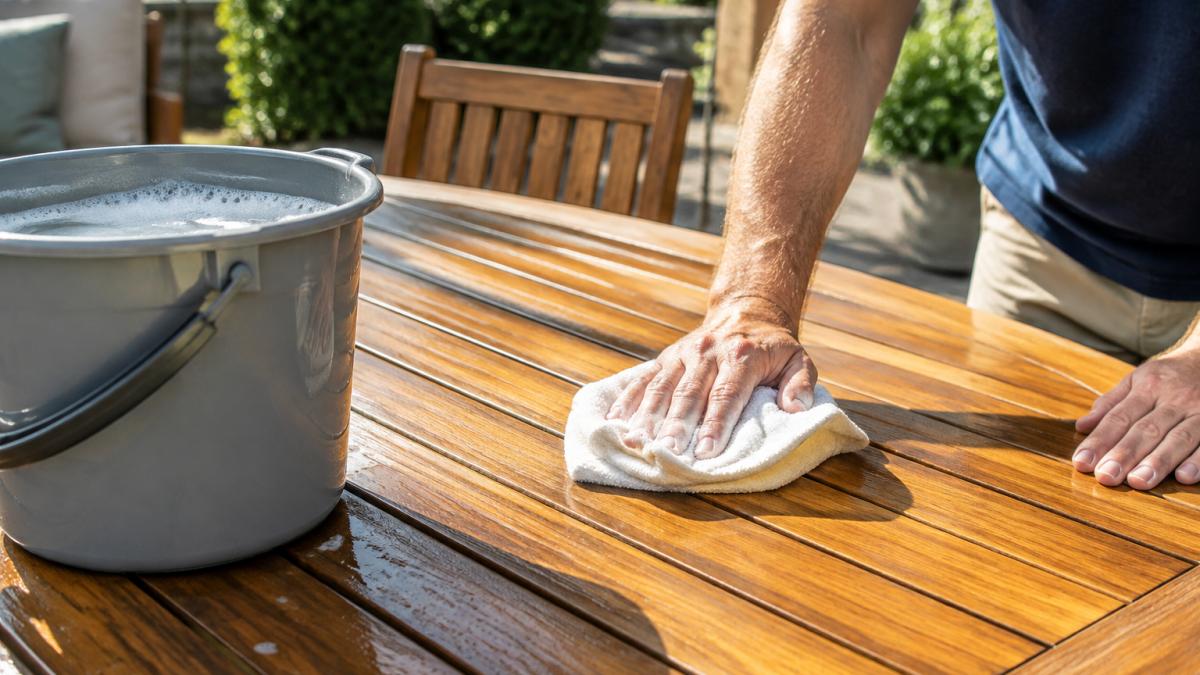
Only oil dry wood. Oil on damp teak traps moisture and causes uneven color. If the surface still feels cool or looks dark, give it more time.
How to Care for Teak Outdoor Furniture
Outdoor teak faces sun, rain, and temperature swings, so it needs more attention than indoor pieces. Weather exposure slowly turns natural teak from honey tone to a silver-gray patina. That shift is normal, not damage, the wood is still structurally sound, and many owners prefer the look.
For outdoor furniture, we recommend:
- Rinse off dust and pollen every couple of weeks during patio season.
- Deep clean at the beginning and end of the season.
- Treat mildew spots quickly with a diluted vinegar solution (about one part white vinegar to three parts water).
- Cover or store pieces during harsh weather if you want to slow graying.
A covered patio or a breathable furniture cover makes a real difference. So does placement. Furniture under a pergola or shade structure holds its color longer than pieces in full sun all day.
Covers, Airflow, and Trapped Moisture
A cover is only helpful if it breathes. Heavy vinyl or plastic tarps trap condensation against the wood, and that trapped moisture is what feeds mildew and raises the grain.
A common pattern is to cover furniture only for long stretches of rain or snow, then pull the cover off on dry days so the wood can air out. Leaving a piece wrapped for months in humid weather does more harm than leaving it exposed.
Storing Teak for Winter
If you live where temperatures drop below freezing, storage matters more than any product. Before storing:
- Clean and dry the piece completely, a full sunny day is usually enough.
- Remove cushions and bring them indoors; foam holds moisture and mildews fast.
- Store furniture in a dry garage, shed, or covered porch if you have the space.
- If it must stay outside, elevate it off the ground so water drains and air moves underneath, and use a breathable cover rather than a tarp.
Storing teak on a damp concrete floor or stacking pieces so air cannot circulate can trap moisture.
What Weather Actually Does to Teak
Teak contains natural oils that help it resist rot and insects, which is why it can survive outdoors with basic care. Sun breaks down the surface lignin and turns the wood gray; rain leaches out some of the surface oils; and repeated wet-dry cycles cause the wood to expand and contract slightly. That movement is why hairline cracks appear at joints and why hardware can loosen over a season.
If you are still choosing pieces, our Rinjani teak dining set shows what well-built teak looks like before you start a care routine.

How to Care for Teak Indoor Furniture
Indoor teak needs far less work than outdoor teak. No rain, no direct sun, no pollen. The main enemies are dust, dry air, and spills.
Here is how we handle indoor pieces:
- Dust weekly with a soft, dry cloth.
- Wipe spills right away with a damp cloth.
- Keep furniture away from heating vents and direct sun through windows.
- Apply furniture polish sparingly, only if the wood looks dry.
Most indoor teak is finished with a poly finish or oil, and that finish changes the care needs. A sealed indoor table mostly needs dusting. An oiled one may want a light re-oil once a year.
Do not treat indoor teak like outdoor teak. Heavy washing and sealers made for patios are overkill indoors and can cloud a finished surface.
Choosing the Best Teak Sealer for Outdoor Furniture
The best teak sealer for outdoor furniture is one that matches your goal: keep the golden color or let it gray naturally. Sealers with UV protection slow the silvering process. Oils feed the wood but offer less sun protection. Neither is wrong, they just produce different results.
Here is a simple way to decide:
| Goal | Best Option | Notes |
|---|---|---|
| Keep golden color | UV-protective sealer | Reapply yearly |
| Let it gray naturally | No sealer, clean only | Lowest maintenance |
| Feed dry wood | Teak oil | Reapply every 6-12 months |
| Low-toxicity choice | Water-based treatment | Gentler, needs more coats |
Sealer vs. Oil vs. Leaving It Bare
These three paths are not interchangeable, and mixing them without cleaning first is where beginners get into trouble.
- Sealer forms a thin film on the surface that blocks UV and water. It holds color best but needs a full strip-and-recoat when it starts to fail, because a new coat will not bond evenly over a flaking film.
- Oil soaks into the wood and replenishes the natural oils. It darkens the grain slightly and gives a richer tone, but it offers little UV protection, so the wood will still gray, just more slowly and more evenly.
- Bare teak is the lowest-maintenance option. Clean it and let the patina develop. The trade-off is that bare wood is more prone to surface mildew in humid climates and shows water marks more readily.
A common pattern is to seal a new piece to lock in the golden color, then switch to oil or bare care once the sealer film starts to wear. Pick one path and stay on it for a season rather than layering products.
How to Apply Sealer Without Causing Buildup
Apply sealer to clean, dry wood in thin coats. One coat too many creates a sticky film that attracts dirt and turns gummy in heat.
- Clean the piece and let it dry for a full sunny day.
- Stir the sealer, do not shake it, which introduces bubbles.
- Apply a thin coat with a foam brush or lint-free cloth, working along the grain.
- Let it dry per the label, usually several hours to overnight.
- Add a second thin coat only if the label calls for it; stop there.
Watch out: applying sealer in direct sun or on a hot afternoon causes it to skin over before it soaks in, leaving streaks and a patchy finish. Work in shade and in mild temperatures.
When a Sealer Starts to Fail
Sealers do not last forever. When you see dull patches, water no longer beading, or a chalky film, the coating is breaking down. Do not just add another coat on top, strip the old finish with a teak cleaner, let the wood dry, and start fresh with one thin coat. Layering over a failing film is the most common cause of the sticky, blotchy surfaces beginners complain about.
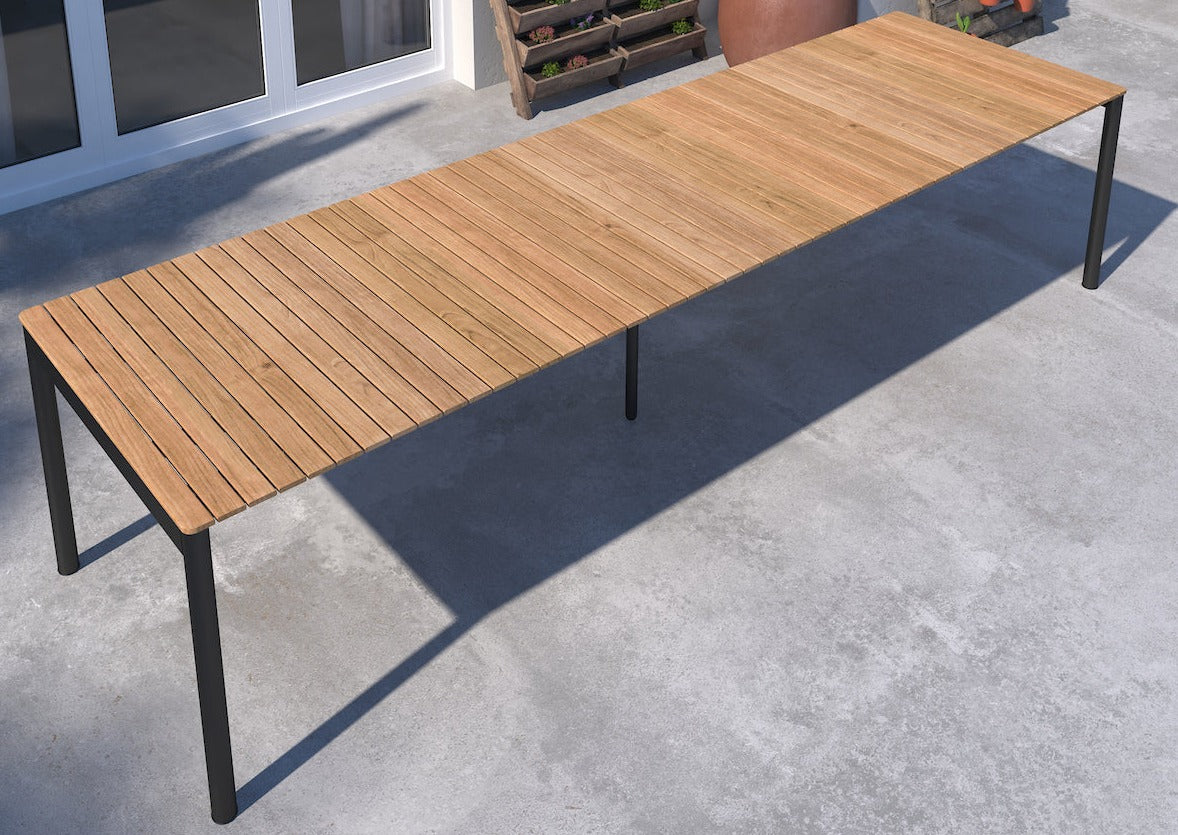
Seeing a finished piece helps. Our Topaz teak and aluminum table shows how sealed teak should look: even tone, visible grain, no buildup.
How to Identify Your Teak's Finish and Care Needs
Not every teak piece wants the same treatment. A care guide from Rengard's teak maintenance guide notes that mild soapy water suits untreated teak, but it is not a guarantee for every finish. Check your piece before you clean it.
Run this quick check:
- New, smooth, golden wood: likely oiled or sealed. Use mild soap and re-oil yearly.
- Silver-gray, dry texture: untreated teak. Clean and decide whether to seal.
- Shiny, plastic-like surface: poly finish. Dust and wipe only.
- Reclaimed teak: older wood, often denser. Clean gently and test any product on a hidden spot.
When in doubt, test on the underside first. A small patch tells you more than any label.
Common Teak Mistakes and How to Fix Them
Most teak problems come from good intentions and the wrong method. Here are the fixes.
Mistake 1: Pressure washing. It can raise the grain and strip color.
Mistake 2: Harsh cleaners. Bleach and abrasive pads scratch the surface.
Mistake 3: Oiling wet wood. Trapped moisture causes mildew.
Mistake 4: Over-sealing. Too many coats turn sticky and dull.
Mistake 5: Ignoring small cracks. Teak moves with humidity, so hairline cracks are normal. Deep splits are not.
Watch out: skipping the rinse after soaping leaves a film that grabs dust and dulls the finish fast.
Shop Teak Pieces Built to Last
Good care starts with good furniture. A well-made teak piece rewards a simple routine; a cheap one fights you the whole way.
Our outdoor seating collection includes teak frames and weather-resistant materials that hold up to sun and rain with basic care.
You do not need a cabinet full of products to maintain teak furniture. You need a schedule, a soft brush, mild soap, and a little patience.
Maintaining teak furniture is not complicated, but it does take a plan.
Frequently Asked Questions
Does teak furniture need to be oiled?
Not always. Teak contains natural oils that protect it, so untreated teak can be left to weather to a silver-gray patina. Oil is a choice, not a requirement: it preserves the honey-golden color and helps repel water. If you oil, clean the surface first, apply a thin coat of teak oil or sealer, and wipe off the excess. Furniture that stays untreated simply needs regular cleaning to remove dirt and mildew.
How do you clean teak furniture before oiling it?
Rinse the piece with water, then scrub the wood grain with a soft brush and mild soapy water. Rinse again and let it dry completely, usually 24 to 48 hours, before applying oil. Never oil damp wood, because trapped moisture can cause mildew. If you spot gray patches or stains, treat them with a teak cleaner and rinse thoroughly first, so the oil soaks in evenly.
Can you use Dawn or Murphy's Oil Soap on teak furniture?
A few drops of mild dish soap in warm water is fine for routine cleaning, as long as you rinse well afterward. Murphy's Oil Soap is made for finished indoor wood, not outdoor teak, so skip it on pieces exposed to weather. Avoid harsh detergents and never pressure wash teak, since a power washer can discolor the surface and raise the wood grain.
What happens if you don't oil teak?
Nothing breaks. Untreated teak gradually fades from golden brown to a gray patina as sun and rain break down the surface oils. The wood stays durable, but the gray look is permanent once it sets in unless you sand or use a teak restorer. If you want to keep the original color, plan to clean and seal once or twice a year, especially before the rainy season.