Does HDPE Furniture Fade in Direct Sunlight?
Last Updated: November 14, 2026
Quick Summary
HDPE furniture fade in direct sunlight is possible, but far less than most outdoor materials because UV stabilizers are blended into the plastic itself rather than sprayed on top. Expect slight dulling over a decade of full exposure, with no peeling, rotting, or repainting. Severe color shift usually points to a formulation or pigment issue, not normal weathering.
- UV stabilizers are embedded in HDPE during manufacturing, so they cannot peel away like a coating.
- Dark colors absorb more heat and show fading faster than white, sand, or light gray.
- Wash HDPE with mild soap and water, and skip harsh solvents and abrasive pads.
- HDPE generally does not need wax or aftermarket UV sprays, which wear off and can dull the finish.
- A warranty that excludes color change tells you fading is possible.
Table of Contents
- Does HDPE Furniture Fade in Direct Sunlight?
- How Long Does HDPE Furniture Last Outdoors?
- Does HDPE Get Hot in the Sun?
- HDPE Outdoor Furniture vs. Polywood
- HDPE vs. Wood, Metal, and Other Plastics in Sun Exposure
- How to Clean HDPE Outdoor Furniture and Preserve Its Color
- Choosing Sun-Ready Pieces for Your Backyard
- Frequently Asked Questions
Does HDPE Furniture Fade in Direct Sunlight?
Yes, HDPE furniture can fade in direct sunlight, but far less than most outdoor materials. The plastic is made with UV stabilizers mixed into the material itself, not sprayed on top. That slows color loss over years of sun exposure. It does not make the furniture fade-proof.
This guide from Backyard Sanctuary Supply LLC explains what actually happens to high-density polyethylene in the sun. We cover how long it lasts, how hot it gets, and how to keep the color sharp.
First, a quick reality check. Manufacturer Carolina Casual says its HDPE furniture lasts 25 to 50+ years with zero maintenance, according to Carolina Casual's HDPE furniture guide. That is a bold claim. Color and structure are two different things, and fading is the topic most buyers care about.
What UV Stabilizers Actually Do
UV stabilizers are additives blended into HDPE during manufacturing. They absorb or block ultraviolet energy before it can break down the pigment. Westin Trends notes that UV stabilizers are embedded in the material, not applied as a coating, per Westin Trends on HDPE construction. That matters because a coating can wear off. An additive cannot peel away.
Minor Fading vs. Severe Discoloration
Minor fading is a slight dulling of color after years outside. Severe discoloration is a visible shift, like a red chair turning pink. Real-world change can happen: fading from long sun exposure is a normal part of how these materials age.
How Long Does HDPE Furniture Last Outdoors?
HDPE outdoor furniture typically lasts decades, and the color usually outlasts the structure. But "lasts" is doing a lot of work in that sentence. Structure and color age on different clocks, and the gap between them is where most buyer disappointment lives.
Manufacturer claims about how long pieces look unchanged in direct sun are best read as a best case rather than a guarantee.
Here is what actually drives real-world lifespan and color retention:
- Sun hours: A shaded porch wears slower than an open pool deck. A piece that sees four hours of direct sun daily is on a very different trajectory than one that bakes for ten.
- Color choice: Dark colors absorb more heat and show fading faster. A black or dark brown board can look chalky within a few seasons in high-UV areas, while white and sand hide change longer.
- Formulation: UV stabilizers, pigment quality, and whether the color runs through the board all vary by maker. Two HDPE chairs at similar prices can age very differently.
- Recycled content: Boards with higher recycled content can carry more color variation batch to batch, which sometimes masks or mimics fading.
- Climate: Hot, high-UV regions stress any plastic. Latitude, altitude, and reflected heat off water or light-colored patios all raise the UV dose.
- Cleaning habits: Dirt holds heat and grime against the surface, and abrasive scrubbing dulls the finish faster than sun alone.
A realistic timeline looks like this: expect slight dulling over a decade of full exposure, no peeling, no rotting, and no repainting. Severe color shift, a red chair turning pink, is possible but usually points to a formulation or pigment issue rather than normal weathering.
To judge fading on your own furniture, compare a sheltered area (under a table, against a wall) with an exposed area under the same lighting. That side-by-side is more honest than any marketing photo.
Does HDPE Get Hot in the Sun?
HDPE does get hot in direct sun, but less than metal or dark wood. The material conducts heat slowly, so it warms up gradually. Light colors stay noticeably cooler than dark ones. Carolina Casual says lighter colors stay comfortable in direct sun, per Carolina Casual on HDPE heat.
If your patio bakes in summer, choose white, sand, or light gray. A dark brown or black HDPE set will feel warmer on bare skin.
HDPE Outdoor Furniture vs. Polywood
HDPE and Polywood are close cousins, not rivals. So the real question is which HDPE formulation and build quality you are buying.
| Factor | HDPE Furniture (General) | Polywood (Brand) |
|---|---|---|
| Material | High-density polyethylene | High-density polyethylene |
| Color method | Color-through pigment | Color-through pigment |
| UV protection | Stabilizers in the material | Stabilizers in the material |
| Fading risk | Minor over years | Minor over years |
| Price | Varies by maker | Higher brand pricing |
The difference comes down to formulation, thickness, and warranty. Two HDPE chairs can age very differently.
HDPE vs. Wood, Metal, and Other Plastics in Sun Exposure
HDPE generally holds up well in sun compared with some common patio materials. Here is how it stacks up:
| Material | Fading Risk | Peeling or Cracking | Upkeep |
|---|---|---|---|
| HDPE | Low | None | Soap and water |
| Wood | High, grays out | Cracks and splits | Staining, sealing |
| Metal | Paint can chalk | Rust at chips | Touch-up paint |
| Standard plastic | High | Brittle over time | Replace often |
Wood grays and needs yearly sealing. Painted metal chalks and rusts where the finish chips. Cheap plastic turns brittle. HDPE's color runs through the full board thickness, so it does not peel the way a surface coating can.
Pros of HDPE in sun:
- No peeling or flaking
- Color runs through the material
- Low maintenance
Cons of HDPE in sun:
- Some fading over many years
- Dark colors get warm
- Quality varies by maker
How to Clean HDPE Outdoor Furniture and Preserve Its Color
Cleaning HDPE outdoor furniture takes minutes and protects the color. Wash with mild soap and water, rinse, and dry. Skip harsh solvents and abrasive pads, which can dull the surface.
A simple routine:
- Rinse loose dirt with a garden hose
- Wash with dish soap and a soft brush
- Rinse fully and wipe dry
- Move pieces into shade during peak sun when possible
- Use covers during long off-seasons
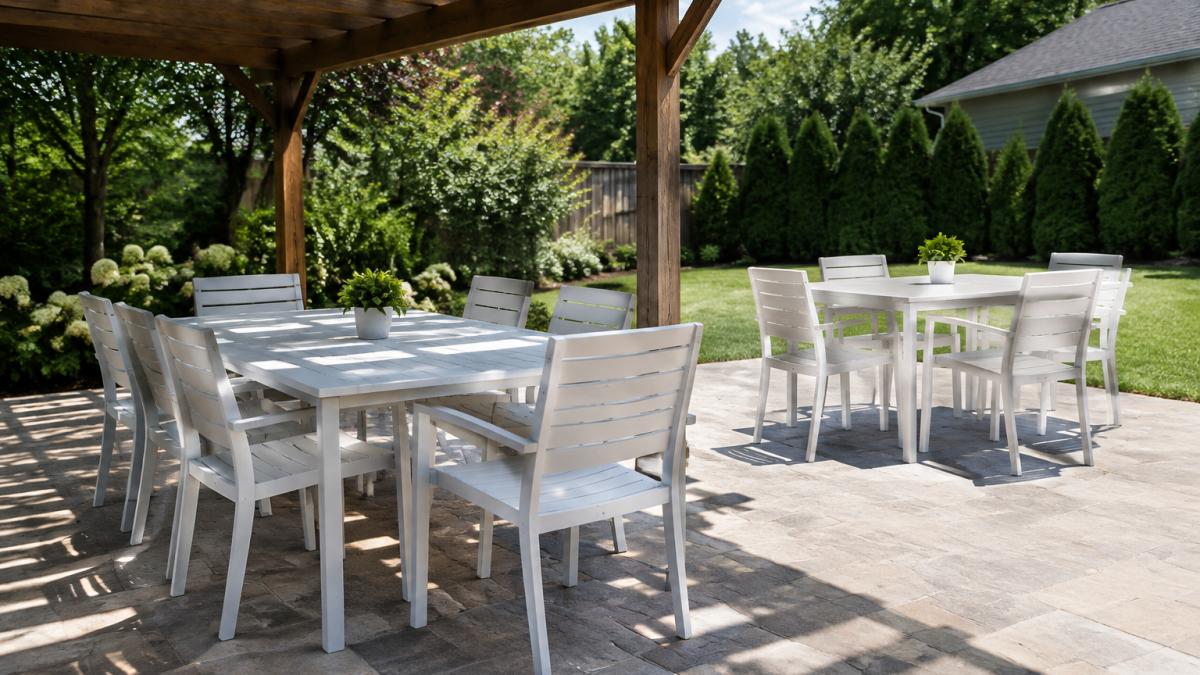
Shade and covers are the cheapest color insurance you can buy. A patio umbrella or pergola cuts UV exposure for half the day.
Do You Need Wax or UV-Protection Products?
This is where most guides go quiet, and it is the question buyers actually ask. The short answer: HDPE generally does not need wax or aftermarket UV sprays, and some products can do more harm than good.
UV stabilizers in quality HDPE are blended into the material during manufacturing, not applied as a coating. A surface wax or spray sits on top of the board and wears away with rain, sun, and cleaning. It cannot replenish the additives inside the plastic. Worse, some solvent-based protectants can dull the finish or leave a sticky film that attracts dirt.
If a product claims to "restore" faded HDPE, read carefully: it may be a surface dressing that washes off, not a fix for pigment change.
What actually helps preserve color is boring and effective: keep the surface clean, reduce direct sun hours where you can, and store or cover pieces during long off-seasons. If you want extra protection, a breathable furniture cover beats any spray.
Watch out: power washing at high pressure can pit the surface and accelerate dulling. A garden hose and soft brush are enough.
Warranty Terms and Realistic Expectations
Warranties tell you what the maker actually expects. Read the fine print before you buy. A warranty that excludes color change is telling you fading is possible.
Expect slight dulling over a decade. Expect no peeling, no rotting, and no repainting.
Choosing Sun-Ready Pieces for Your Backyard
Pick pieces built for your sun exposure, not just your Pinterest board. Light colors, thick boards, and quality UV stabilizers are the trio that protects your investment.
At Backyard Sanctuary Supply LLC, our curated outdoor collections are chosen for weather-resistant materials and clean, modern design. Free shipping covers most orders within the Continental U.S.
Before you buy, ask three questions: What color fits my sun? What warranty covers fading? Where will this sit at 2 p.m.? Answer those and your HDPE furniture will look good for years.
Your backyard should not need a yearly overhaul just to keep its color. Backyard Sanctuary Supply LLC offers weather-resistant outdoor furniture and structures built for real sun and real seasons, with a curated selection and clean modern design. Get started with Backyard Sanctuary Supply LLC and build an outdoor space that holds its look year after year.
Frequently Asked Questions
Does HDPE furniture fade in direct sunlight?
It can, but far less than most materials. Quality HDPE has UV stabilizers mixed into the plastic itself, not applied as a coating, so there is no surface layer to peel or wear away. Pigment runs through the full thickness of quality HDPE boards, so surface scratches do not reveal a different color underneath. Still, expect some dulling over a long period of full sun rather than zero change.
How long does HDPE furniture last outdoors?
Real lifespan depends on sun hours, climate, and care, so treat any lifespan figure as an estimate rather than a guarantee. Regular cleaning and shade from a pergola or umbrella help keep HDPE pieces looking their best over the years.
Does HDPE get hot in the sun?
Yes, any material warms up in direct sun. Color matters: dark colors absorb more heat and feel hotter on bare skin, while light colors stay more comfortable. If your patio gets 100+ degree summers, choose white, sand, or light gray seating and add shade from a pergola or umbrella over the dining table.
How do you clean HDPE outdoor furniture and protect it from UV damage?
Wash with mild soap and water, rinse, and dry with a soft cloth; avoid abrasive pads and harsh solvents that dull the surface. Furniture covers are useful during long stretches of disuse, and shade from a pergola or umbrella reduces cumulative UV exposure. Check any warranty terms before applying a wax or protective coating. A quick seasonal clean plus consistent shade is usually enough to keep HDPE color stable for years.