How to Get Cold Plunge Benefits at Home Safely
Last Updated: October 29, 2026
Quick Summary
Cold plunge therapy at home is a short immersion in cold water, usually between 40°F and 60°F, that some people use for recovery, alertness and stress relief. Research points to possible benefits such as reduced soreness and inflammation, but the evidence is early and many studies are small.
- Start in the upper 50s°F and move colder only after two or three comfortable sessions.
- A five-minute dip boosted alertness and reduced perceived stress in a small study of 33 adults.
- Never plunge alone, and keep your head above water during every session.
- Cold plunging may be risky for people with certain medical conditions, so check with a clinician first.
- A filled 100-gallon tub weighs roughly 830 pounds of water, so confirm your floor can carry it.
Table of Contents
- What Cold Plunge Therapy at Home Involves
- Potential Physical Benefits: Inflammation, Soreness, and Circulation
- Mood, Alertness, and Stress Resilience: What the Evidence Shows
- Cold Plunge Temperature: Finding a Safe, Effective Range
- How Long to Cold Plunge as a Beginner
- Cold Plunge Safety and Who Should Avoid It
- Cold Plunge vs. Cold Shower: Which Fits Your Routine
- Setting Up Your Own Cold Plunge at Home
- Frequently Asked Questions
Cold plunge therapy at home has moved from pro athlete routines to backyard patios, and many homeowners now ask whether the benefits of cold plunge therapy at home are real.
What Cold Plunge Therapy at Home Involves
A cold plunge is a short immersion in cold water, usually between about 40°F and 60°F, used for recovery or wellness. Cold-water immersion is the research term for the same practice.
Most people use a dedicated tub, sometimes with a filter and chiller, and stay in for a few minutes. Others add ice to a regular tub. The setup shapes how easy it is to hold a steady temperature.
- Dedicated tubs: Hold a set temperature and filter the water automatically
- Ice baths: Cheaper and simpler, but the temperature drifts as ice melts
- Hot-and-cold tubs: Offer both warm soaks and cold plunges in one unit
Potential Physical Benefits: Inflammation, Soreness, and Circulation
Research points to several possible physical effects. A 2024 review describes potential benefits of cold-water therapy, including reduced inflammation, improved sleep, immune effects, and exercise recovery (2024 review of cold-water therapy effects).
Cold exposure narrows blood vessels, which is why people often feel the effect on circulation. A separate review of voluntary cold-water exposure discusses claims and research on possible effects, including effects on adipose tissue and insulin sensitivity (review of voluntary cold-water exposure).
Mood, Alertness, and Stress Resilience: What the Evidence Shows
Many people report feeling more alert after a cold plunge. A small study of 33 adults found that a five-minute cold-water dip boosted feelings of alertness and attentiveness and decreased perceived stress (Mayo Clinic Press coverage of cold-water study).
A broader analysis of 11 studies found possible temporary reductions in stress, improved sleep quality, and a slight improvement in quality of life. Men, but not women, reported better sleep in that summary (Harvard Health Publishing summary of cold-water immersion research).
Reported hormone changes are often cited too. One review reported a 530% increase in noradrenaline and a 250% increase in dopamine, but the study population and exposure protocol were not specified (UF Health Jacksonville overview of cold-water research).
The studies cited in this section report different outcomes, and the figures below show what each one measured.
| Source | Finding | Caveat |
|---|---|---|
| Mayo Clinic Press coverage | Five-minute dip boosted alertness and reduced perceived stress | Small study of 33 adults |
| Harvard Health Publishing summary | Possible temporary stress reduction and better quality of life | Analysis of 11 studies |
| Harvard Health Publishing summary | Better sleep reported in men, not women | Sex difference from the same analysis |
| UF Health Jacksonville overview | 530% noradrenaline increase and 250% dopamine increase | Study population and protocol not specified |
Cold Plunge Temperature: Finding a Safe, Effective Range
Most people start in the upper 50s°F and move colder only as they adapt. A digital thermostat makes this easy; a DIY ice bath is harder to keep steady.
The Icetubs IceBarrel XL lets you set temperatures from 37.4°F to 100.4°F through an app or onboard panel ([Backyard Sanctuary Supply LLC product page for the Icetubs IceBarrel XL | backyardsanctuarysupply.com]).
How Long to Cold Plunge as a Beginner
Duration and frequency are where beginners get hurt or quit. The goal is a repeatable routine you can tolerate, not the coldest or longest plunge you can survive. This progressive protocol is built for home use, where you control the temperature and can stop at any time.
Start with a conservative baseline
Research protocols often use longer exposures, the 33-adult study cited earlier used a five-minute dip, but study conditions include supervision and screening a home setup may not. Do not copy a study protocol as your first session.
Progress in two variables, not one
From there, lower temperature in small steps only after two or three comfortable sessions at the current setting. Many experienced home plungers settle in the 45°F to 55°F range for 2 to 5 minutes, but there is no requirement to go that cold or that long to get the reported short-term benefits.
Icetubs- IceBarrel XL Thermowood Fiberglass Cold Plunge Immersion Tub →
Use a pre-plunge and post-plunge routine
- Before: Be rested, hydrated, and not overheated from a hard workout. Do not plunge after drinking alcohol.
- Entry: Enter slowly, keep your hands free for the rail, and breathe normally. Do not hold your breath or hyperventilate to "get through" the cold.
- During: Keep your head above water. Watch for numbness, dizziness, or loss of breathing control, any of these means get out.
Home-specific safety and emergency planning
- Never plunge alone, especially for the first several sessions. A second person should be within sight and able to help.
- Keep a phone within reach but out of the water.
- Do not hold your breath underwater and do not submerge your head as a beginner.
Track what you actually did
A simple log, date, water temperature, duration, and a one-line note on how you felt, turns guesswork into a progression. If two sessions in a row feel hard to control, hold the current settings another week rather than pushing colder.
Cold Plunge Safety and Who Should Avoid It
Cold plunging is not safe for everyone, and this is the part many marketing guides skip. Cleveland Clinic cautions that cold plunges may be risky for people with certain medical conditions, even though they may help others with focus or muscle soreness (Cleveland Clinic guidance on cold plunges).
Cold Plunge vs. Cold Shower: Which Fits Your Routine
A cold shower is the easiest way to try cold exposure. It costs nothing, and you can stop at any time. Its downside is that it is hard to get the whole body cold for a set period.
A cold plunge gives you full-body immersion at a steady temperature, which makes sessions more consistent. It also costs far more. The PEWSHTUB Pine Hot Tub and Ice Bath is one option if you want both warm and cold water without electricity or filtration equipment ([Backyard Sanctuary Supply LLC product page for the PEWSHTUB Pine Hot Tub and Ice Bath | backyardsanctuarysupply.com]).
Setting Up Your Own Cold Plunge at Home
Most ranking articles explain what cold plunging does, then stop. The keyword is about doing it at home, so this section covers what determines whether a home setup works: tub choice, placement, water treatment, temperature control, cleaning, and ongoing cost.
Choose the tub type that fits your space and budget
There are four common home setups, and each trades cost against control and maintenance:
- Bathtub with ice: The lowest-cost entry point. Fill a standard tub, add ice, drain afterward. Temperature drifts as the ice melts, and you cannot hold a steady set point. Best for occasional use and testing whether you tolerate cold water.
- Stock tank or chest freezer conversion: A stock tank is inexpensive and durable but needs manual ice, insulation, and a cover. A chest freezer conversion requires electrical and waterproofing work and should be done by someone qualified; a poorly sealed unit is a shock and contamination risk.
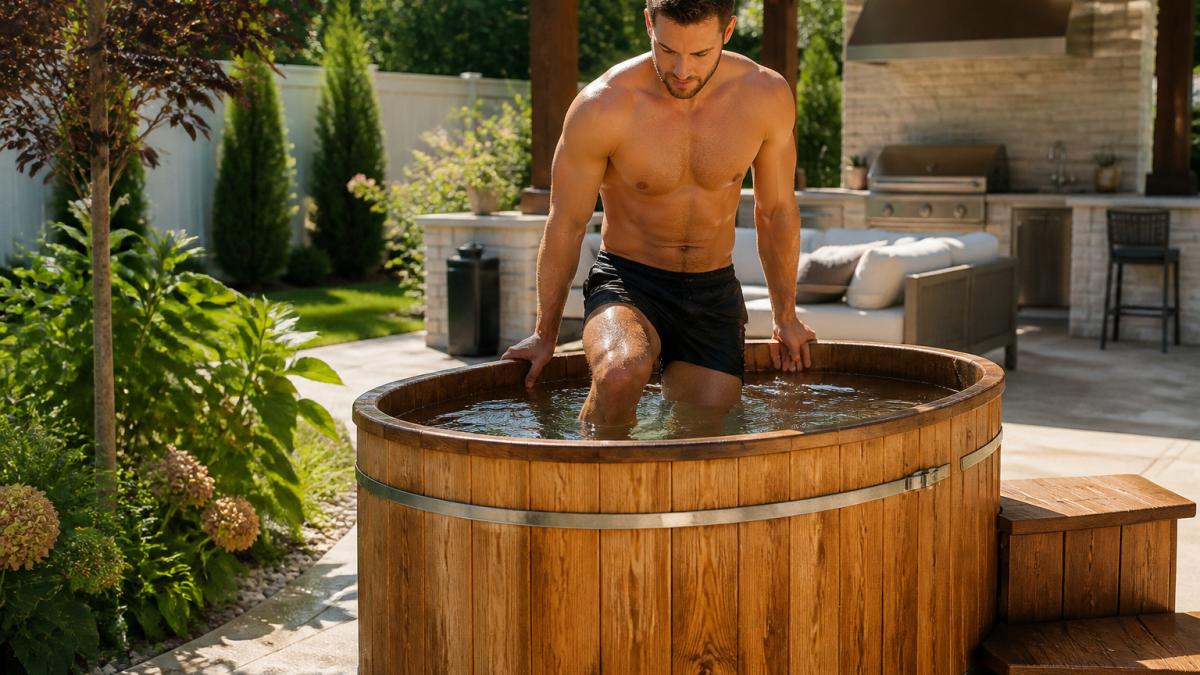
- Purpose-built plunge tub with chiller and filter: Holds a set temperature, filters the water, and usually includes a cover and insulated lid. Highest upfront cost, lowest ongoing effort. This is where most dedicated home plungers end up.
Plan placement before you buy
A filled plunge tub is heavy, water weighs about 8.3 pounds per gallon, so a 100-gallon tub holds roughly 830 pounds of water before you add the tub itself and a person. Confirm your deck, patio, or floor can carry that load, and keep the tub level.
- Outdoors: Shade the unit from direct sun to reduce chiller workload, and keep it off sprinkler and downspout runoff. Check local rules on fencing, covers, and standing water if children or pets are nearby.
- Indoors: Confirm ventilation and floor drainage. A chiller and dehumidification load can be significant in a small room.
- Electrical: Chillers and heaters need a dedicated circuit sized to the unit's rating. Use a GFCI-protected outlet and follow the manufacturer's cord and clearance requirements. If unsure, hire a licensed electrician.
Treat the water like a small pool
A plunge tub is a small body of water that people enter with skin, sweat, and outdoor debris, so it needs a treatment routine:
- Filtration: Run the filter on the manufacturer's schedule, and rinse or replace cartridges as directed.
- Sanitization: Follow the maker's guidance on chlorine, bromine, or alternative sanitizers. Do not improvise doses; too little allows biofilm, too much irritates skin.
- Water changes: Even filtered tubs need periodic full water changes. Frequency depends on use, sanitizer type, and cover discipline.
Control and monitor temperature
A digital thermostat on a chiller-equipped tub makes it easy to hold a target range. For ice baths and stock tanks, use a floating or probe thermometer and check before every session, guessing by feel is unreliable, and water can be colder than it feels once you are numb.
Budget for ongoing costs
Upfront price is only part of the picture. Plan for:
- Electricity: Chillers and heaters draw power continuously in hot weather. A well-insulated tub with a fitted cover reduces run time.
- Filters and sanitizer: Recurring consumables, usually modest per month but easy to forget.
- Water: Fill and change costs depend on tub volume and local rates.
A bathtub-and-ice setup has the lowest upfront cost but the highest per-session effort and ice cost. A chiller-equipped tub costs the most upfront but is the most consistent to use. Stock tanks sit in between and reward owners who insulate and cover them well.
A simple setup checklist
- Confirm the load rating and level surface.
- Confirm electrical capacity and GFCI protection if the unit has a chiller or heater.
- Set up filtration and sanitization before the first plunge.
- Install a thermometer and confirm the actual water temperature.
- Stage a towel, warm clothing, and a seat next to the tub.
- Keep a cover on when not in use.
- Log sessions and review the log weekly.
If you want a purpose-built unit, the Icetubs IceBarrel Thermowood and Fiberglass Cold Plunge Immersion Tub is a compact option with optional anti-slip stairs, priced at $10,499.97 ([Backyard Sanctuary Supply LLC product page for the Icetubs IceBarrel | backyardsanctuarysupply.com]). Shoppers who want a warmer, larger setup can compare the Icetubs IceBath Thermowood and Stainless Steel Cold Therapy Immersion Bath, which is listed at $12,099.97 ([Backyard Sanctuary Supply LLC product page for the Icetubs IceBath | backyardsanctuarysupply.com]).
Frequently Asked Questions
What are the benefits of cold plunge therapy at home?
Research on cold-water immersion reports possible benefits including temporary reductions in stress, improved sleep quality, and reduced inflammation. A 2024 review in PubMed Central describes potential effects on inflammation, sleep, immune function, and exercise recovery. A small study of 33 adults found that a five-minute cold-water dip boosted alertness and decreased perceived stress. These findings are promising but limited, and the evidence is still developing, so treat benefits as possibilities rather than guarantees.
How long should a beginner stay in a cold plunge?
Beginners should start with short sessions, often a minute or two, and build gradually as the body adapts. The five-minute exposure used in one small study of 33 adults is a reference point rather than a starting target. Stop immediately if you feel numbness, dizziness, chest discomfort, or breathing difficulty, and never stay in until you shiver uncontrollably.
Is cold plunging safe for everyone?
No. Cleveland Clinic cautions that cold plunges may be risky for people with certain medical conditions, even though they may help others with focus or muscle soreness. People with heart conditions, high blood pressure, or circulation problems should speak with a physician before starting. Benefits should not be assumed for everyone, and cold shock response is a real risk for people unaccustomed to sudden cold.
What is the difference between a cold plunge and a cold shower?
A cold plunge immerses most of the body in cold water, while a cold shower exposes mainly the skin to cold water for a shorter period. Immersion provides more consistent, full-body cold exposure and is typically held at lower temperatures in a dedicated tub. Cold showers are a lower-cost, lower-intensity entry point for people building tolerance before investing in equipment.