Backyard Outdoor Kitchen Cooling: 7 Practical Solutions
Last Updated: November 4, 2026
Quick Summary
Outdoor kitchen cooling combines shade and airflow to reduce heat exposure around cooking and seating areas. Map where sunlight falls during your usual hosting hours, shade the busiest zone first, and add an outdoor fan where airflow is needed. In humid climates, prioritize a shaded roof and air movement over misting.
- Pair an outdoor fan with shade; fans circulate air but do not block direct sunlight.
- Keep the grill open to cross-breezes and avoid blocking airflow with tall screens or furniture.
- Check outdoor fan ratings, mounting support, and power access before installation.
- For open, unpowered areas, prioritize passive shade and natural cross-ventilation.
Table of Contents
- 1. Cooling Solutions for Backyard Outdoor Kitchen Areas: Start With Shade
- 2. Outdoor Patio Cooling: Choose a Roof for Sun and Rain
- 3. Add an Outdoor Patio Cooling Fan for Better Airflow
- 4. Choose an Outdoor Cooling System for Humid Climates
- 5. Improve Outdoor Kitchen Ventilation Around the Grill
- 6. Match Cooling to Climate, Layout, and Operating Needs
- 7. Plan Your Outdoor Kitchen Shade Structure
- Frequently Asked Questions
1. Cooling Solutions for Backyard Outdoor Kitchen Areas: Start With Shade
According to Houzz’s 2026 Outdoor Trends Study, cooking spaces appear in 48% of outdoor projects, while lounge areas appear in 83%. For homeowners planning cooling solutions for backyard outdoor kitchen areas, that gap makes one point clear: shade should serve the whole outdoor living space, not just the grill. This guide from Backyard Sanctuary Supply LLC explains how outdoor kitchen cooling can match shade, airflow, and your layout and climate.
Outdoor kitchen cooling is the planned use of shade and airflow to reduce heat exposure around cooking and seating areas. Start by mapping where direct sunlight lands during the hours you host, then mark the grill, prep counter, and dining zone. Shade the busiest zone first, then consider whether additional cooling is needed.
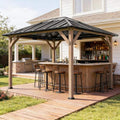
A common mistake is covering the grill but leaving guests in full sun. For a compact cooking area, a dedicated grill gazebo can create focused shade without covering the whole patio. The 9×10 Alora hardtop grill gazebo includes side shelves and hooks, giving the cook a sheltered prep area. See the 9×10 grill gazebo with shelves.

2. Outdoor Patio Cooling: Choose a Roof for Sun and Rain
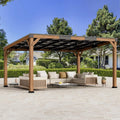
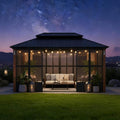
A roof can be a first layer of outdoor patio cooling because it blocks direct sunlight before adding powered equipment. Choose a fixed hardtop for steady coverage, or adjustable louvers when you want to change shade and airflow through the day. Roof shape also affects rain runoff, so plan drainage before placing furniture.
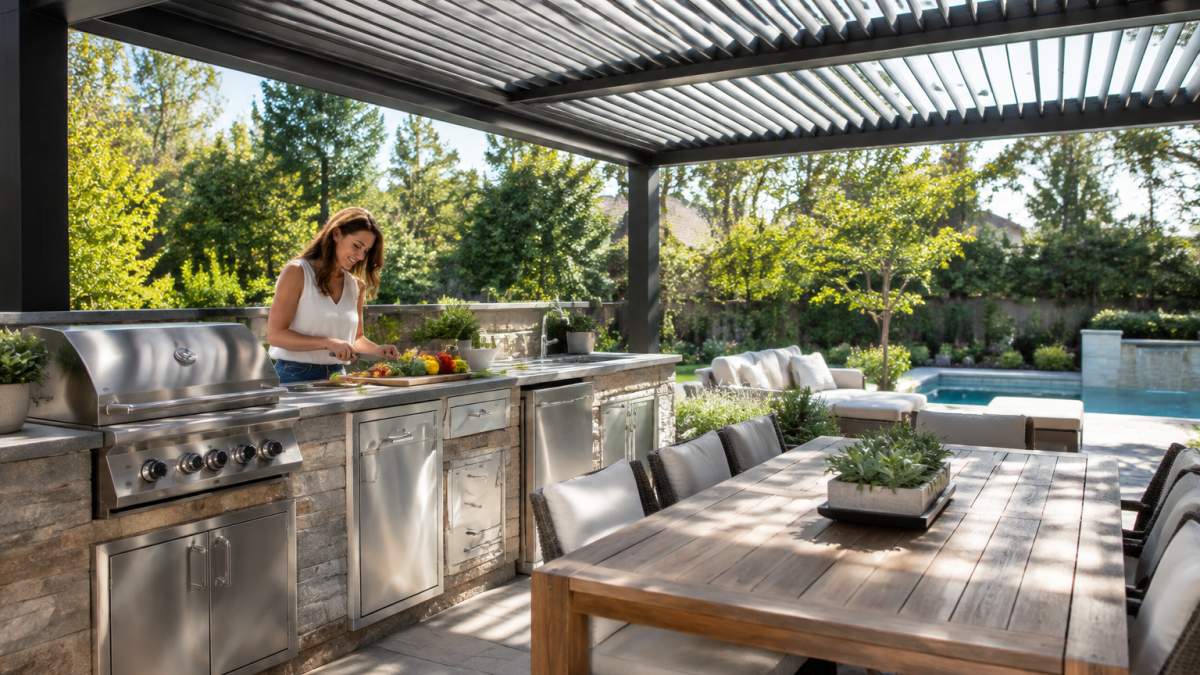
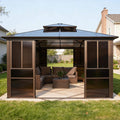
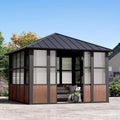
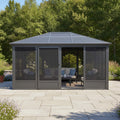
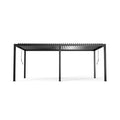
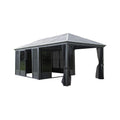
For a patio attached to the house, a wall-mounted gazebo can create a sheltered zone while keeping the space bright. Its sloped polycarbonate roof filters harsh sunlight and directs rainwater away. For changing sun, an adjustable-louver pergola lets you open the roof for airflow or close it for coverage. Choose the roof around the space you use most, not the largest footprint you can fit.
3. Add an Outdoor Patio Cooling Fan for Better Airflow
An outdoor patio cooling fan improves comfort by moving air through a covered seating or cooking area. A ceiling-mounted fan suits a roofed structure; wall-mounted or freestanding fans give more placement flexibility in open layouts. Fans circulate air, but they do not block direct sunlight, so pair one with shade rather than expecting it to cool an exposed patio alone.
Before installation, check the fan’s outdoor rating, mounting support, and power access. Aim airflow across the seating area without directing smoke toward guests or back into the cook’s workspace. If the structure is uncovered, a freestanding fan can be repositioned as the sun and gathering areas shift.
This is where smart zoning helps: place shade over the grill, then direct airflow toward the dining area. The result is more useful than one oversized fan trying to serve every corner.
4. Choose an Outdoor Cooling System for Humid Climates
An outdoor cooling system for humid climates should prioritize shade and air movement over misting. Evaporative cooling works by adding moisture to the air, so it is generally a better fit for dry conditions than already humid ones. According to Facebook Answers’ 2026 cooling guidance, evaporative cooling units can lower an outdoor area’s temperature by up to 20°F, but that figure is not a guarantee for every layout or weather condition.
Misting systems also need careful placement. Check wind direction, drainage, and the distance between nozzles and dining furniture before installation. For humid climates, begin with a shaded roof and an outdoor fan; add mist only if the space stays comfortable and dry enough for it.
5. Improve Outdoor Kitchen Ventilation Around the Grill
Outdoor kitchen ventilation means giving smoke and hot air a clear path away from the cooking area and people. Keep the grill in an open position with room for cross-breezes, and avoid placing tall screens or furniture where they block airflow. A roof can provide shade, but it should not trap smoke above the cook.
Alora Premium Outdoor Hardtop Wooden BBQ Grill Gazebo (13x6) →
The 9×10 Alora grill gazebo has a single-slope hardtop that directs smoke away from the chef. Its side shelves also keep prep items close, reducing unnecessary movement through the cooking zone. For a larger footprint, the 13×6 wooden grill gazebo offers a metal pent roof, bar shelves, and six tool hooks.

Watch out: Do not position a fan so it blows grill heat or smoke toward guests, nearby structures, or the cook.
6. Match Cooling to Climate, Layout, and Operating Needs
The best cooling solution depends on humidity, sun exposure, power access, and how the space is used. In dry climates, a misting system may add useful evaporative cooling; in humid conditions, shade and airflow are the safer starting point. For an open-air kitchen without convenient power, prioritize passive shade and natural cross-ventilation before adding powered equipment.
| Space condition | First choice | Check before adding |
|---|---|---|
| Hot, dry patio | Shade and misting | Water use, drainage |
| Humid cooking zone | Roof and fan | Airflow, smoke direction |
| Open, unpowered area | Pergola or gazebo | Wind and sun exposure |
| Covered dining space | Outdoor fan | Mounting and power |
Track comfort in the cooking and seating zones separately. A simple outdoor thermometer placed in each area can show whether shade changes the temperature where people actually sit. The median ready-to-assemble outdoor kitchen order rose 17.9% year over year, from $16,409 in 2025 to $19,355 in 2026, according to Landscape Management’s 2026 outdoor kitchen cost analysis. That makes planning the coverage area before buying equipment especially worthwhile.
7. Plan Your Outdoor Kitchen Shade Structure
A shade structure should match the kitchen’s footprint, the direction of afternoon sun, and the way guests move between cooking and dining. Designers increasingly separate cooking, bar seating, and lounge areas into distinct zones, according to Blount Designs’ outdoor kitchen design guidance. That approach prevents one roof or fan from being asked to solve every comfort problem.
Use this short planning checklist before choosing a structure:
- Mark the grill, prep surface, dining area, and main paths.
- Note where direct sunlight falls during your usual hosting hours.
- Choose fixed coverage or adjustable louvers based on changing sun.
- Plan airflow and smoke direction around the grill.
- Check power access, drainage, and water use before adding equipment.
For a combined cooking and shade setup, the KoKoMo outdoor kitchen island includes a built-in four-burner grill, refrigerator, lighting, and a 12×12 pergola. Explore the KoKoMo kitchen island with pergola. Backyard Sanctuary Supply LLC offers a curated selection of weather-resistant outdoor structures and kitchen products.

Frequently Asked Questions
What is the best way to cool down an outdoor kitchen area?
Start by considering shade over the cooking and seating zones. Shade structures such as pergolas and hardtop gazebos provide overhead cover, while adjustable louvers can be opened or closed. Match the setup to the space and the local weather.
Are patio misters effective in humid climates?
Misting systems rely on evaporation, so they are generally less effective when humidity is high. They can also wet furniture and nearby surfaces if the spray reaches beyond the intended area. For an outdoor cooling system for humid climates, prioritize shade and air circulation, and check the mist pattern, water use, and drainage before installation. Keep misting away from the grill and food-preparation surfaces.
Do outdoor fans help cool a patio?
An outdoor patio cooling fan moves air across people and can make a shaded seating or cooking area feel more comfortable. It does not lower the outdoor air temperature, so placement matters: aim airflow toward the occupied zone and avoid directing smoke toward guests. Choose a ceiling-mounted, wall-mounted, or freestanding fan based on the structure and available power, and follow the fan maker’s outdoor-use and installation instructions.
How can shade make an outdoor kitchen cooler?
A pergola with adjustable louvers can be opened from 0° to 90°. The Alora louvered pergola has a hidden gutter system that channels rainwater through the posts in four directions when the louvers are fully closed.
How can I stay comfortable while cooking outside in hot weather?
Place the grill under a suitable covered structure and plan cooking and dining as separate zones when the yard allows.